The Complete Guide to Hiking Drakolimni (Greek Dragon lake)
Last updated: April 2026
The hike to Drakolimni is undeniably beautiful, but it is also long, exposed in parts, and very dependent on the weather.
If you start late, carry the wrong things, or underestimate how much energy the route asks from you, the day can turn tiring very quickly. If you prepare well, it is easily one of the best hikes in Greece.
In this guide, I’m covering where to stay, how to get there, how hard the trail really is, what to pack, what to expect on the way, and a few things I wish I knew before starting.
Just so you know: Some links on this page are affiliate links, which means I might earn a small commission if you book or buy through them, at no extra cost to you. Thank you for your support!
What is Drakolimni?
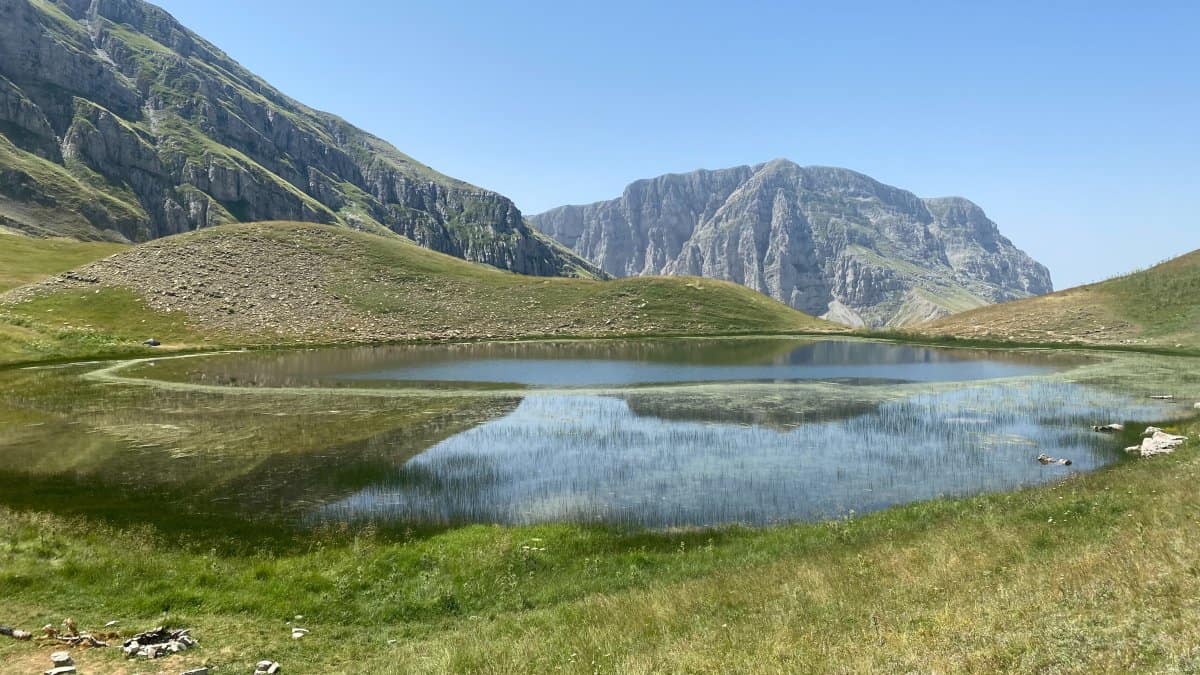
Drakolimni of Tymfi, or directly translated to Dragon Lake, is an alpine lake on Mount Tymfi inside Vikos-Aoös National Park in Epirus. It sits at about 2,050 metres and is one of the best-known mountain hikes in Greece.
As for the name, there is more than one story. Some people say it comes from the little alpine newts in the lake, which locals compare to tiny dragons. Others go straight to the old mountain legends about dragons fighting in the area. Either way, the name stuck, and it really suits the place if you ask me.
Is Drakolimni Safe to Visit?
Yes, if you treat it with respect.
I don’t believe that it is a dangerous hike by default. That said, the route has steep sections, a fair amount of ascent, and conditions can shift quite quickly depending on the weather. Because of that, it helps to go in with realistic expectations from the start.
You do not need advanced mountaineering experience for this hike, but you should be comfortable walking for several hours on mountain terrain. Good boots, enough water, food, layers, and an early start make a big difference.
The weather is also worth taking seriously. Even in warmer months, the mountain can change quickly, so I would always check the forecast before setting off. If the conditions look poor, or if you are already struggling early on, it is better to turn back than push on for the sake of reaching the lake.
I would also not skip travel insurance for a hike like this. In a remote mountain area, even a minor injury can become far more stressful than it should be.
Where should I stay before my Hike?
From my own experience, I would strongly suggest arriving at least one day before the hike and staying in Mikro Papingo.
Instead of driving in, rushing, and starting the trail already tired, you get to wake up in the village and begin the hike properly. Believe me, that alone changes a lot.
Mikro Papingo is also a lovely place to spend a day or two. Stone houses, cobbled streets, mountain views, quiet corners, and a slow village pace.
There are plenty of places to stay, so finding accommodation is not difficult.
We stayed at Hotel Papigo and I was very happy with it. The rooms were spacious, clean, and cozy, the hosts were lovely, and being so close to the start of the trail made the morning much easier.
And if you have a little extra time, use it. Walk through the village, visit the watermills, and try some of the local taverns before or after the hike.
Getting to Mikro Papingo
The easiest way to get to Mikro Papingo is by car.
That is also the option I would recommend without hesitation, especially if you are coming just for the hike. The route is much easier to manage when you have your own car, and it gives you the freedom to arrive when you want, stop along the way, and not depend on limited connections once you get closer to Zagori.
1. By driving a Car
If you are coming from Athens, this is a long drive. It is completely doable, and the road is in good condition, but it will be tiring (to say the least). The same goes for Thessaloniki, even if that side is a bit shorter. If you are already in Ioannina, things are much easier. That is the nearest big city, and if you do not want to keep a rental car for your whole Greece trip, this is the place I would pick one up.
2. By Public Transportation
Public transport is possible, but it certainly takes more planning.
The first step is to get to Ioannina. The more complicated part is the last stretch toward Papingo. There are only a few buses that get to the area, and that is why I would check schedules very carefully before planning the rest of the trip.
I would not describe public transport as the easy version of getting to Mikro Papingo (or anywhere in rural Greece). For a route like this, having your own transport really removes a lot of unnecessary hassle.
Is the Hike to Drakolimni Difficult?
I would call it moderate to difficult.
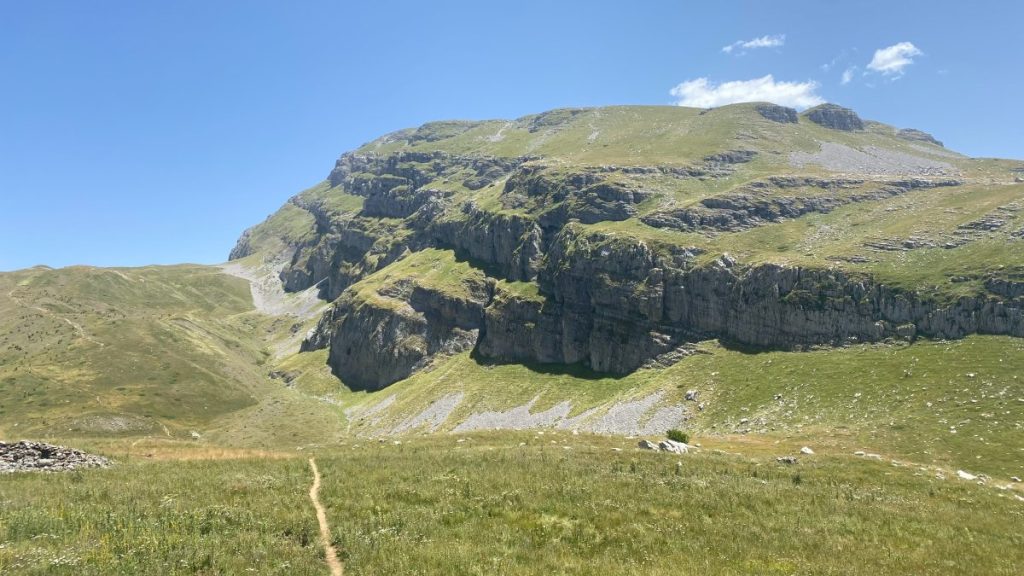
It is not a “climb”, but it is still a demanding hike. The trail is long, there is a lot of uphill walking, and some parts are rocky, exposed, and tiring. You do not need mountaineering experience, but you should be in decent shape and comfortable spending a full day on mountain terrain.
The weather also changes a lot. In rain, fog, or leftover snow, the trail becomes much harder and a lot less forgiving.
I’d say it is really manageable if you go prepared, but it is a hike that does ask quite a lot from you.
What is the Weather Like at Drakolimni?
The weather at Drakolimni changes a lot depending on the season, and that is something you should take seriously before setting off.
In summer conditions are generally milder and more stable. Temperatures are often around 15 to 25°C (59 to 77°F), which is why this is the most popular period for the hike. Even then, mountain weather can still shift quickly, so I would not rely on the fact that it is “summer” and assume everything will stay calm all day.
In spring and autumn, things become much less predictable. Temperatures can range from around 5 to 20°C (41 to 68°F), and sudden rain, wind, fog, or even snowfall are all possible.
In winter, Drakolimni is usually covered in snow. Temperatures often drop below freezing, with averages around -5 to 5°C (23 to 41°F). At that point, this is no longer a normal hiking trip. Winter conditions up there need proper experience and the right equipment.
Whatever time of year you go, always check the forecast before the hike.
So, what is the best time to Hike Drakolimni?
The best time to hike Drakolimni is definitely summer.
The trail is most accessible, the days are longer, and you are less likely to run into snow or difficult ground.
That said, summer is also the busiest period.
If you would rather avoid more people on the trail, late spring and early autumn can be very good too, as long as the weather is on your side. The atmosphere is quieter, the mountain calmer, and the whole experience can be even better for that reason. You just need to be more careful with conditions and a bit more flexible with your plans.
What should I pack for my hike?
Wear proper hiking boots
- Choose sturdy, comfortable hiking boots with good grip
- Essential for rocky and uneven terrain on the Drakolimni trail
Pack appropriate hiking clothing
- Lightweight, moisture-wicking clothes to stay warm and dry
- Use layered clothing to adapt to changing mountain weather
- Waterproof jacket and pants for rain or sudden weather changes
Bring the right backpack
- Hiking backpack with 25-30 liter capacity for essentials
- Space for water, snacks, extra clothes, and safety gear
- Optional small daypack or waist pack for short walks around Drakolimni Lake
Carry enough water
- At least 2 liters of water per person for the hike
- Use water bottles or a hydration bladder
- Water filter or purification tablets recommended for natural water sources along the trail
Pack high-energy snacks and food
- Lightweight, nutritious options: trail mix, energy bars, nuts, dried fruit
- Packed lunch or sandwiches for longer hikes
- Extra snacks for delays or extended breaks
Include essential safety and comfort items
- Headlamp or flashlight for low-light conditions
- Basic first aid kit
- Sunscreen for sun protection at high altitude
- Insect repellent
- Whistle or signaling device for emergencies
Can I bring my dog on the hike to Dragon Lake of Tymphi?
In theory, yes. In practice, I would only do it if your dog is used to long mountain hikes.
Drakolimni is a long mountain hike, and not every dog will enjoy it. If your dog is not used to steep trails, rocky ground, and several hours outside, I would not choose this as the day to test it.
The weather is another thing I would think about properly. If it is very hot, very cold, or unstable, I would leave the dog out of it. What feels manageable to you can be much harder on them, especially on the exposed parts of the trail.
If you do bring your dog, carry enough water for them, bring a collapsible bowl, and pack some food or snacks. I would also keep them on a leash, partly for their own safety and partly because you are not alone up there. Other hikers, wildlife, and livestock are all part of the mountain.
More than anything, just pay attention to how your dog is doing. If they start slowing down badly, looking stressed, or struggling with the terrain, that is the moment to stop being stubborn about reaching the lake.
The Drakolimni hiking trail, Explained
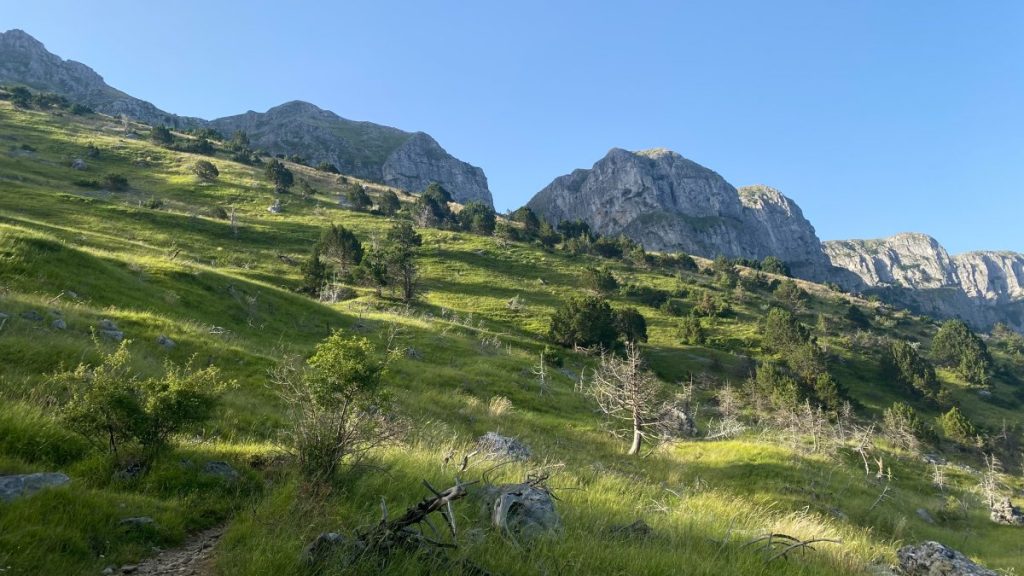
The trail to Drakolimni starts from Mikro Papigo and is easy enough to follow, since it is well marked.
The first part goes through forest, which gives the hike a really calm start. Along the way, you will also come across natural springs where you can refill your water.
Later on, the landscape opens up and the views get much bigger, with the surrounding mountains and valleys slowly taking over.
Your first stop will be at the Astraka Refuge.
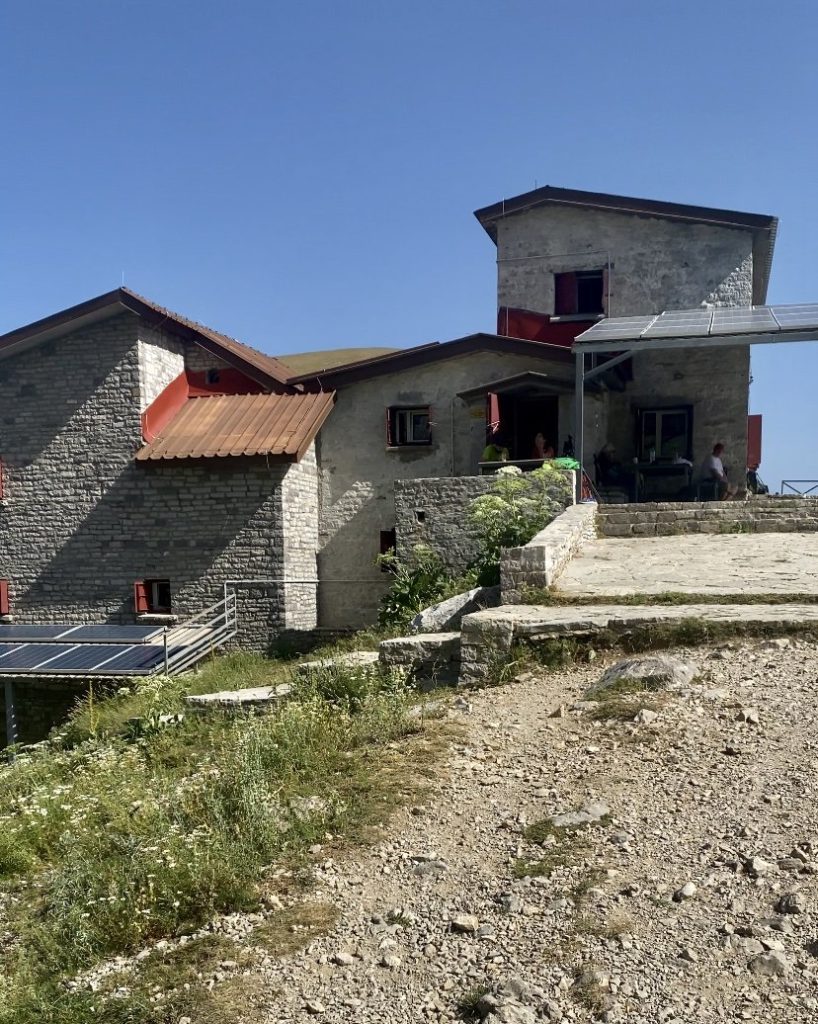
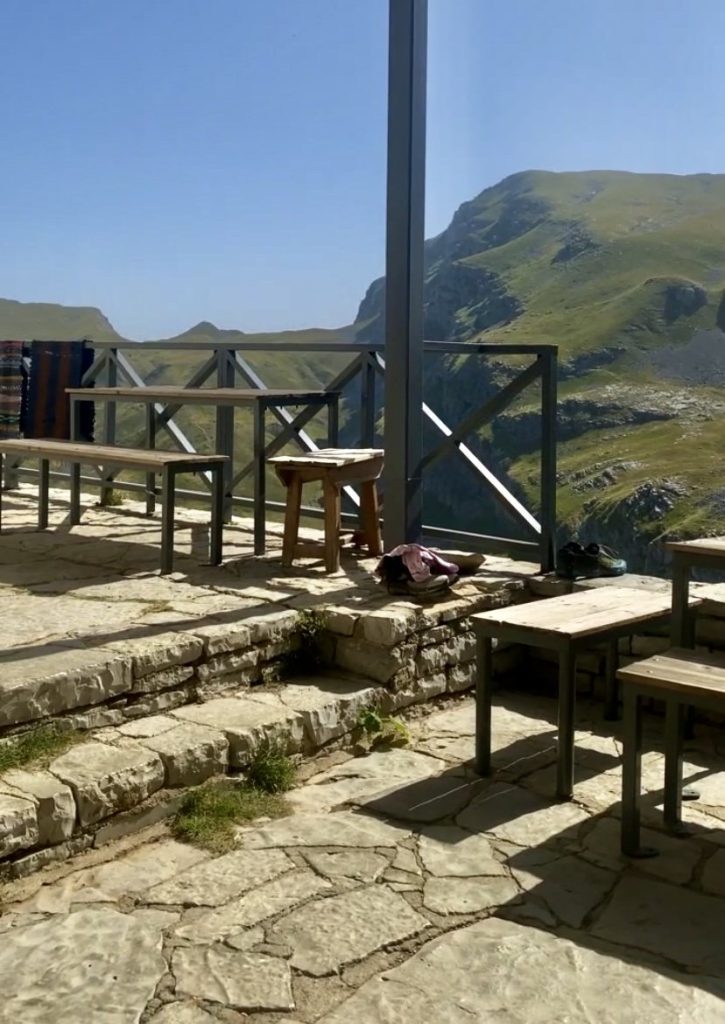
From Mikro Papigo to Astraka Refuge, the distance is about 8 km one way. That is already a decent climb, so it would be a good idea to stop there for water, coffee, food, or even the night. If you decide to split the hike in two, this is the best place to do it, though I don’t think it’s really necessary.
From Astraka to Drakolimni, you still have around 3 km left, but that sounds shorter than it feels. The ground gets rougher, there is more rock underfoot, and I found it to be more challenging than the previous part.
The final stretch of the trail involves some scrambling and requires careful footing. However, the effort is well worth it once you reach the glacial cirque in which the lake is located. It will be just you, the lake, and the peaks around it, and that setting is one of the most beautiful I’ve ever seen.
Take your time to take photos, videos, or even enjoy a picnic. However, if hiking during the summer months, be mindful of insects. By the time we arrived there were thousands of flies at the lake, making our stay a little unpleasant. However, this shouldn’t discourage you, as it might have been the wrong day. The hike itself is well worth it.
Can I swim in the lake?
While the idea of swimming in Drakolimni may seem tempting, and there are people doing it, you should know that swimming is not allowed. Drakolimni is a unique and fragile ecosystem that needs to be preserved.
The lake is home to various species of plants and animals (including the dragons), some of which are endangered. Swimming could disturb the delicate balance of the ecosystem and harm the wildlife that relies on the lake for survival.
Even if the water looks tempting after the hike, I would leave it alone. Sit by the lake, eat something, take photos, enjoy the view, then take the path back down.
What wildlife can I expect to see around Drakolimni?
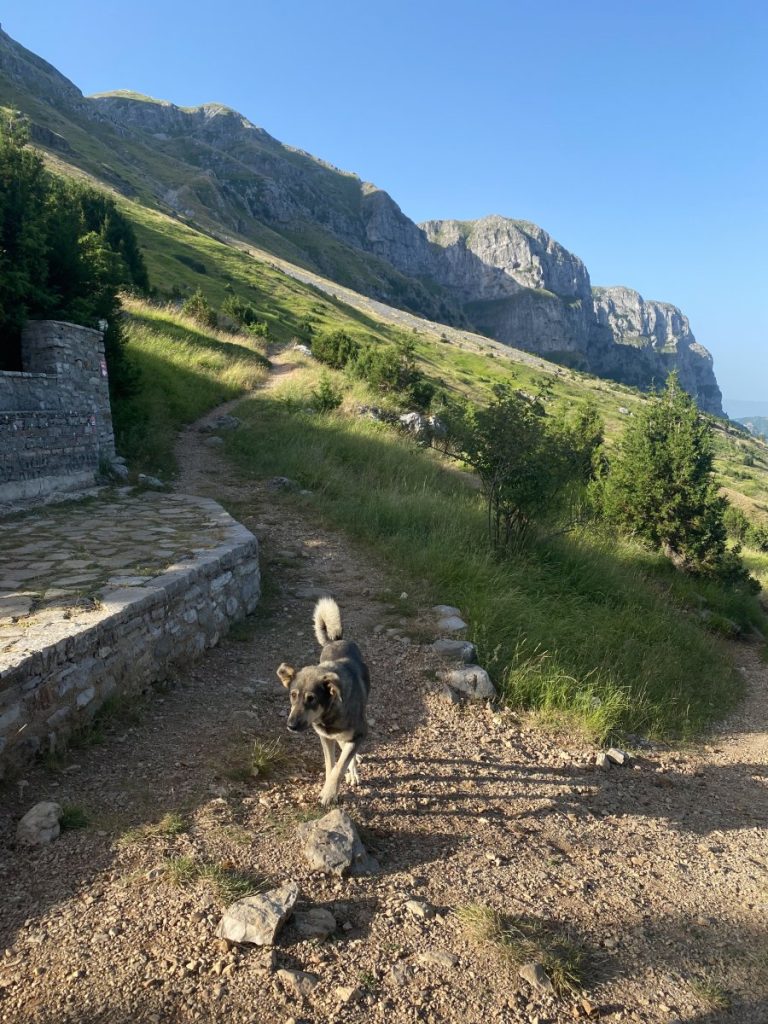
One of the nice things about this hike is that the mountain never feels empty.
The area around Drakolimni is part of Northern Pindos National Park, which is home to a lot of protected wildlife. If you are lucky, you may spot birds of prey, including golden eagles, and in the higher parts of Tymfi there are also chamois, which are far more likely than anything dramatic like bears or wolves.
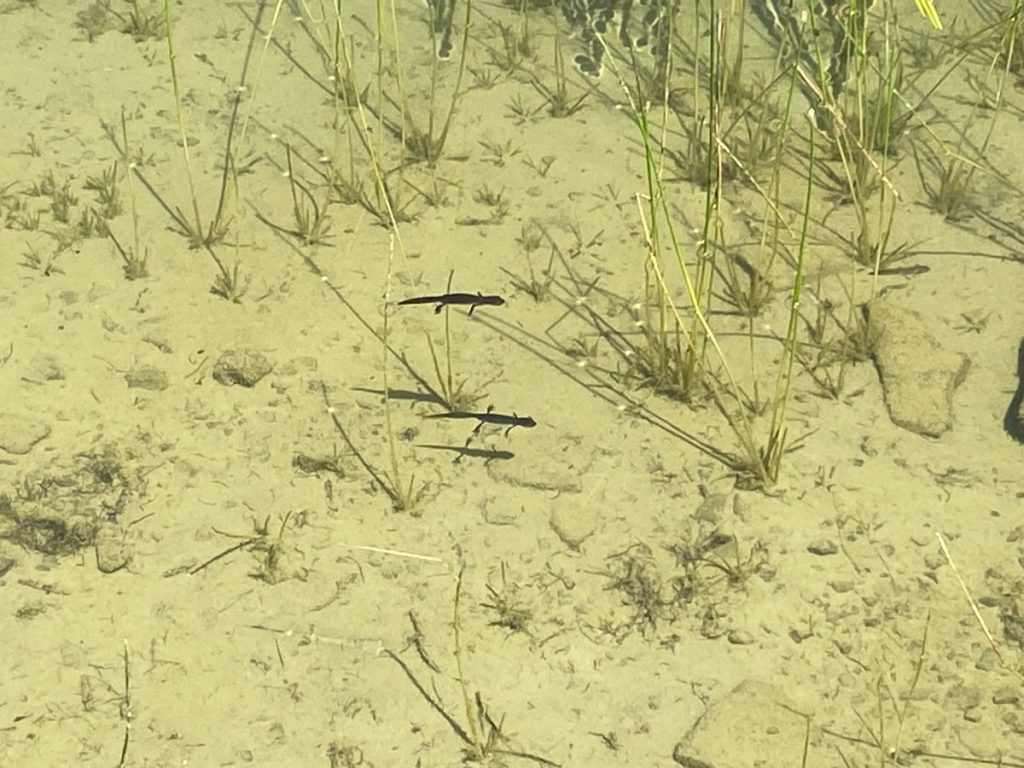
Closer to the lake itself, the best-known animal is the little alpine newt people talk about as the “dragon” of Drakolimni. That is the creature most closely linked with the lake’s name, and if you are there on a calm day, it is worth looking carefully into the water.
FAQ: Hiking to Drakolimni
1. Is Drakolimni worth it if you are not a regular hiker?
Yes, but only if you are realistic about what kind of day this is. You do not need to be some extreme mountain person, but you do need decent stamina and the willingness to spend a full day walking uphill and back down again. If that already sounds miserable to you, the lake will probably not change your mind.
2. Is Drakolimni better as a one-day hike or with an overnight stop?
That depends on how you like hiking. If you are fit and used to long days, doing it in one go is completely possible. If you prefer a slower pace, stopping at Astraka makes the whole thing much easier on the body.
3. Is there shade on the trail?
At the beginning, yes. Higher up, not much. Once the trail opens up, the hike becomes much more exposed, and that is the part you shouldn’t underestimate.
4. Is there phone signal during the hike?
Do not count on having reliable signal the whole way. You may get it in parts, you may not – especially around the lake itself.
5. Can you do the hike solo?
Yes, plenty of people do. But if you are hiking alone, I would be a bit more careful with timing, weather, and how honest you are being with yourself about your fitness. A mountain day on your own is never the moment for unnecessary optimism.
6. Are there toilets or places to stop on the way?
The main obvious stop is Astraka Refuge. That is the place where you can take a proper break, get something to eat or drink, and reset a bit before continuing.
7. Do I need cash for the hike?
It is a good idea to carry some. Mountain huts and remote areas are never the place where I would want to depend fully on card payments or perfect signal.
8. Is the trail busy?
It can be, mainly in summer and on weekends. That said, “busy” on a mountain is still very different from busy in a city.
9. Is Drakolimni a good hike for children?
Only for older children who are already used to long walks and mountain terrain.
10. Can you combine Drakolimni with other Zagori stops?
Yes, and you probably should if you have the time. Mikro Papigo, the stone villages, viewpoints, and the rest of Zagori make much more sense as part of a wider stay rather than only as the background to one hike.
11. Is Drakolimni still worth it if the weather is not perfect?
That depends how “not perfect” we are talking. A bit of cloud is one thing. Bad mountain weather is another. I would not romanticise discomfort on a route like this. If the conditions look poor, leaving it for another day is the better choice.
Final Thoughts
The hike to Drakolimni was hands-down one of the best ones I’ve ever done.
It takes effort, a bit of planning, and enough respect for the mountain not to treat the route too lightly. But that is also part of why it stays with you. By the time you reach the lake, it really does feel like you have earned it.
And that, for me, is a big part of the appeal.
Drakolimni is beautiful, yes, but so is the whole day around it. The climb, the changing landscape, the silence higher up, the first look at the lake, and the tired walk back knowing it was completely worth it.