
The Complete Tashkent Travel Guide
Picture Uzbekistan for a moment. You know nothing about it? Go check my complete guide to travelling to the country, where I share tips and free itinerary suggestions and come back again.
You’re back? Your mind probably goes to ancient history, old temples, local bazaars and slow living, right? What if I told you that there is one place in the country that is the complete opposite? I am talking about Skyscrapers, massive roads, and modern malls. If it isn’t obvious just yet, I am writing about Tashkent.
In this Tashkent travel guide, you’ll find everything you need to know about Uzbekistan’s capital which is often overlooked by visitors. By the end of this read, I hope that you find your inspiration to give it a fair chance.
Just so you know: Some links on this page are affiliate links, which means I might earn a small commission if you book or buy through them, at no extra cost to you. Thank you for your support!
A little bit of History
Before I dive into the Tashkent travel guide, let’s talk history. Tashkent is one of the oldest cities in Central Asia. The early references of its existence appear in Chinese and Persian sources under different names such as Chach and Shash. Due to its location near the Chirchiq River, Tashkent grew as a merchant stop in the Silk Road.
During the early medieval period, Tashkent fell under the control of successive powers, including the Sogdians, the Arabs, and later various Turkic dynasties. The Arab conquest in the 8th century brought Islam to the city, shaping a new religious and cultural identity.
In the centuries that followed, Tashkent developed into a center for Islamic scholarship, artisanal production, and regional trade, until being flattened my the Mongol army of Genghis Khan. In the 14th century, it was absorbed into the empire of Timur (Tamerlane), though it played a secondary role compared to other Uzbek cities such as Samarkand and Bukhara.
In the 18th and early 19th centuries, Tashkent became a part of the Kokand Khanate. In 1865, the city was conquered by the Russian Empire. Under Russian rule, Tashkent expanded rapidly and became an administrative and industrial center, with new European-style districts built alongside the older Islamic quarters.
During the Soviet period, Tashkent served as the capital of the Uzbek Soviet Socialist Republic and underwent extensive modernization. However, a devastating earthquake in 1966 destroyed much of the city, leading to large-scale reconstruction that gave Tashkent its distinctive Soviet-era architecture.
Since Uzbekistan’s independence in 1991, Tashkent has continued to evolve, becoming the massive and modern city that it is today.
Is Tashkent safe to visit?
Short answer – extremely. What really surprised me during our trip to Uzbekistan was the level of safety. Even though Tashkent is a massive city and certainly does not have the calm, family feel of Bukhara, it is a very safe place to visit, go out freely and enjoy without fear. Obviously, I highly recommend you exercise normal safety precautions, as anyone would in any other country.
Having travel insurance for your trip is extremely important. I personally choose Nomad Insurance by SafetyWing when I travel. I pick this specific plan because it’s quite affordable, offers very good coverage, and has very short response times for any questions that may arise.
A major advantage is that you can purchase your regular insurance even after your trip has already started – especially convenient if you’re a forgetful person like me. I would definitely recommend Nomad Insurance. Visit their website to learn more.

What is the best season to visit Tashkent?
The best time to visit Tashkent is in the spring (March-May) and autumn (September-October). During these seasons, the weather is mild and comfortable, making it ideal for sightseeing, walking around the city, and enjoying outdoor activities.
Summer (June-August) can be very hot, with temperatures often rising above 35 °C, which might make daytime sightseeing less comfortable, though mountain or evening activities can still be enjoyable. Early mornings and late afternoons are more manageable, but midday sightseeing is, indeed, uncomfortable.
We traveled during August and it was hot. However, due to being a desert country, Uzbekistan has very low humidity, though generally higher in Tashkent than in the other cities. While this normally means that you will not suffer in the same way you would in another country, sweating in Tashkent was quite the norm (which was not the case in the other cities).
Winter (December-February) is cold and quieter for tourism, with lower prices and fewer crowds, but many outdoor attractions are less pleasant due to the chilly weather.
So, if your priority is pleasant weather and the best overall visiting experience, aim for spring or autumn for your trip to Tashkent.
Is Tashkent expensive?

Well, yes and no. If you have any worries before traveling to Uzbekistan, finances would not be one of them. Uzbekistan is considered to be one of the cheapest countries in the world. For example, a bottle of water would cost around 0.25$, a plate of local plov would cost as low as 3$, a mojito around 2$.
However, Tashkent lies on the more expensive side of the country. that’s not to say that it is not affordable, it very much is. But this basically means that it will be harder to find the extremely low prices seen for example in Bukhara.
Let’s get into detail. Street food like a plate of local plov will set you back around $4-5. Meals at a local café or mid-range restaurant will cost around $10. When it comes to accommodation, it will be easy to find a mid-range hotel to stay for around $30-40 per night. Lastly, a metro ride costs about $0.15–$0.30 per trip, while Short taxi ride within the city typically costs $2–$5 if booked via an app like Yandex Go.
As you can see, while more expensive than other parts of Uzbekistan, Tashkent is a destination where you will be able to do a lot of different things without constantly thinking of the cost.
How can I get to Tashkent?
The easiest way to get to Tashkent is through the city’s international airport, which is also the largest in the country. It receives flights from many major cities, both in Asia and Europe. There are also domestic flights from other Uzbek cities in the country, such as Samarkand and Bukhara.
Until recently, budget airline WizzAir operated cheap direct flights from Abu Dhabi. Unfortunately, this branch has now closed and this opportunity is no longer possible.
Another convenient way to visit the capital of Uzbekistan is by train. Tashkent is connected by rail to other cities in the country, as well as to international cities, such as Almaty in neighboring Kazakhstan. Uzbek railways offer surprisingly good quality services at great prices.
Lastly, you can also reach Tashkent by car from a neighboring country, such as Kazakhstan and Kyrgyzstan. However, I am not sure I would recommend this, as the roads, driving license requirements, and driving quality vary from country to country and can complicate the situation.
Where should I stay in Tashkent?
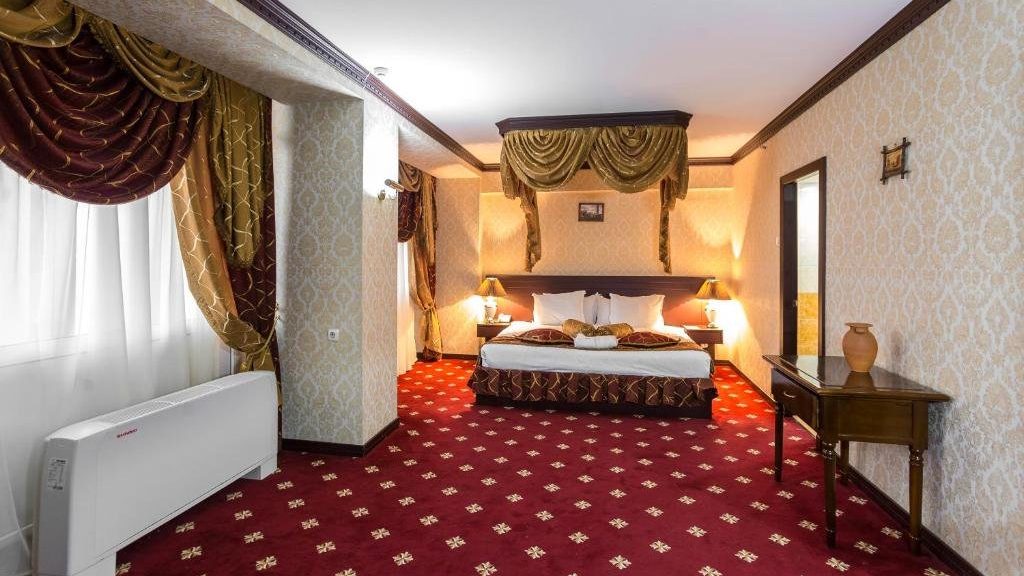
Tashkent is the biggest city in Central Asia for a reason, with plenty of accommodation options available in Booking.com. However, most of them are not located centrally and I am not so sure as to why.
Your goal should be to aim for a hotel near the metro station, since its network is fantastic. that is why I have comprised a map to help you find out.
The most iconic hotel in the city is maybe Hotel Uzbekistan (more on that, later). It was built in 1974 and looks like an open book in true, Soviet era fashion. The hotel is located directly opposite to the Amir Timur Square. It offers a large number of rooms and suites, many of which have been renovated. In fact, it is considered a high-end option for moderate prices. I’d say that a night there is worth it – It is a piece of history after all.
City Centre Hotel is another good and budget-friendly option, also located near the Amir Timur square. It offers family rooms with air-conditioning, balconies, and private bathrooms. You can also enjoy a modern restaurant serving halal and vegetarian meals, a sun terrace, and a garden.
How long should I stay in Tashkent?
Before I continue, I would like to mention that Tashkent is the largest city in Central Asia by a wide margin. As we will see later, there are a lot of things to do and obviously, which will obviously affect how long you will need to stay in the city. Although well organized, some attractions can be far from each other.
Personally, I would recommend staying at least 3-4 days in the city. I think that is more than enough to see all the necessary attractions, explore some lesser-known neighborhoods, try local food and experience the life of the locals in this beautiful capital. I think Tashkent is a place worth spending time in, since it combines older neighborhoods with modern ones, all deserving their share in your itinerary.
I understand, however, that time may not be in your favor, or you might want to visit other places in this magnificent country. In such a case, I think that 2 full days can be enough to cover all the basics, without necessarily feeling rushed. Although not ideal, it is a reasonable compromise, someone would argue.
How can I move around in Tashkent?
This is the part of the Tashkent travel guide where we talk about transportation. For some strange reason, getting around Tashkent manages to be easy, but at the same time difficult. But let’s have a look.
Certainly, a very easy and comfortable way to get around Tashkent is by renting a car. In recent years, several international car rental companies have established themselves in the country. However, there are two problems that come with this.
First, there is a lot of traffic on the roads. I was really impressed by the fact that, although the roads were open and had many lanes, it took a very long time to reach our destinations during rush hour.
The most important problem, however, is the driving culture. I am not exaggerating at all when I say that driving in Uzbekistan is the worst I have ever experienced in my life. I have traveled all over the Middle East and I come from Greece, where the driving culture is also horrible. However, I don’t think I have ever encountered anything like what I experienced in Uzbekistan.
For all these reasons, I would recommend avoiding renting a car.
One of the best ways to get around Tashkent is by metro. It covers the entire city and trains run every 5-10 minutes. It is also extremely affordable, costing around $0.15 per ride. The stations are beautiful and decorated with designs inspired by the history of Uzbekistan.
The system is extremely clean and safe. The only problem is that the trains are not air-conditioned, which is especially noticeable during the summer. Trust me, I traveled there in August and it was not a pleasant experience.
Taxis are maybe the most convenient way of getting around Tashkent (Maybe not during rush hours). We used Yandex, and it made everything extremely convenient. No bargaining was needed, and prices were great.
For example, a 10-minute ride will cost around $2-3. However, I would never choose a regular taxi (meaning not being booked through an app), unless absolutely needed, since they tend to inflate the prices a lot, and our experience with them was not nice.
There are also public buses, but I think that metro and taxis are generally a better option.
The Best things to do in Tashkent
1. The Hazrat Imam Complex

- Address: 86QQ+3X8, Qorasaroy ko’chasi, Тоshkent
- Opening times: 9:00-21:00
- Tickets: 60,000 UZS (approx. $5 USD) in the museum
The Hazrat Imam Complex is maybe the most significant religious site in Uzbekistan. It is also the spiritual heart of Tashkent due to its combination of mosques, madrassas (Islamic schools), and mausoleums.
The complex includes many key structures: the Barak-Khan Madrassah, the Tillya Sheikh Mosque, the Kafal Shashi Mausoleum, and the Hazrat Imam Mosque. One of the most important items housed within the Hazrat Imam Complex is the Uthman Quran, considered the oldest Quran in the world.
The complex also functions as a living religious center, with daily prayers, religious lectures, and cultural events taking place regularly.
2. The Amir Temur square

Address: Амир Темур шоҳ кўчаси 4, Тоshkent
Amir Temur Square is the definition of the city center. It is named after Amir Temur, the 14th-century conqueror and founder of the Timurid Empire, who is considered Uzbekistan’s national hero.
In the middle of the square stands a statue of Amir Temur, unveiled in 1993 after Uzbekistan gained independence. The monument depicts Temur on horseback, and was built in an effort to reapproach Uzbekistan’s old history, after decades of being part of the Soviet Union.
Surrounding the square lie the Hotel Uzbekistan and the State museum of Timurid history, but more about them later.
Once in the square, try to spot the two identical clock towers. The original clock tower was built in 1947 to commemorate Uzbek soldiers who died during the Second World War. The clock mechanism itself was brought from Germany as war reparations.
The second clock tower, added in 2009, was designed to mirror the first, creating perfect symmetry. They are actually very popular among locals.
3. Hotel Uzbekistan

Address: Mirzamakhmud Musakhanov Street 45, Tashkent
Hotel Uzbekistan maybe the most recognizable building in Tashkent. It was built in 1974 and looks like an open book in true, Soviet era fashion. The hotel is located directly opposite Amir Timur Square.
As one of the largest hotels in the country it has historically played an important role in the development of tourism in Tashkent. It offers a large number of rooms and suites, many of which provide views of the city skyline. While the interior decoration in some areas retains a Soviet-era character, the hotel has undergone renovations to look more like a modern hotel.
It is actually still possible to stay in the hotel. In fact, it is considered a high-end option for moderate prices. I’d say that a night there is worth it – It is a piece of history after all. If, however, you don’t want to stay there, just visiting to take a few photos is a must-do.
4. The state museum of Timurid history

- Address: Амир Темур шоҳ кўчаси 1, 100000, Тоshkent
- Opening Times: 10:00-18:00 (Mondays closed)
- Tickets: 40,000 UZS (Approx. $3.5)
This was by far my favorite museum in the city. As mentioned above, is located next to the Amir Timur square. Architecturally, it has a unique three-story circular design and turquoise dome.
The museum’s collection includes thousands of artifacts related to the Timurid period, such as jewelry, traditional clothing, musical instruments, weapons, coins, models of architectural monuments (like Bibi Khanum Mosque and Gur‑e Amir), and correspondence between Amir Temur and rulers of other states.
One of the most impressive features inside the museum is an 8.5‑meter-high crystal chandelier composed of thousands of pendants.
For me, however, the highlight was the impressive giant painting of Amir Timur during a battle. Correction, my actual favorite was the collection of portraits of members of the Timurid dynasty, explaining, among others, their cause of death (some of them are actually hilarious).
5. The Chorsu Bazaar
- Address: Tafakkur ko’chasi 57, Тоshkent
- Opening times: 8:00-23:00
- Tickets: Free
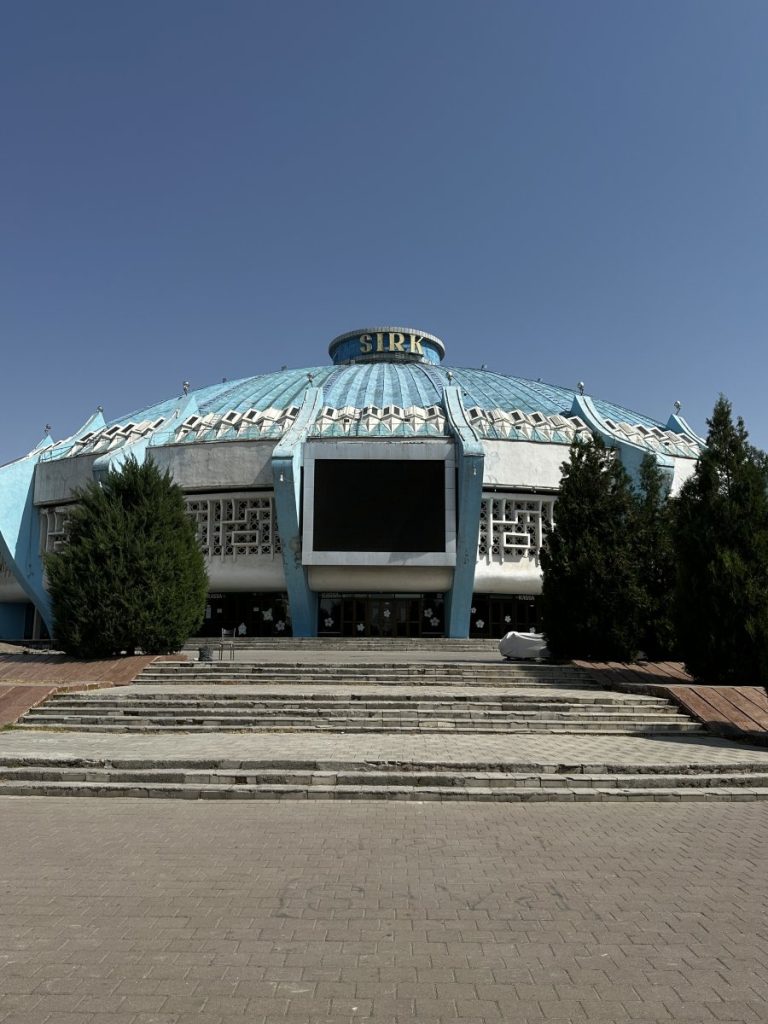
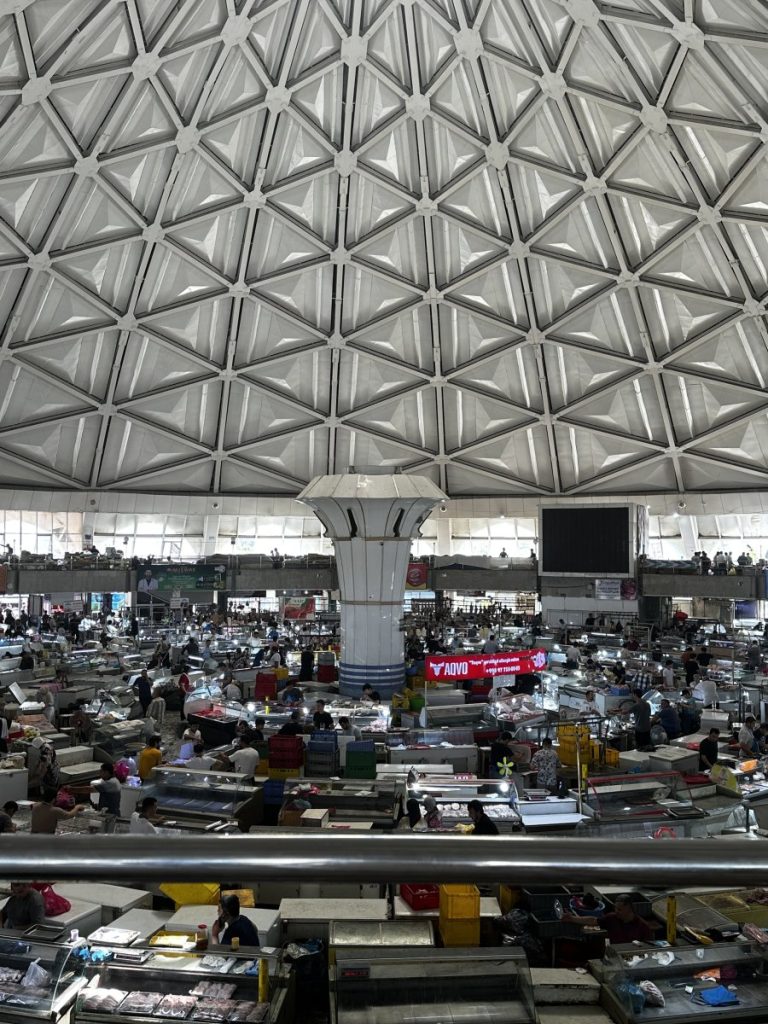
I don’t know where to start. Chorsu Bazaar is the biggest local market in Tashkent and the best place in the city to get a feel of the old, authentic Tashkent. You might have come across its large blue-domed main building, constructed during the Soviet period and renovated after Uzbekistan’s independence. It is actually much bigger than it looks.
The dome, decorated with traditional patterns, shelters stalls selling meat, dairy products, spices, nuts, dried fruits, and bread.
The ground floor has the intense smell of raw meat and dairy (make it rotten meet if traveling during the summer). However, if you head to the upper floor, you can find sweets and other local delicacies. You MUST try Uzbek halva. Unlike Middle Eastern or Mediterranean halva, it has a denser, richer, and more chocolatey flavor.
Surrounding the main hall are open-air sections where vendors sell fresh fruits and vegetables, clothing, household goods, and traditional crafts. The outer part of the market is massive and so easy to get lost. Feel free to wander around, and why not buy anything. Remember, aim for 75% of the original asking price.
Chorsu Bazaar is the best place to get the feel of authentic Uzbekistan, in a city that looks more and more westernized.
6. The Sailgokh Street
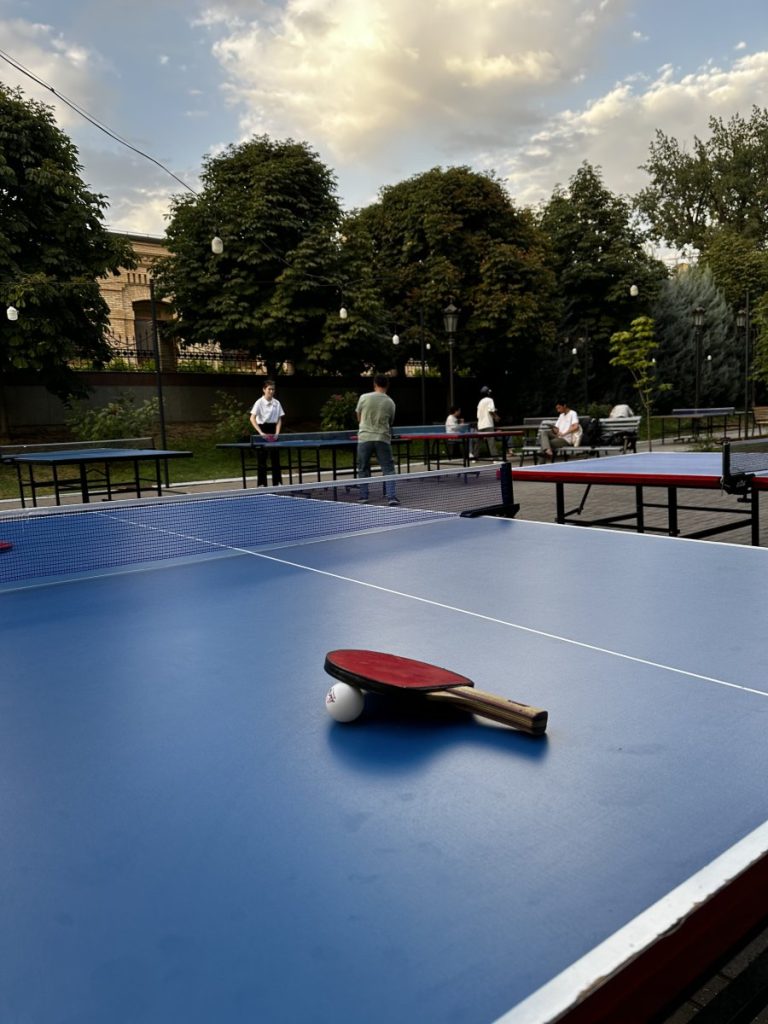
Address: Sayilgoh ko’chasi
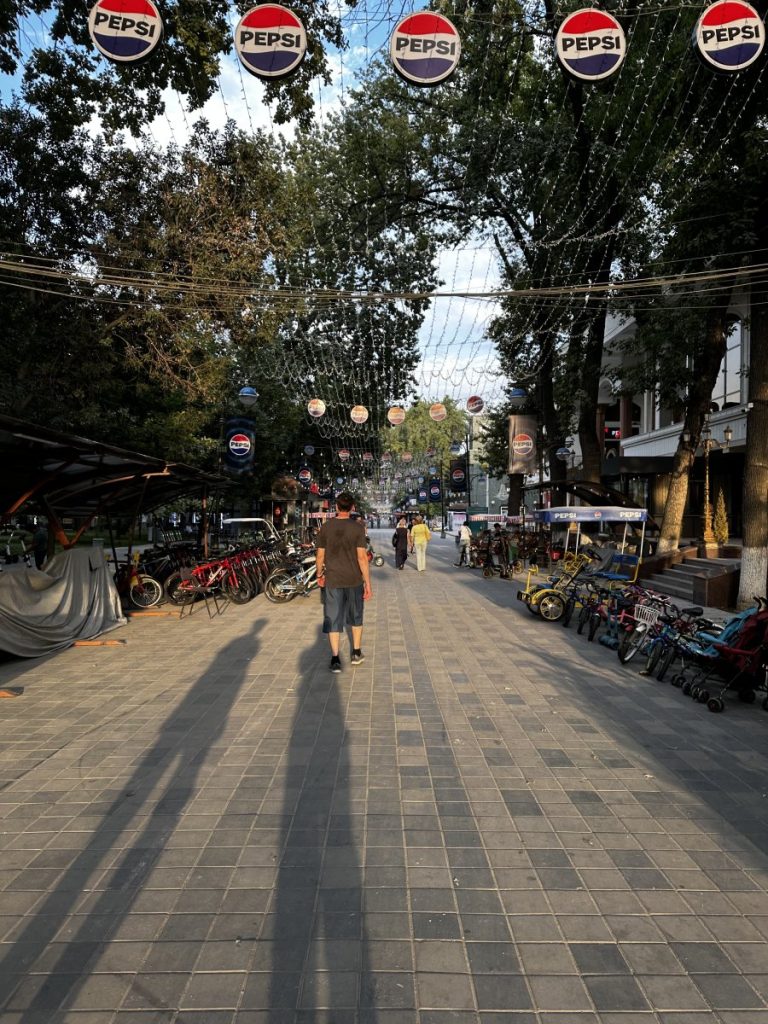
What is so interesting about a street, I hear you ask. Well, Sailgokh Street, which starts from Amir Timur square is a place that gets really lively in the afternoon.
It is a long strip with vendors, canteens and outdoor activities. You can find and try anything, from archery (!) to table tennis and much more while spending very little money. We ended up going twice there, spending a total of 3 hours playing table tennis.
7. The Alisher Navoi Museum
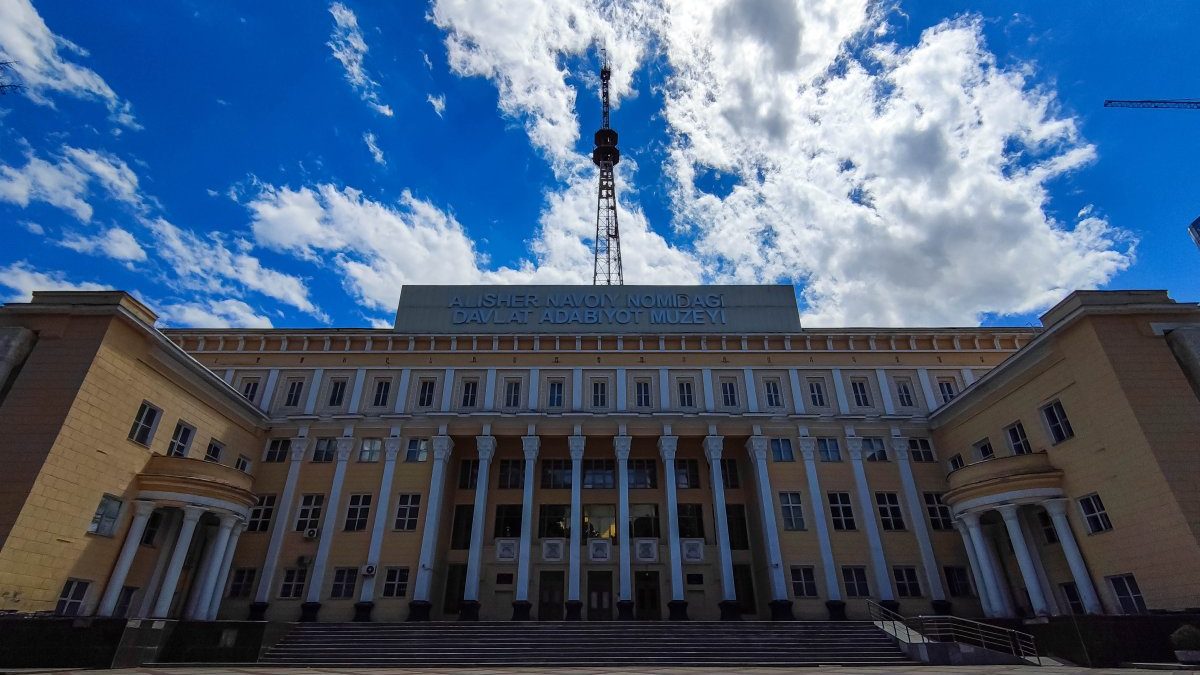
- Address: Navoiy shoh ko’chasi 69, 100011, Тоshkent
- Opening times: 8:00-24:00
- Tickets: 16,000 UZS (Approx. $1.5)
This Museum is dedicated to Alisher Navoi, the famous Afgan poet, philosopher, and statesman of the Timurid era. Navoi is considered the founder of Chagatai literature, an early form of the Uzbek literary language, and a key figure in Central Asian cultural history.
The museum’s exhibits include manuscripts, rare books, miniatures, and historical documents related to Navoi’s works and his influence on Persian and Turkic literature. Navoi is really loved in Uzbekistan, so visiting the museum is an important thing to do when visiting Tashkent.
8. The Tashkent Planetarium
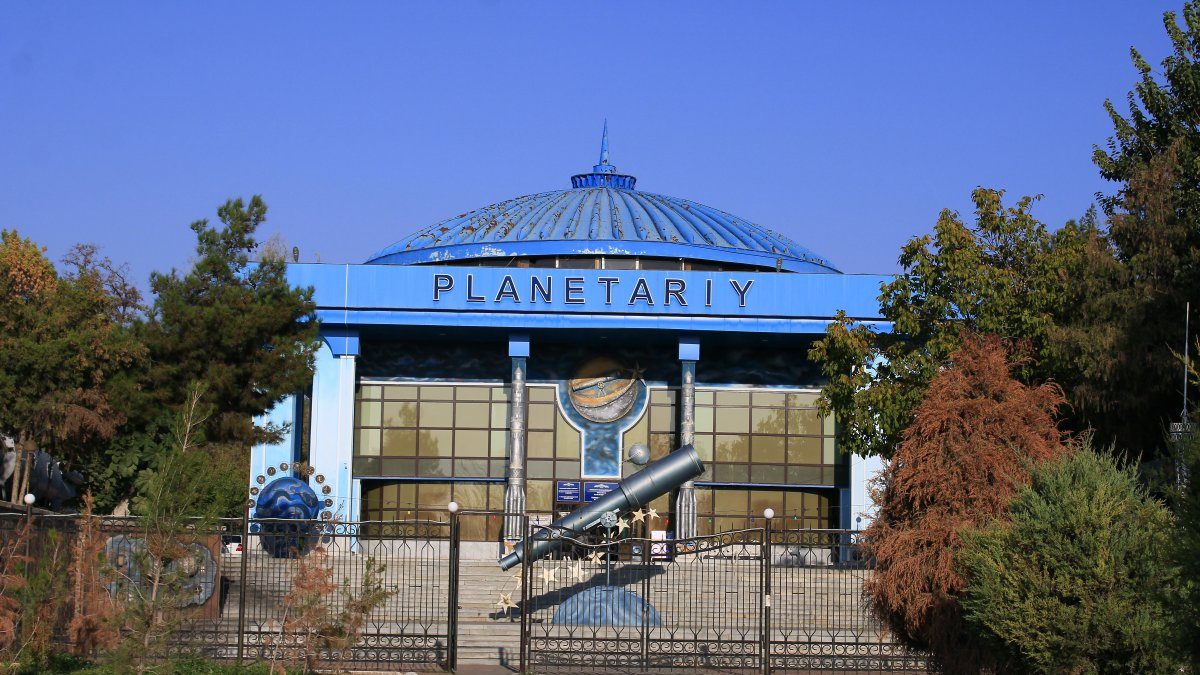
- Address: Zarqaynar ko’chasi 6, Тоshkent
- Opening times: 9:00-17:00 (Sundays closed)
Tashkent’s planetarium is located near Chorsu Bazaar and is a classic example of Soviet Architecture. It is very significant to the country because it is a place where a new planet, named Samarkand, was discovered.
It also offers shows in English, making it a less famous, but still nice activity if you are interested in space exploration.
9. The State museum of history
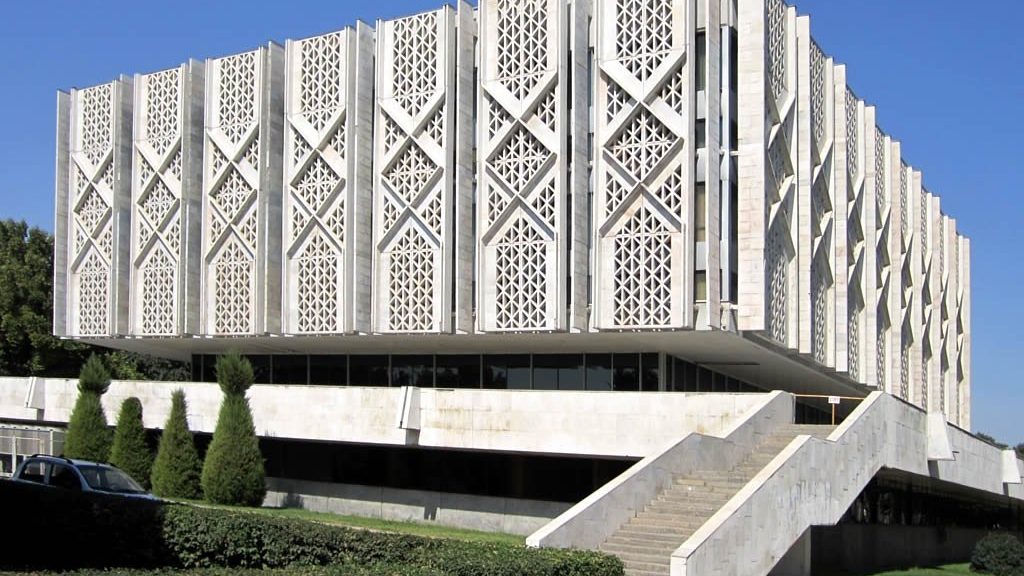
- Address: Sharof Rashidov Shoh ko’chasi 3, Тоshkent
- Opening times: *Temporarily closed for rennovation*
- Tickets: 50,000 UZS (Approx. $4)
The State Museum of the History of Uzbekistan is the country’s biggest historical museum and one of the oldest in Central Asia. It is housed in an oddly satisfying, square like building, another prime example of brutalist Soviet architecture.
The museum’s collection includes over 300,000 artifacts, covering a wide chronological range. Exhibits begin with prehistoric and archaeological materials from the Stone and Bronze Ages, such as ancient tools and ceramics. Later sections focus on the rise of early civilizations in Central Asia, including Sogdiana, Bactria, and Khorezm.
Significant attention is given to the Islamic Golden Age, the Timurid period, and subsequent khanates, with many manuscripts, miniature paintings, weapons, clothing, and everyday objects. The museum also documents the Russian imperial and Soviet eras, presenting materials related to industrialization, political change, and social transformation. The final sections address Uzbekistan’s independence, focusing on nation-building, modern reforms, and cultural revival.
It is maybe the best place to learn about the history of Uzbekistan and I would definitely recommend a visit.
10. The Navoi park

Address: Bunyodkor shoh ko’chasi 1, 100035, Тоshkent
The Navoi Park is one of the largest and most beloved green spaces in Tashkent. With a size of about 65 hectares, it is a refreshing change in the center of the city, with century-old trees, fountains, and much more.
At its center stands a large monument of Alisher Navoi beneath a decorative rotunda. Around the park you’ll find a network of canals and a 9-hectare lake, where in warmer months you can enjoy paddle-boating, while cafés and restaurants along the water’s edge are plentiful.
In addition to its natural beauty, Navoi Park has a few cultural and recreational attractions. These include the Alley of Writers, a street featuring statues and memorials to prominent Uzbek poets and authors, the Parliament building, the Istiklol Concert Hall, and the historic Abulkasym Madrasa, now home to a traditional applied arts center where you can see crafts like jewelry, woodwork, and miniatures.
11. The Islam Kharimov Museum
- Address: 8756+7QP, Samarkand Street, Tashkent, Uzbekistan
- Opening times: 9:00-17:00 (Mondays closed)
- Tickets: Free
The Islam Karimov Museum is dedicated to the life and work of Uzbekistan’s first president. It is located in what was once the Presidential Palace, the former workplace of President Karimov. This building, long closed to the general public, was converted to house the complex and its exhibitions.
Exhibition spaces include plenty of material such as portraits and images of Karimov at official events with foreign leaders and domestic figures. Some artistic works depict Karimov in stylized or symbolic scenes (that is an understatement), showing how his public image has been shaped within Uzbekistan.
I think that the museum is well worth a visit and you’ll understand the reason why once you are there. It is informative and an overall alternative experience.
12. The Earthquake memorial
Address: Sharof Rashidov Shoh Ko’chasi, Тоshkent
The Earthquake Memorial is a tribute to one of the most defining events in the city’s modern history, the 1966 Tashkent earthquake.
On April 26, 1966 at about 5:23 a.m., a devastating shock struck the city, destroying thousands of homes and buildings, leaving hundreds of thousands of people homeless. The disaster became a pivotal moment that led to Tashkent’s dramatic reconstruction in the following years.
The memorial was erected in 1976, on the 10th anniversary of the earthquake, at or near the site of the original epicenter. At the heart of the complex is a black cube split by a crack that symbolizes the rupture of the earth.
One face of the cube is engraved with the date of the earthquake and another shows a clock marking the exact time the quake began. Extending from the crack are a man, woman, and child.
It is indeed a powerful monument that commemorates the day that the city changed forever.
13. The Paxtacor stadium
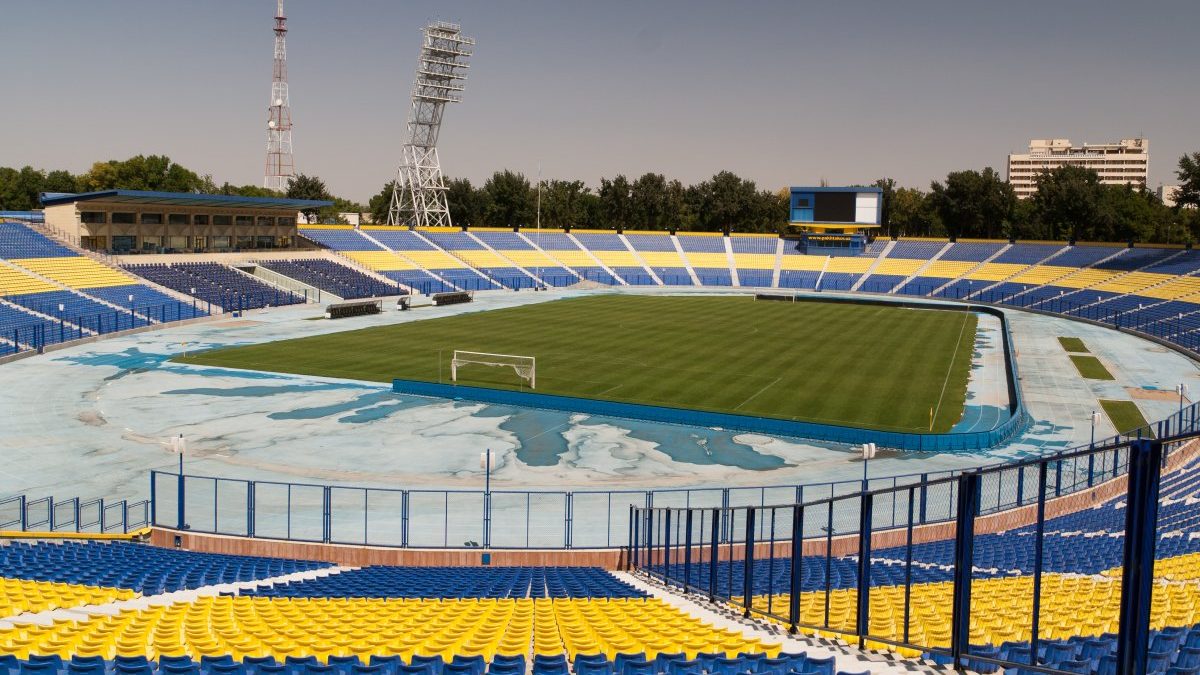
Address: 8786+54V, Tashkent
Paxtakor Stadium is one of the most important sports venues in the country. Opened in 1956, it is the home of FC Paxtakor Tashkent, Uzbekistan’s most successful and internationally recognized football club. If you are a soccer fan like me, this one is not to be missed.
You can attend a game or, if you are not lucky enough, just visit the small club shop located in the park.
14. The Freedom Square

Address: Tasjkent, Tashkent
The Freedom Square (Mustaqillik Maydoni) represents the country’s independence and sovereignty. During the Soviet period it was known as Lenin Square, but after Uzbekistan gained independence in 1991, it was renamed and redesigned to reflect the country’s national identity and statehood.
At the center of the Square stands the impressive Monument of Independence and Humanism, featuring a globe with the outline of Uzbekistan engraved on it, symbolizing the country’s place in the world.
Nearby is the Happy Mother monument, depicting a woman with a child, which represents peace, future generations, and care for the people. The square is surrounded by fountains, landscaped gardens, and wide open spaces that emphasize harmony and dignity.
Freedom Square is also the site of official state ceremonies, including Independence Day celebrations, military honors, and national commemorations. Important government buildings, such as the Senate of Uzbekistan and the Cabinet of Ministers, are located nearby.
The Best places to eat in Tashkent
Top Traditional Uzbek Cuisine
- Besh Qozon – Legendary spot for plov (Uzbekistan’s national dish), one of the most famous in Tashkent. Big portions and authentic taste make it a must-try.
- Restaurant Caravan – Popular for Uzbek classics like shurpa, manti, and lagman in a comfortable setting.
- BOBOY Tashkent City Mall – Highly rated Uzbek restaurant
- Khan Chapan – Another favorite for rich Uzbek food and grilled meats.
International Cuisine
- Syrovarnya – Italian-inspired menu in a stylish location – great for pasta, pizza, and European dishes.
- Cafe 1991 – Cozy café serving Uzbek dishes with a modern twist, popular for lunch or dinner.
- Eco Café. VEGAN | VEGETARIAN – Excellent choice for vegetarian and plant-based meals in Tashkent.
- AZUR – Terrace Garden – Mediterranean dining with a lovely terrace atmosphere.
- Sette Restaurant & Bar – Italian fine dining inside the Hyatt Regency — perfect for special occasions.
- Silk 96 Wine&Lounge – Stylish lounge for dinner, drinks, and contemporary cuisine.
Street Food & Markets
- Chorsu Bazaar – While not a single restaurant, it is one of the best places to sample Uzbek street food like samsa, shashlik (grilled skewers), and local snacks.
Tashkent Travel Guide – Final Thoughts
In the end, Tashkent is absolutely worth visiting, especially if you’re interested in culture, everyday local life, and a city that feels different from typical Uzbek destinations. It’s a mix of old Islamic heritage, Soviet-era architecture, and modern Central Asian city life. The metro stations are beautiful, the city is green and spacious, and places like Chorsu Bazaar give a real sense of how people live.
While it doesn’t have the postcard-style monuments of Samarkand or Bukhara, it’s a great place to spend a couple of days, either as a first stop in Uzbekistan or as a contrast to the more historic Silk Road cities.