Best Museums in Athens Beyond the Acropolis
Athens has more museums than any trip can absorb, and the Acropolis Museum takes up most of the oxygen. Deservedly, but it does mean a lot of very good places get skipped by people who’d have loved them.
The Museum of Cycladic Art is my own favourite, largely because of the marble figurines. The National Archaeological Museum is the one I’d pick with room for a single big archaeological collection.
And the Numismatic Museum, which sounds like the dullest option on this list, has one of the nicest garden cafés in the centre and sits inside the former home of the man who dug up Troy. For ancient machines that move rather than statues that don’t, the Kotsanas Museum does something nowhere else here attempts.
This guide covers the museums I think earn the time beyond the Acropolis Museum, with what each one costs, how long to give it, and who it suits.
Just so you know: Some links on this page are affiliate links, which means I might earn a small commission if you book or buy through them, at no extra cost to you. Thank you for your support!
Quick Picks
Short on time? Start here.
- The one to pick if it’s only one: National Archaeological Museum
- Best for art lovers: Museum of Cycladic Art
- Best for modern Greek history: National Historical Museum
- Best all-rounder: Benaki Museum
- Best with kids: Goulandris Museum of Natural History
- Best for contemporary art: EMST
- Most underrated: Numismatic Museum
- Best hands-on: Kotsanas Museum of Ancient Greek Technology
- Best café: Numismatic Museum, with the Benaki roof terrace a close second
Athens Museum Map
I’ve put together a free map with every museum in this guide, which makes it much easier to see what clusters together and avoid crossing the city twice in a day.
Plenty of these are within a few minutes of each other around Kolonaki and Vasilissis Sofias, so a bit of planning saves real time.
1. Museum of Cycladic Art
- Address:Neofytou Douka 4, Athens
- Ticket: €12
- Nearest metro: Evangelismos
- Time needed: 1.5 hours
I’ve always had a thing for the Cycladic civilisation, which developed across the islands roughly between 3000 and 2000 BC. I probably have Greek primary school to thank for that.
Despite the name, the museum covers other ancient Greek and Cypriot periods too, so the range is wider than the name suggests.
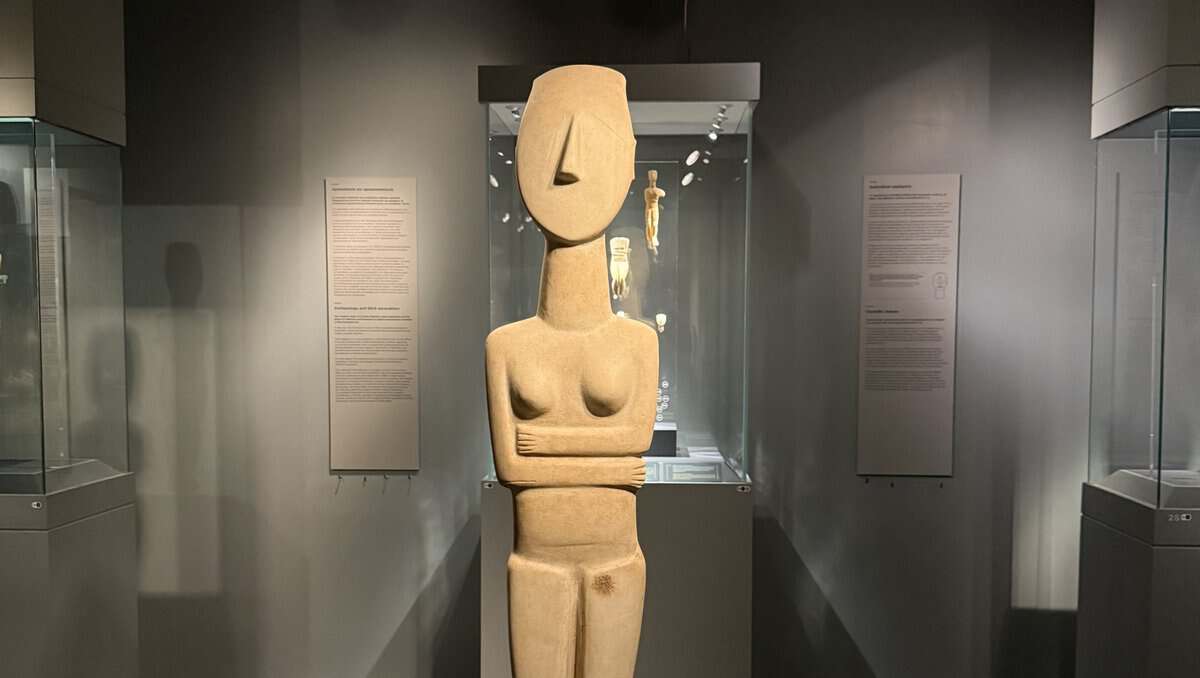
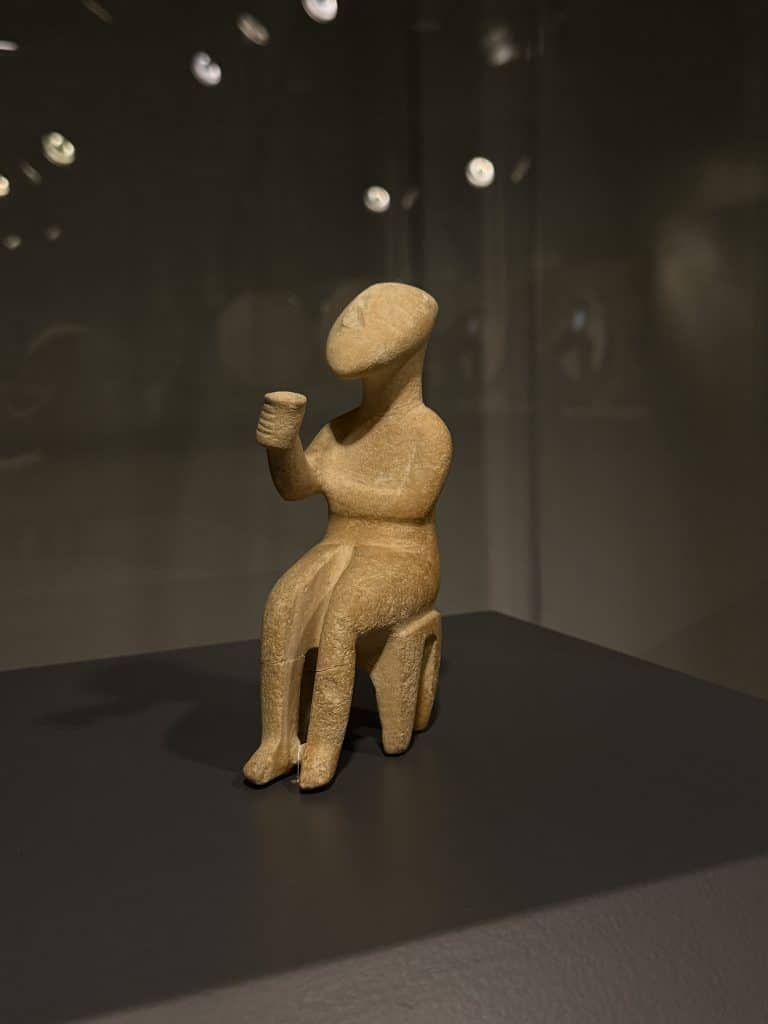
The famous pieces are the Cycladic marble figurines. Small human figures, mostly female, arms folded, with that startlingly clean and modern look. Nobody knows for certain what they were for, and that unresolved quality is a big part of why they hold the attention.
Alongside them are tools, vessels, and everyday objects that fill in how island life worked day to day.
My favourites are the smaller pieces, the so-called “frying pan-shaped vessels”. They had nothing to do with cooking. Archaeologists are still arguing about whether they were ritual objects, mirrors filled with water, or something else entirely.
There is both a permanent and temporary exhibition (at an extra cost).
The funny thing is that you have to pass through the temporary exhibition to get to the temporary, so you basically see everything without paying more.
2. National Archaeological Museum
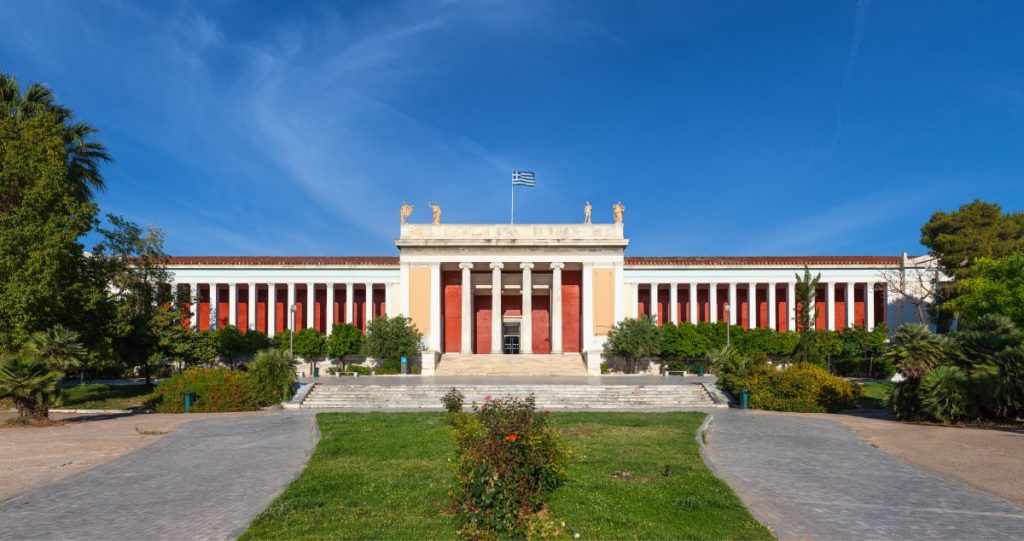
- Address:28is Oktovriou 44, Athens 106 82
- Ticket: €20
- Nearest metro: Victoria or Omonia
- Time needed: 2 to 3 hours, and that still won’t cover it
If you only have room for only one big archaeological museum beyond the Acropolis Museum, this is the one to pick.
For me, the absolute star is the Antikythera Mechanism, a 2,000-year-old object, basically an ancient device that was used to predict astronomical events. It is considered the first computer in history, which is still hard to get your head around.
Another highlight is the Mycenaean collection, including the famous Mask of Agamemnon, the mythical leader linked with the Trojan War.
There is also a beautiful section with the wall paintings from Akrotiri in Santorini, showing nature, animals, and scenes from daily life. It gives the museum a different side beyond all the marble and bronze.
This museum is big, and I don’t recommend trying to see everything. Pick a few sections, take breaks, and don’t rush it.
3. Numismatic Museum of Athens
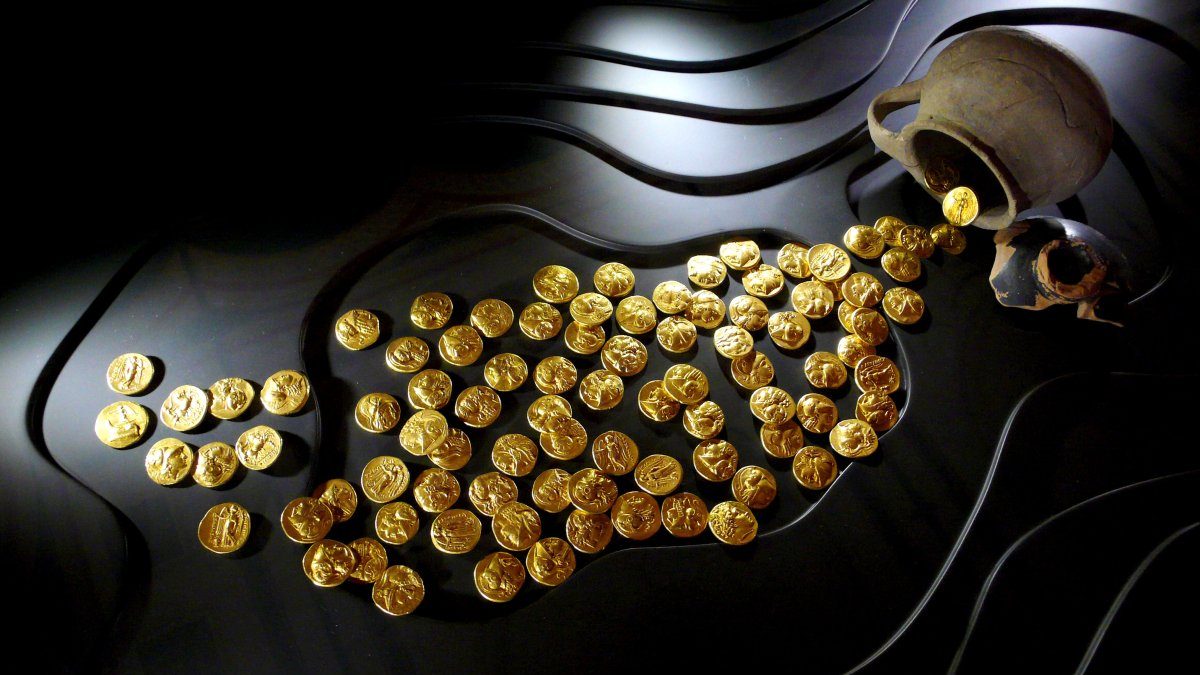
- Address: Iliou Melathron, Panepistimiou 12, 10671
- Ticket: €10
- Nearest metro: Syntagma or Panepistimio
- Time needed: 1 hour, plus however long the garden turns into
This is the museum people skip first, and I’d argue that’s their loss.
Even taking coins as a boring subject, and that’s fair enough, the building alone justifies the ticket. It’s housed in Iliou Melathron, the former home of Heinrich Schliemann, the archaeologist who excavated Troy. The mansion is beautiful and far quieter than anything else sitting directly on Panepistimiou has a right to be.
Inside, the collection runs Greek history through money, from ancient coinage to modern currency. There’s no need to study every case. A general feel for how power, economy, and art changed is enough, and it’s worth noticing how faces, symbols, and myths move across the coins as the politics change.
The garden café is my favourite part, and I’ll say that without embarrassment. Even without doing the museum, the courtyard is one of the calmest places to sit with a coffee anywhere in the centre.
4. Kotsanas Museum of Ancient Greek Technology
- Address: Pindarou 6 and Akadimias, Athens 106 71
- Ticket: €7
- Nearest metro: Syntagma or Panepistimio
- Time needed: 1 to 1.5 hours
For anyone stopped in their tracks by the Antikythera Mechanism at the National Archaeological Museum, this is the next stop.
The Kotsanas Museum is built entirely around working reconstructions of ancient Greek inventions, put together over decades of research from ancient texts and archaeological evidence. Philon’s automatic servant, Heron’s automatic theatre, Ktesibios’ water clock, odometers, cranes, an ancient vending machine, and a full reconstruction of the Antikythera Mechanism itself.
Many of the models are hands-on, and a 2,000-year-old mechanism running in front of the room does something a display case behind glass never quite manages.
It is housed in an Art Nouveau building a couple of minutes from Syntagma that once belonged to the family of Queen Aspasia Manou, and the same building houses a second small museum of ancient Greek musical instruments and games, which is worth the extra twenty minutes.
At €7 it’s one of the better value tickets in the centre, and unlike most museums here it’s open every day, Mondays included.
5. Benaki Museum
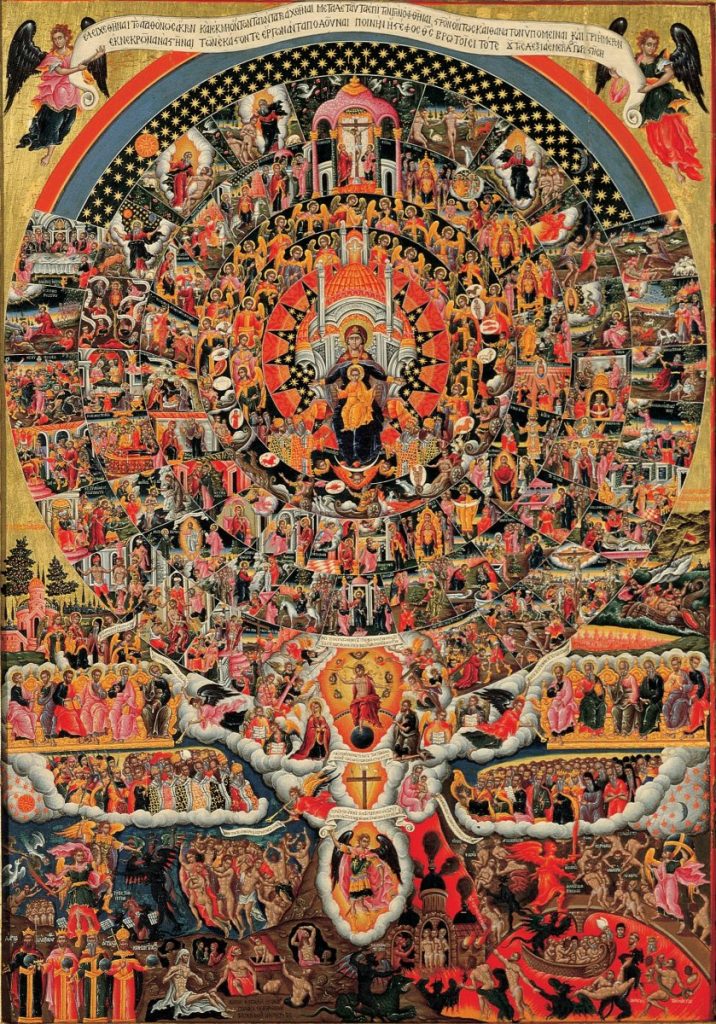
- Address:Koumpari 1, Athens 106 74
- Ticket: €12
- Nearest metro: Syntagma or Evangelismos
- Time needed: 2 hours
If you only go to one museum in Athens that gives you a broader picture of Greek history, this is a very good one to choose.
What I like about the Benaki is that it does not trap you in one period.
You move through ancient objects, Byzantine art, traditional dress, domestic objects, and modern Greek culture in the same visit, so the whole thing feels much fuller than a museum that stays in one lane.
And yes, the roof terrace is part of why I like it. If you need a break, it is a lovely spot for a coffee or something light, with a view over the city and toward the Acropolis.
6. National Historical Museum
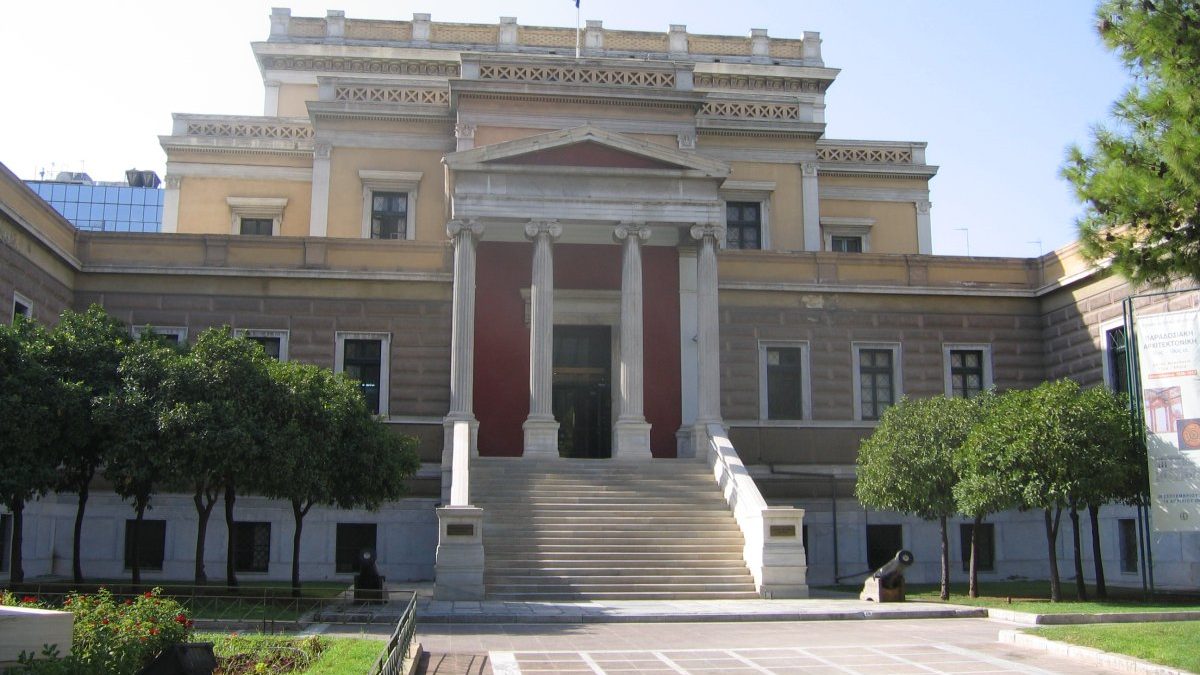
- Address:Stadiou 13, Kolokotroni Square
- Ticket: €10
- Nearest metro: Syntagma or Panepistimio
- Time needed: 1 to 1.5 hours
Housed in the Old Parliament building, this covers the Greek War of Independence, the founding of the modern Greek state, and political life through the 19th and early 20th centuries.
Inside are weapons, flags, documents, paintings, and personal objects that explain how the country became what it is. Both the permanent and temporary exhibitions here earn the time, which isn’t always the case.
It isn’t flashy, but it’s far more interesting than the exterior suggests. It’s also compact enough not to eat a whole day, so it slots easily into an afternoon around Syntagma, Ermou, or Kolonaki.
It is also compact enough that it does not take over the whole day, and you can easily combine it with a walk around Syntagma, Ermou, or Kolonaki later.
7. Goulandris Museum of Natural History
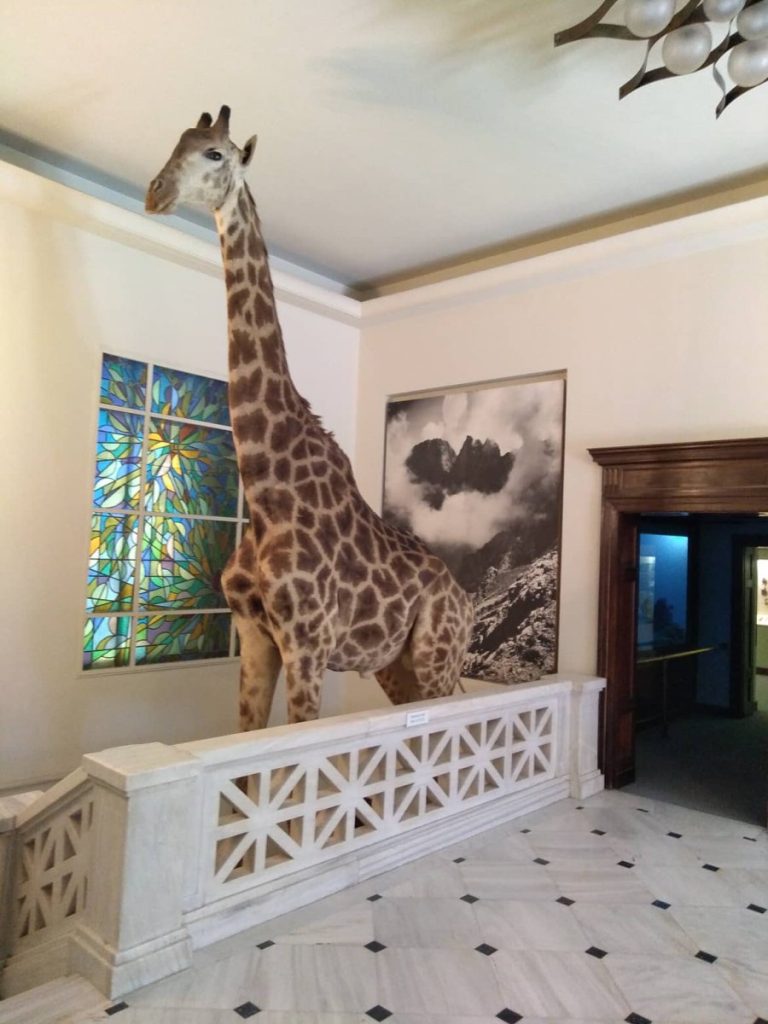
- Address: Othonios 100, Kifisia 145 62
- Tickets: 12€ ($14,07)
This one is up in Kifisia, well outside the centre, which makes it a good choice for anyone travelling with kids and after an excuse to see a different part of the city.
The focus is nature, biodiversity, and the environment, with sections on Greek flora and fauna, geology, and ecosystems. Also dinosaurs, which I probably should have led with.
The standout is the Gaia Centre, a newer extension on climate change and environmental awareness. It’s noticeably more interactive than the rest and works especially well with children.
Worth knowing that Kifisia is a solid 40 minutes from the centre by metro, so treat this as a half day rather than something to squeeze in.
8. Byzantine & Christian Museum
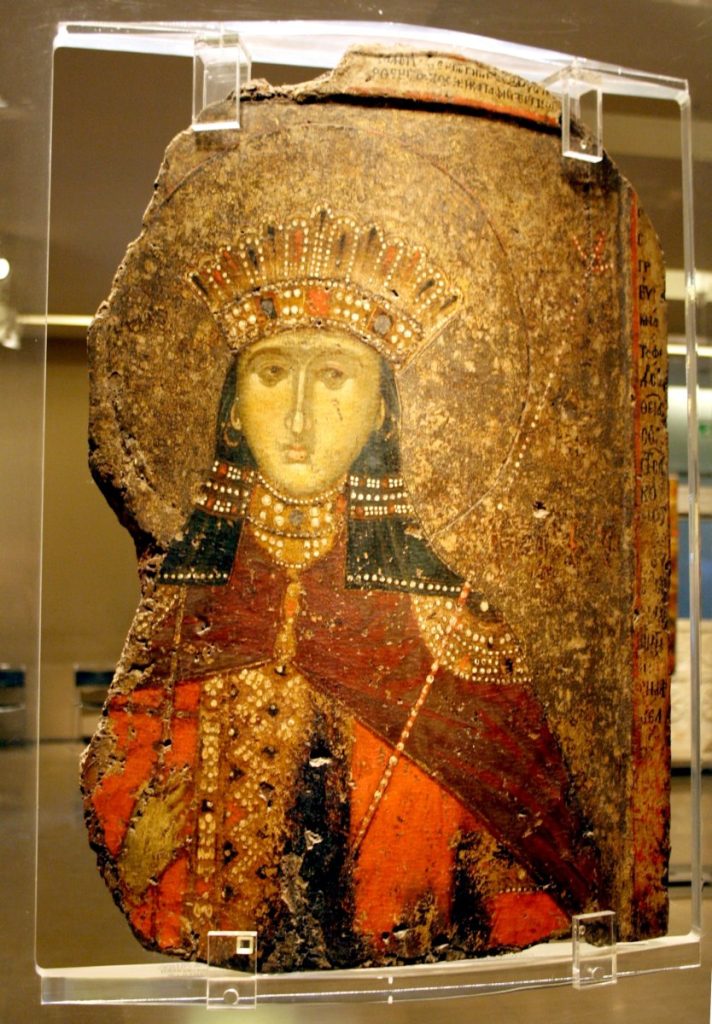
- Address:Vasilissis Sofias 22, Athens
- Ticket: €8
- Nearest metro: Evangelismos
- Time needed: 1.5 hours
Dedicated to Byzantine and post-Byzantine art, with icons, mosaics, frescoes, manuscripts, and everyday objects from that world. It sits in a beautiful old villa, which suits the material well.
The courtyard and garden are among the nicest parts. Peaceful, green, and a good place to stop partway through rather than pushing to the end.
I’d file this as a slow museum. Anyone after another room of classical statues should skip it. For art, religion, and the long Byzantine centuries, it deserves a proper afternoon.
9. The Olympic Museum
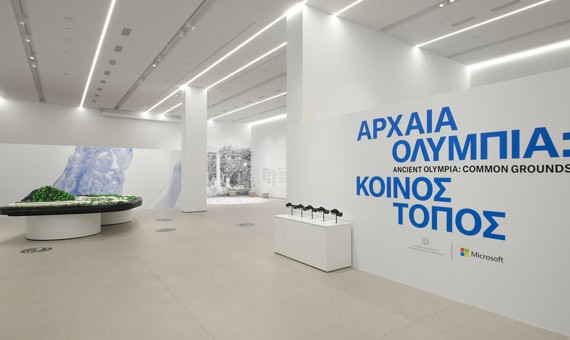
- Address:Kifisias Avenue 37A, Athens 151 23
- Ticket: €8.60
- Nearest metro: Neratziotissa
- Time needed: 1.5 hours
A newer museum covering the Olympic Games from ancient Olympia through to the modern version, up in Maroussi inside the Golden Hall mall and right beside the Olympic Sports Complex.
It runs the story through interactive displays, memorabilia, and original objects, covering the ancient Games, the first modern Olympics in Athens in 1896, and the 2004 Athens Games. It also digs into the bigger themes, competition, national identity, and how the Games turned into a global machine.
Out of everything, my favourite part had to be the display of Olympic torches and sports equipment.
Afterwards, walk outside and around the Olympic complex. Most of the stadiums are still in use, and the Calatrava structures are worth seeing up close.
10. The National Gallery
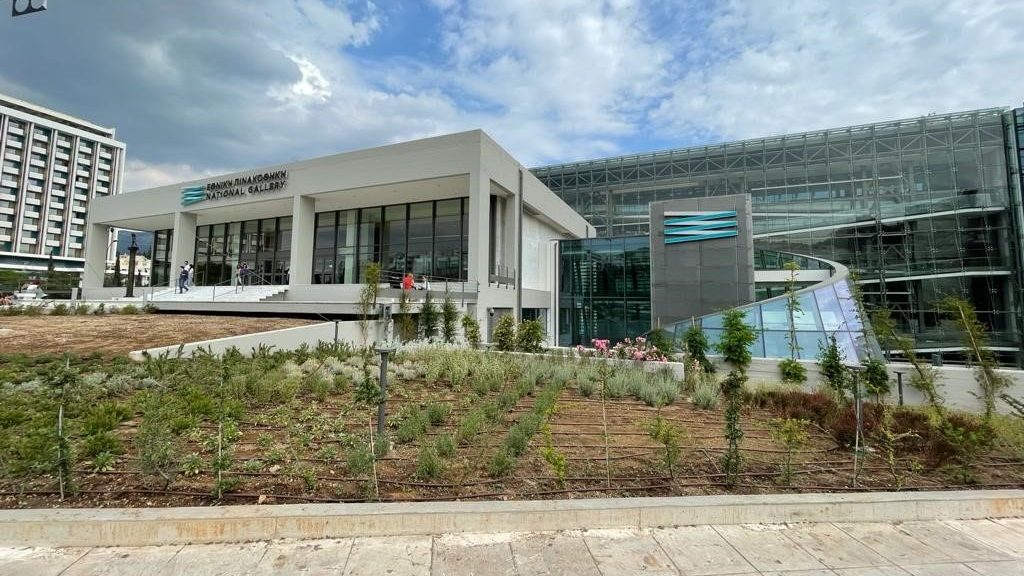
- Address:Vasileos Konstantinou 50
- Ticket: €10
- Nearest metro: Evangelismos
- Time needed: 2 hours
One of my favourites in the city, and the place to go for modern Greek art.
The collection centres on the 19th and 20th centuries, moving through landscapes, portraits, and historical scenes before opening into later work that gets more experimental and less predictable.
The building does a lot of the work. Since the renovation it’s bright, open, and easy to spend hours in without the fatigue that sets in at heavier museums. Plenty of natural light, clean layout, and room to breathe.
Right next door is Roosters, which does very good coffee and pastries, and makes an easy stop afterwards.
11. Museum of Contemporary Art
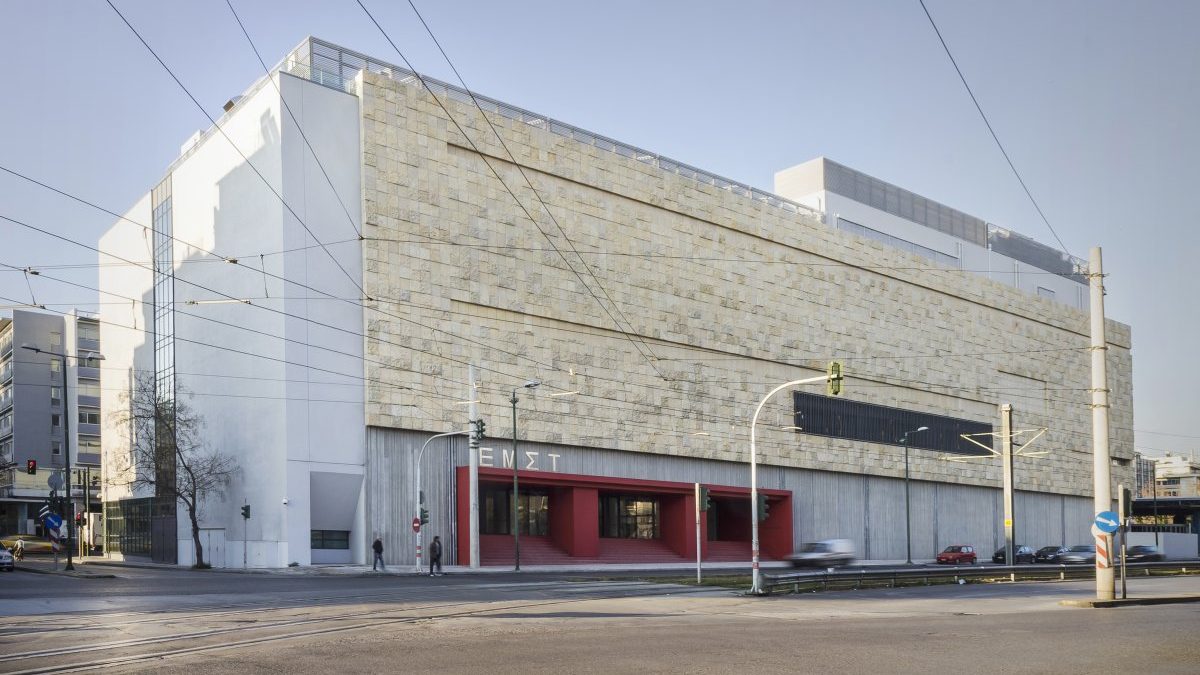
- Address:Kallirrois 53, Athens 117 43
- Ticket: €10
- Nearest metro: Syngrou-Fix
- Time needed: 1 to 2 hours
EMST occupies the former FIX brewery next to Koukaki, which is a good building for it.
Inside, the focus is modern and contemporary work by Greek and international artists, dealing with identity, politics, memory, migration, the body, and the present rather than the distant past. In a city where museum attention overwhelmingly goes to antiquity, that’s a nice change of pace.
The temporary exhibitions rotate regularly and are often very strong, which makes this one of the few museums here worth returning to on a repeat trip.
The views toward the Acropolis from the upper floors are a nice bonus, even if that’s a slightly funny thing to say about a contemporary art museum. From Koukaki, it’s a short walk.
Currently Closed
The Jewish Museum of Greece
I’m keeping this here rather than cutting it, because it’s a museum worth planning a future trip around.
The Jewish Museum of Greece covers a part of Greek history that gets nowhere near enough attention, the long presence of Jewish communities in the country, from antiquity through the Ottoman period and into the 20th century.
It works through personal objects, photographs, documents, and religious items, which keeps the story attached to real lives rather than a distant timeline. One section deals with Jewish life in Greece before the Second World War, with synagogue objects, school notebooks, and family photographs showing how active these communities were. Another covers the Holocaust and the deportations, handled with care, and it stays with me still.
The museum then follows Jewish life after the war and how communities rebuilt, so the story doesn’t end only in loss.
Check the museum’s own site before planning around the reopening date, since renovation timelines here have a way of moving.
The Benaki Museum of Islamic Art
This one deserves a mention because plenty ticket resellers and tour listings still sell it as an open attraction, when it isn’t. The Benaki has listed it as closed since 14 October 2024, with no reopening date given, so treat any third-party page offering tickets with suspicion.
When it does reopen it’s a lovely collection, more than 8,000 objects spanning ceramics, metalwork, textiles, and jewellery from across the Islamic world, in a neoclassical complex built on the ancient walls of Athens, with a top-floor café looking over the Kerameikos excavation.
Worth keeping on a list for a future trip.
Free Museum Days in Athens
State museums and archaeological sites are free to enter on a set list of days each year. When the dates line up, it’s an easy way to see more for less. Quiet is not on offer, though, these are among the busiest days of the year and queues get long.
Annual free days:
- 1 November to 31 March: first and third Sunday of each month
- 6 March: Melina Mercouri Memorial Day
- 18 April: International Day for Monuments and Sites
- 18 May: International Museum Day, including the Acropolis Museum
- Last weekend of September: European Heritage Days
- 28 October: Ohi Day
Two things beyond the calendar. Free tickets can’t be booked online, only collected at the desk. And entry is always free for EU citizens under 25 and under-18s from anywhere, with ID, which quietly settles the whole question for a lot of trips.
The winter Sunday rule has shifted between first-only and first-and-third in recent years, so check the official listing rather than trusting any blog, this one included.
Tips for Visiting Museums in Athens
- Don’t try to do too much. Athens has more museums than any trip realistically fits, and cramming three into a day makes all of them worse. One major museum done properly, plus a smaller one after, is a better day.
- Plan around geography. These are spread across the city, and it’s easy to lose an hour zigzagging. Kolonaki and Vasilissis Sofias alone hold the Cycladic, Benaki, Byzantine, and National Gallery within walking distance of each other.
- Book online for the big ones. It saves queueing, and a screenshot covers for patchy signal inside.
- Use museums against the heat. In an Athens summer they’re one of the best ways to get several hours of air conditioning without losing the day.
- Don’t skip the cafés. A few of them, the Numismatic garden and the Benaki terrace especially, are worth the visit on their own.
- Ask about reductions. Students, seniors, and EU under-25s often pay less or nothing. Nobody will offer, so ask.
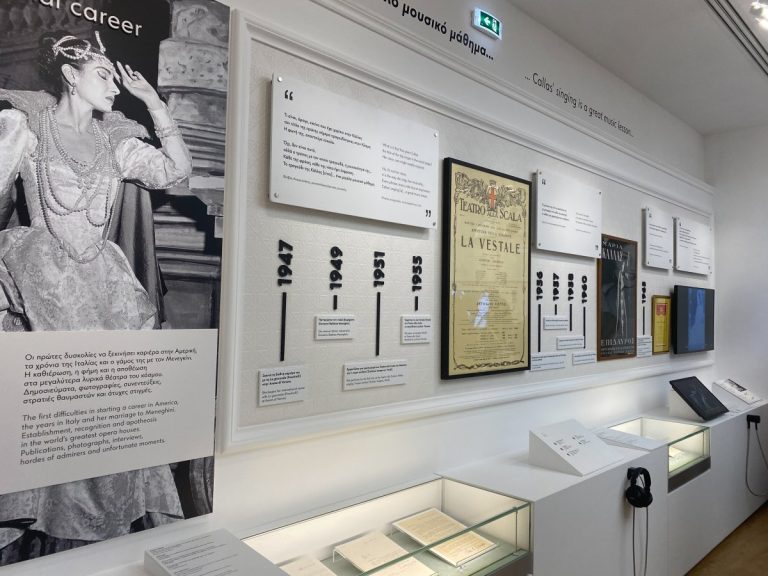
- Leave room for the small ones. The Numismatic, the Cycladic, and the Maria Callas Museum tend to end up as people’s favourite stops, not the giants.
Final Thoughts
A week of moving between museums here still wouldn’t finish the list. The Acropolis Museum deserves its reputation, but it’s one chapter, and some of my favourite hours in this city were spent in places that get a fraction of the attention.
Pick two or three that match a real interest, rather than working through a list because it exists. That’s the whole trick.
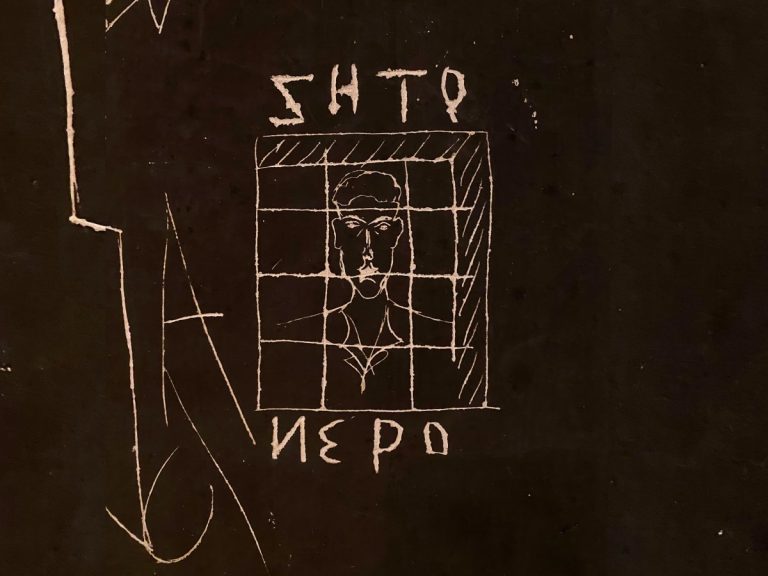
For the rest of the trip, my guide to things to do in Athens covers the wider picture and what to book in advance handles the timing. On ticket costs, the Athens sites I’d skip paying for makes the case that several museum tickets here beat the big archaeological names for value. For something further off the usual route, there’s the Nazi torture site at Korai 4 and the rest of the city’s dark tourism sites.