

How to Get Around Athens: A Transport Guide for Visitors
Athens is a city of 3.5 million, but moving around it is easier than that number suggests. Once the historic centre is reached, most of it is walkable. For everything beyond, there’s a modern metro, buses, trams, taxis, and a few other options of varying usefulness.
Some of those work very well. Others create more problems than they solve. Here’s how each one performs in practice, and what I’d rely on for a few days in the city.
Just so you know: Some links on this page are affiliate links, which means I might earn a small commission if you book or buy through them, at no extra cost to you. Thank you for your support!
1. Walking

While that’s certainly not the case for most of the city, walking is the easiest way to explore the centre.
Most of the main sights are close together, and the area around the Acropolis is largely pedestrianised. Dionysiou Areopagitou is the best example, running along the southern side of the Acropolis and connecting Plaka with Thisseio and Monastiraki.
Athens isn’t always kind to pedestrians though. Pavements are narrow, often uneven, and regularly half-blocked by scooters, poles, or café tables. In summer, heat turns even short walks into a decision rather than a default, which is worth planning around in an Athens July or August.
2. The Metro
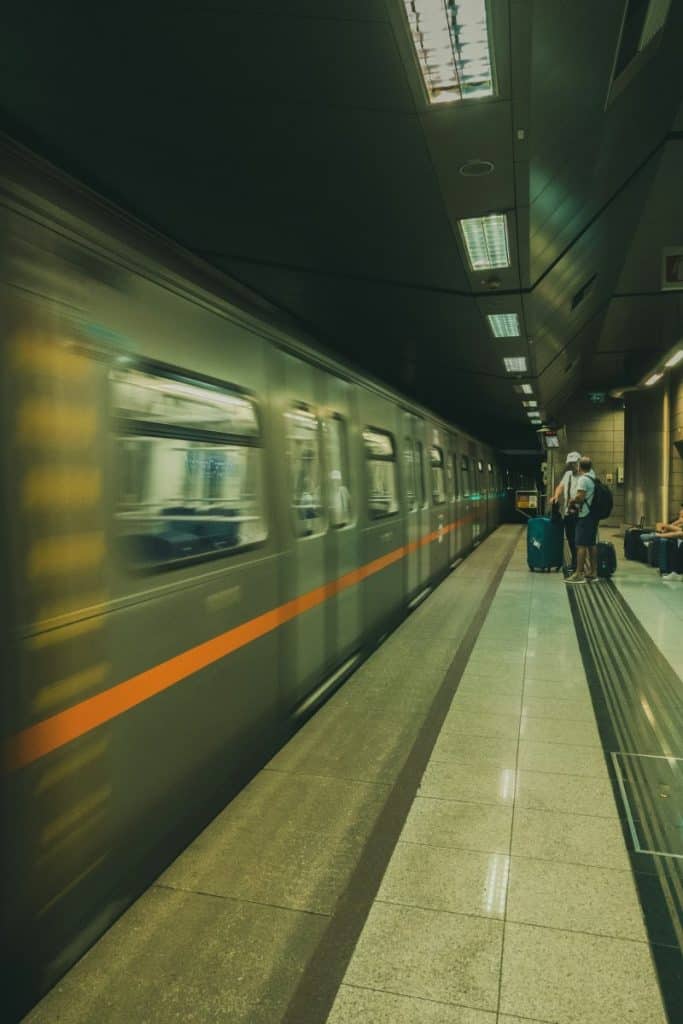
The most reliable way to move around. Modern, clean, safe, and connecting most of what a trip needs, including the airport, Piraeus, and the whole centre.
Three lines, each colour-coded, with stations signed in both Greek and English. Lines 2 and 3 are modern and air-conditioned. Line 1, the green one running to Piraeus, is much older, and in August the difference is noticeable. Trains run every 3 to 15 minutes for most of the day.
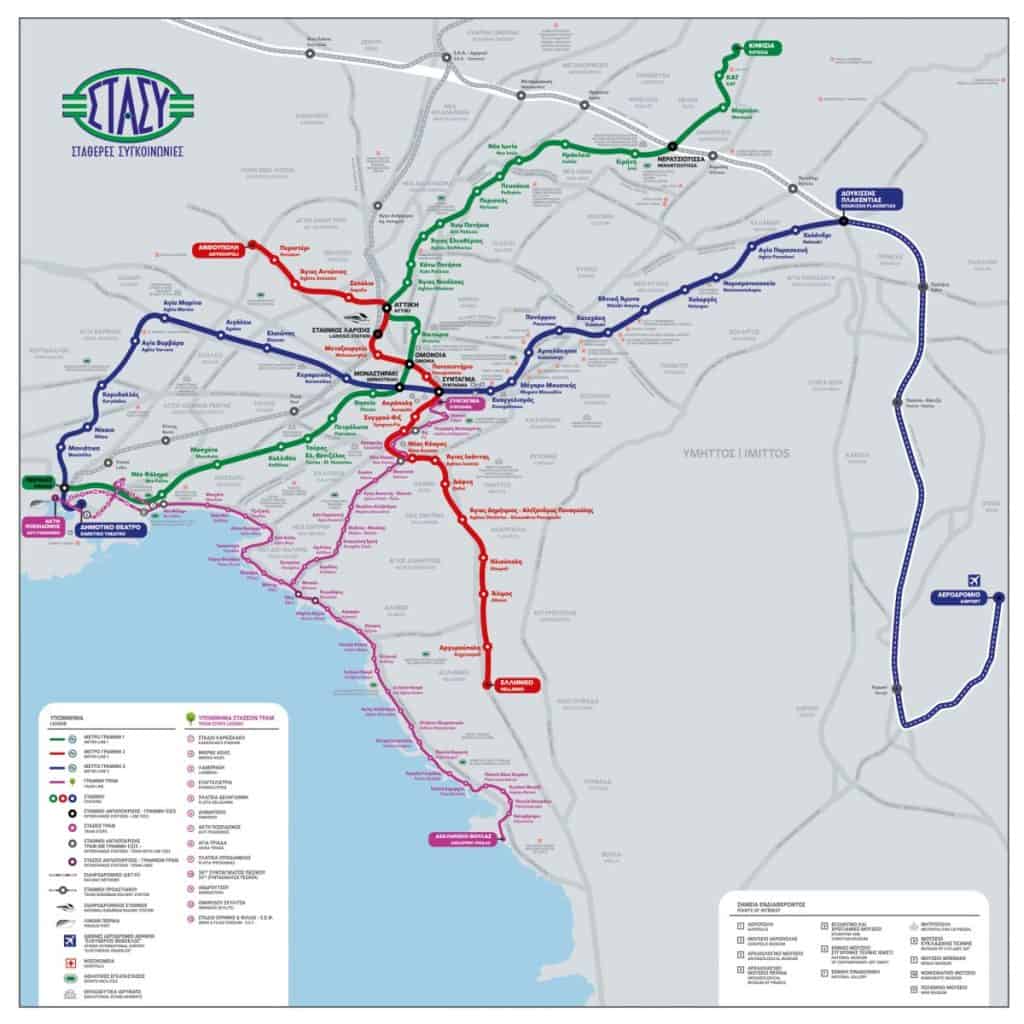
Operating hours:
- Monday to Thursday: 05:30 to 00:30
- Friday and Saturday: Line 1 until 01:00, Lines 2 and 3 running 24 hours on Saturdays
- Sunday: 06:00 to 00:30
Trains to and from the airport run roughly 06:10 to 23:30 only, every 36 minutes. The 24-hour Saturday service does not include the airport.
Ticket Prices
Athens runs a unified ticket, so the same one works on metro, buses, trams, and trolleybuses.
The standard option is the 90-minute ticket at €1.20, with unlimited transfers inside that window. For most days in the city, one ticket covers a whole journey including changes.
Longer options include a 24-hour ticket at €4.10 and a 5-day at €8.20. Multi-ride tickets also exist, at €2.30 for two rides, €5.70 for five, and €12 for ten plus one.
None of those cover the airport route. That needs its own ticket, at €9 one way and €16 return.
The exception is the three-day tourist ticket at around €20, which includes 72 hours of unlimited city transport plus one airport return by either metro or express bus. For a three-day trip arriving and leaving by public transport, that’s the best value on the list.
Tickets come from metro stations, machines, and some kiosks, and can be loaded onto the rechargeable ATH.ENA card, available at Syntagma station. Contactless bank cards also work directly at the validator, which is the simplest option in my opinion.
3. Buses
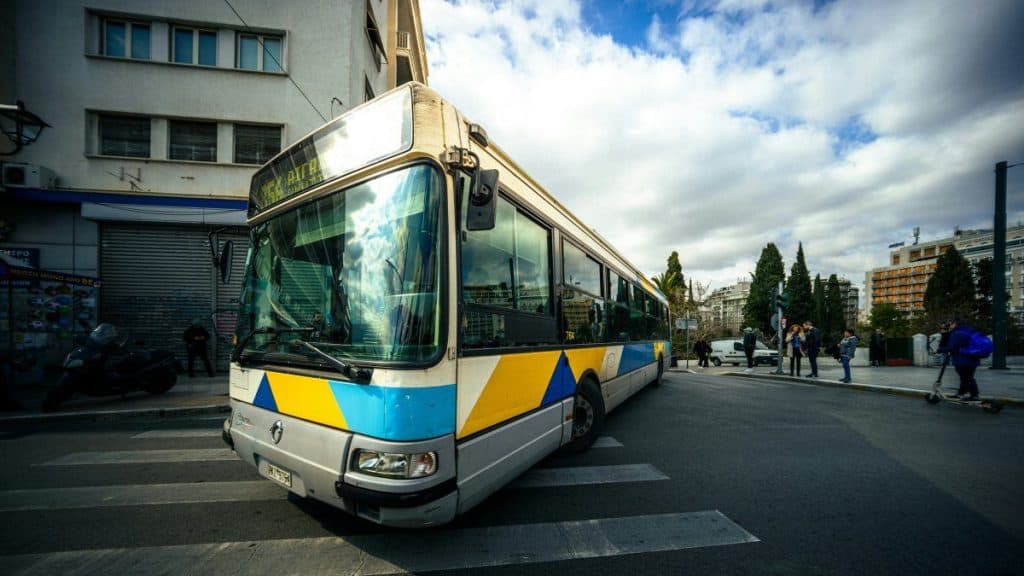
Unlike the metro, which only runs on three lines, buses reach almost every part of Athens.
They connect central neighborhoods, outer districts, and areas that are far from metro stations, which in theory makes them very useful for getting almost anywhere.
In practice, however, they’re not always the most reliable transport option.
First, they share the same roads as cars, so once traffic builds up, delays are very common. There have been efforts to remove cars from bus lanes, but with little progress so far.
The other thing is that not every stop has live arrival information. Some have electronic boards, but many don’t.
And google maps are not always accurate for bus arrivals.
The OASA Transport app helps a lot in that case.
It’s the easiest way to check routes, schedules, and estimated arrivals, even if those estimates are not always perfect.
Because of the above, buses are most useful when you’re not in a hurry or when you’re heading somewhere the metro doesn’t reach.
But if you need to be somewhere at a very specific time, it’s usually safer to rely on the metro or a taxi instead.
4. Taxis
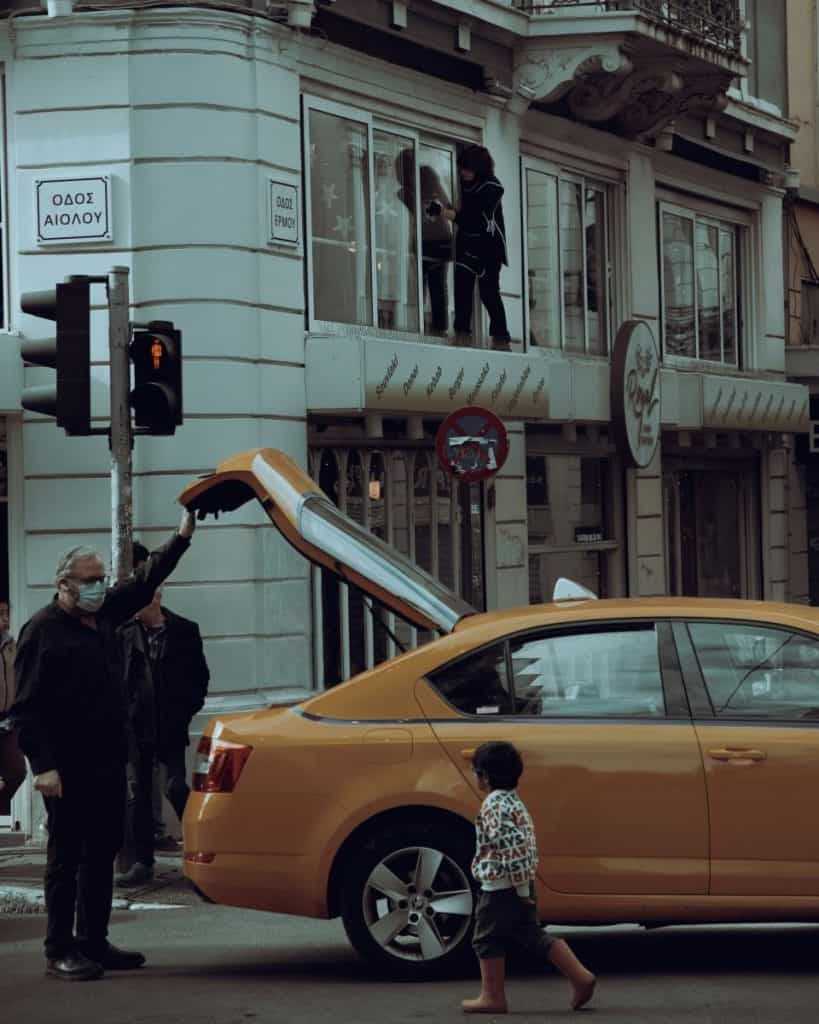
Taxis are everywhere here and not expensive.
They do have however a mixed reputation. Longer-than-necessary routes, inflated quotes, and broken meters remain common enough to be worth guarding against, and they get more common once a driver hears a foreign language.
Which is why booking through an app beats hailing from the street, every time. FREE NOW and Uber both connect to regular licensed taxis rather than private drivers, and both record the route and fix the pricing, which removes most of the room for argument.
Taxis come into their own late at night, after a long day, when the heat wins, or when public transport stops being worth the effort. My Athens taxi guide covers fares, the specific scams, and when one is the right call after all.
5. The Tram
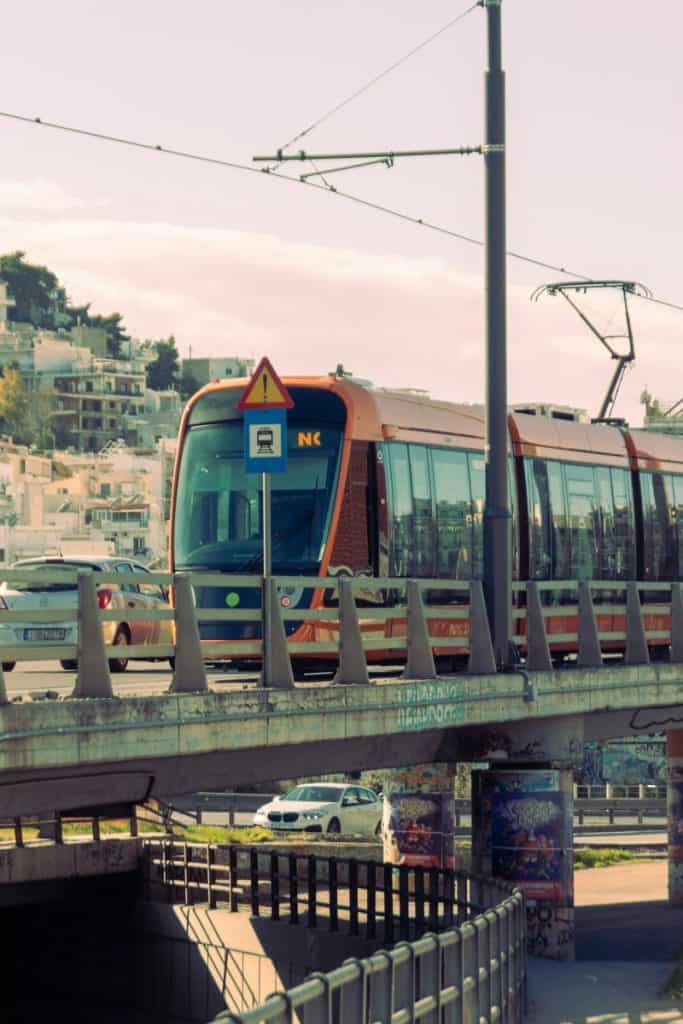
The tram serves the southern coastal stretch, linking the centre with the Athens Riviera through Palaio Faliro, Glyfada, and Voula.
That makes it useful mainly for a day at the sea or a stay in the southern suburbs. It’s slow, running at street level with frequent stops, so it’s the wrong choice for crossing the city quickly.
As a ride it’s pleasant enough, particularly once the coast opens up alongside. For anyone heading that way, my beaches guide covers which stops are worth getting off at, and the Riviera guide covers staying down there.
6. Trolleybuses
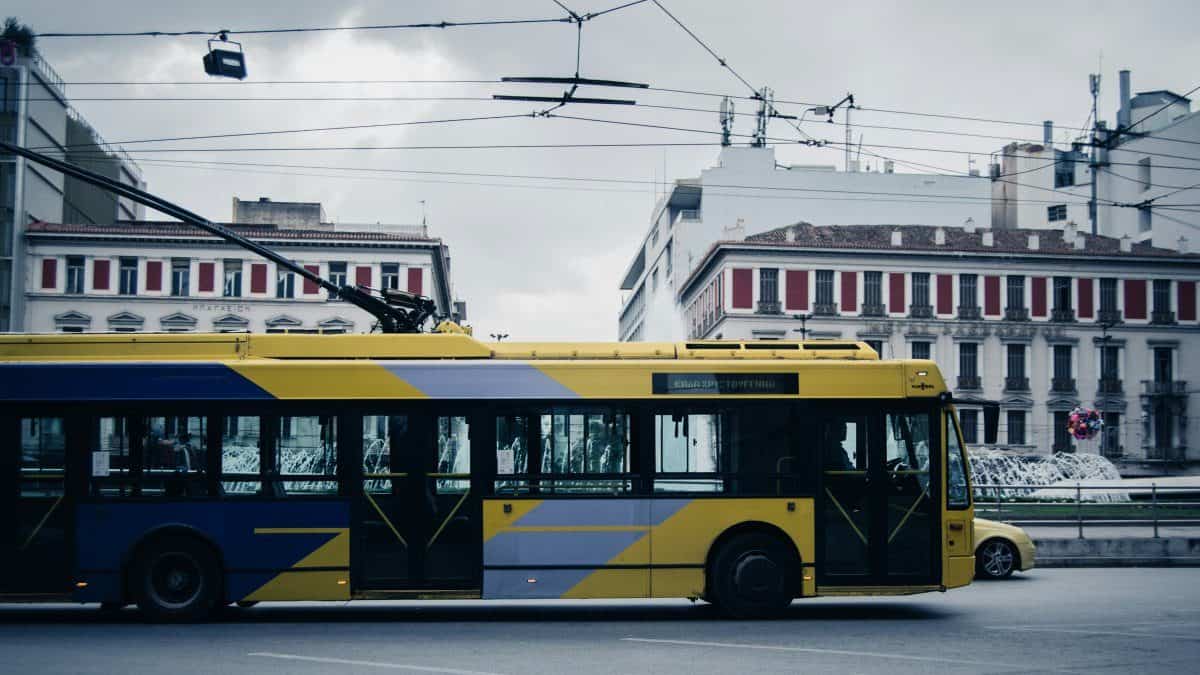
Athens also runs trolleybuses, the electric ones connected to overhead wires. They cover central districts and older parts of the city, and function much like regular buses.
The system is being phased out. In 2026 Greek authorities announced plans to replace them with modern electric buses over the coming years, so this is one to use while it lasts.
7. Cycling
Cycling isn’t part of daily transport here. The city wasn’t designed for it, dedicated lanes are limited, and traffic is rough enough that central streets aren’t safe without real familiarity with the local driving.
So biking is better as an activity than as transport. There is one real exception, a long bike and pedestrian path running from Gazi toward the coast, finishing near the Stavros Niarchos Foundation Cultural Center.
It follows part of the old tram corridor and passes through quieter residential areas, and it’s a “scenic” ride rather than a way of getting somewhere.
Safety on Public Transport
Public transport in Athens is very safe. The one thing worth attention is pickpocketing in crowded spaces, which concentrates around Syntagma, Monastiraki, and Omonia, and on packed trains at rush hour.
Keep bags closed, valuables out of easy pockets, and pay a bit more attention when a carriage fills up. That covers it. My Athens safety guide goes into the wider picture.
Final Thoughts
Athens isn’t the tidiest city to move around, and that becomes clear fast. Some parts work very well. Others depend too heavily on traffic, timing, and luck.
The right approach depends on where the hotel is, what time the flight lands, how much luggage is involved, and how much patience survives a full day in the heat.
Two things worth reading alongside this. My Athens taxi guide covers how they work before the moment of standing on a street corner negotiating with a driver. And my airport guide covers transfers, metro connections, and what makes sense after a late flight.
For what all of this costs across a trip, my Athens cost guide has the daily figures, and where to stay in Athens covers which neighbourhoods reduce the transport question to almost nothing.