The 25+ Best Reasons to Visit Syria in 2026
If you’ve been considering a truly off-the-beaten-track destination for your next vacation, let me make a case for Syria. Rich with historical treasures, home of the best cuisine you’ll ever try, and the place to find warm, welcoming locals, it has everything make your visit unforgettable.
In this article, you’ll find 25 compelling reasons to visit Syria in 2026. While it has faced its share of trials, it is a country with an enduring spirit and an incredible capacity to rebuild and renew. 2026 is the time to see it in all its glory!
Just so you know: Some links on this page are affiliate links, which means I might earn a small commission if you book or buy through them, at no extra cost to you. Thank you for your support!
How to Travel to Syria in 2026
Yes, it is now possible to travel to Syria.
In recent years, the country has reopened its borders to foreign visitors, and in 2023 alone, more than one million international tourists visited, along with 1.2 million Syrians returning from abroad.
That year also marked the first time American tourists were officially allowed to enter Syria. U.S. citizens can now visit Syria for tourism, following the removal of long-standing travel restrictions.
Travelers planning a trip in 2026 can find up-to-date information in my detailed Syria travel guide.
Between 2018 and 2025, travel to Syria required booking through a licensed local tour operator. While this rule appears to have changed under the new government, using a local agency is still recommended due to recent political and logistical changes.
We chose to do our trip with Golden Team Syria. They have one of the most reputable travel agencies in the country. They took care of everything for us before we arrived. They were excellent professionals and tried their best to fulfill every request that we had.
Is It Safe To Travel To Syria In 2026?
This was one of the most common questions I got asked (and still do) from everyone who knew about me traveling to Syria. My biggest safety concern before the trip was what I could do myself to ensure safety.
Finding travel insurance for Syria was far harder than I expected. Most insurers either flat-out refused to cover the destination or excluded anything meaningful once you mentioned it. I spent hours comparing policies, reading fine print, and hitting dead ends. It was frustrating to plan a trip while constantly worrying about whether I’d actually be insured if something went wrong.
That’s when I came across IATI Travel Insurance. Unlike many providers, IATI offers coverage for travel to higher-risk destinations like Syria. Their policy covered my trip and gave me real peace of mind, not just paperwork, but genuine protection I could rely on. Knowing I wasn’t traveling uninsured made a huge difference in how confident I felt about travelling to Syria.
Another reason I chose IATI is how affordable they are compared to other insurers that offer similar coverage. Their plans include 24/7 emergency assistance in your own language (Can you imagine the struggle speaking in another language when something goes wrong?), medical coverage without any deductibles, and repatriation.
On top of that, you can get 5% off your policy when you book through my link, which makes an already reasonable price even better. If you’re struggling to find insurance for destinations others won’t touch, IATI is absolutely worth checking out.

Did I feel safe in Syria? – My personal experience
Despite what I heard in the news, during the entire time I was exploring Syria, I felt as safe as anywhere else I’ve been to. For me, it was no different from any other Middle Eastern country.
As long as you are with your guide and listen to what they advise you, you‘ll be alright. You will pass many checkpoints and see a lot of soldiers, but they are there to protect you. You’ll always be greeted with a smile and a warm “Welcome.”
Obviously, I cannot guarantee anyone’s safety when traveling to Syria, and you always travel at your own risk. However, I can say that there was no place in the country where I felt insecure, even a tiny bit.
Is it Ethical to travel to Syria?
Now comes the difficult part. There has been an ongoing debate about whether it is ethical to travel to Syria – or any country that has experienced conflict in recent years. Even after I decided to plan this trip, one question kept running through my mind: “Am I making the right choice?”
Many people asked if I had thought it through, while others criticized the idea outright, calling it irresponsible before I had even left. But after spending several days in this incredible country and having the chance to talk with locals, I feel I’ve found my answer.
You can read more about my reflections and reasoning in my article on traveling to Syria.
How has Syria changed as a Travel destination for 2026?
Let’s talk about what happened in Late 2024. Basically, a rapid, widespread offensive by opposition forces swept through major cities, culminating in the capture of the capital Damascus on 8 December 2024. This is considered to have brought an official end in the decade-long civil war. In the aftermath, a transitional government was established under a provisional administration.
After speaking with a few people, I have been told that the situation for tourists has not changed from when I was in Syria myself.
Syria has undergone significant changes in the past few years, transforming into a unique travel destination. The country’s infrastructure has seen significant improvements, making travel within Syria easier and more comfortable. New hotels, restaurants, and transportation systems have been established as well.
Syria has also been working to ensure the safety and security of visitors. The country has massively improved its safety standards in the past few years. And that’s one of the good reasons to visit Syria.
Do I need VPN for Syria?
Using a VPN in Syria is a smart move for both privacy and access while traveling. Internet infrastructure is not the best, with most public Wi-Fi in hotels, cafés, and airports being unsecured. On top of that, internet activity was widely monitored under the previous government, so protecting your online privacy is essential.
A VPN encrypts your connection, protecting sensitive data like passwords, emails, online banking details, and booking confirmations from potential interception.
I personally use and trust NordVPN. At the moment, it offers thousands of servers across 165 locations throughout the world, meaning that there are always fast servers to choose from, no matter the location. It is also is a five-times audited service to ensure that your online activities remain confidential, your activities will be private and your devices risk-free.
Lastly, there’s a 24/7 chat, which is very helpful if you need assistance. Visit their website to learn more.

What is the best time of the year to visit Syria?
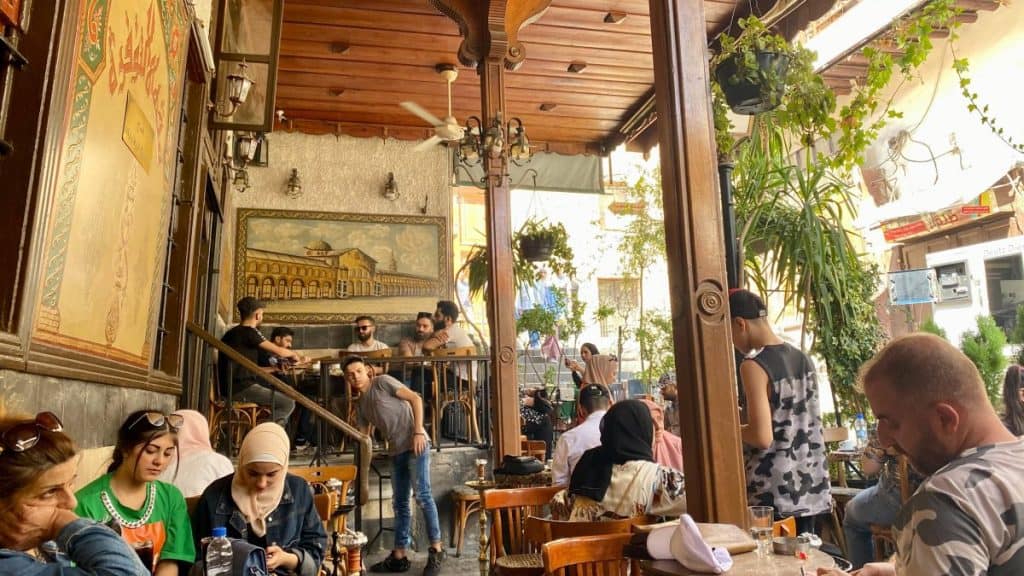
Syria, due to being situated in the Middle East, experiences a Mediterranean climate along the coast and a desert climate in the east. This means that the best times to visit Syria are during the spring and fall seasons when the weather is most pleasant.
Spring, from March to May, is a particularly good time to visit Syria. The temperatures are moderate, making it comfortable for sightseeing and exploring the country’s rich history. The landscape is also at its most beautiful during this time, with wildflowers blooming across the countryside. Fall, from September to November, is another ideal time to visit Syria. The weather is similar to spring.
Visiting Syria in the winter, from December to February, can also be an option for those who enjoy cooler weather. However, it’s worth noting that many areas can experience heavy rainfall or snowfall, and the desert regions can get quite cold at night.
Summer, from June to August, is the hottest time to visit Syria, with high temperatures that can often be insufferable. We traveled during August, and it was indeed hot. However, if you plan to visit the coastal areas, the Mediterranean Sea can provide a refreshing escape from the heat.
25 Reasons to Visit Syria in 2026
1. Syria has a Rich History
Syria is a country where history is everywhere you look. In Damascus, Aleppo, every street, building, and ruin seems to tell a story. For thousands of years, empires have passed through – Assyrians, Persians, Romans, Byzantines, Ottomans – and each left its mark, shaping the culture, architecture, and traditions that still survive today.
Walking through the cities, you see the past and present side by side. Roman columns stand in busy markets, medieval citadels watch over neighborhoods, and centuries-old mosques and churches remain active. History isn’t locked in books here, it’s lived by the people and visible in the everyday rhythm of life.
For anyone who loves history, Syria is impossible to forget.
2. For the Archaeological Sites
Syria is a treasure trove for anyone who loves archaeology. From the ruins of Palmyra to the ancient walls of Aleppo and the historic sites around Damascus, there is so much to see.
For me, the archaeological sites felt alive. The scale and craftsmanship are remarkable, and even small details, like carvings or mosaics, reveal a lot about the lives, beliefs, and artistry of the past.
3. For the Ancient Ruins
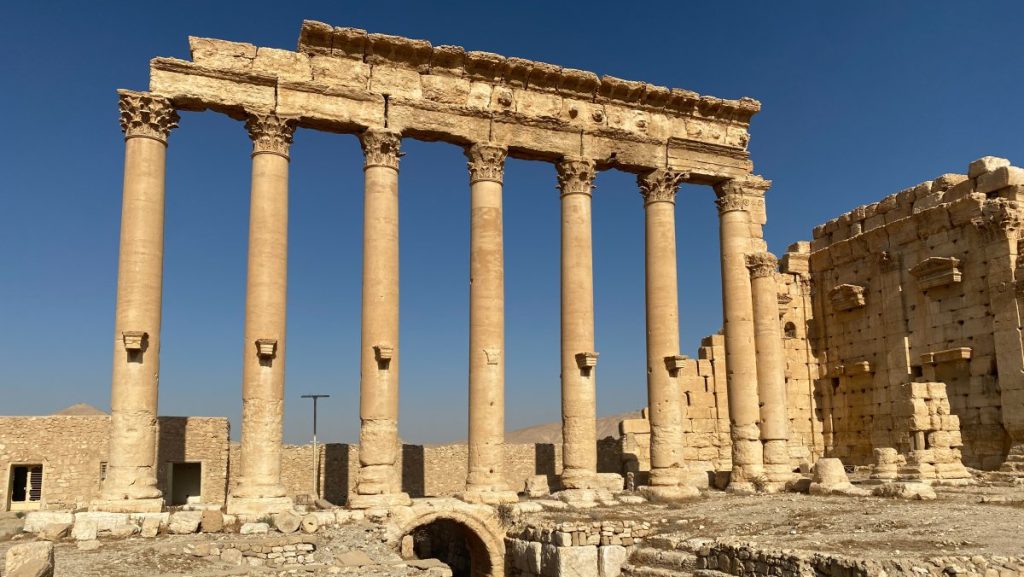
Syria has ancient ruins that really make you feel the past. Places like Palmyra and Bosra show the cities and civilizations that once thrived here. Walking among old temples, arches, and streets, it’s easy to imagine what life was like so long ago.
The ruins show a lot about the people who built them, their culture, beliefs, and daily routines. Standing in these places, you can feel the history around you and connect with a world that existed centuries before ours. It’s an experience you don’t forget.
4. For the Roman Architecture
Syria is a paradise for Roman architecture enthusiasts. The country was a significant part of the Roman Empire, and as such, it hosts plenty of Roman ruins.
One of the most notable sites is the city of Bosra, which is home to one of the most well-preserved Roman theaters in the world., which could seat up to 15,000 spectators.
Syria also houses the ruins of Apamea, an ancient city that was once one of the largest in the Roman Empire. The city’s main street, lined with columns for over two kilometers, is truly impressive.
Lastly, Syria’s capital, Damascus, also bears the imprint of Roman architecture. The city was an important hub of the Roman Empire, and it still retains elements of its Roman past, such as the eastern gate of the city.
5. For the Landscapes
Experiencing the country’s natural beauty is among the reasons to visit Syria. From the Mediterranean coastline to the desert landscapes, Syria offers a variety of different options. You’ve got deserts, mountains, coastal stretches, and green fields all rolled into one stunning country.
Picture yourself driving through scenic routes, flanked by olive trees on one side and breathtaking mountains on the other – or maybe getting lost at the endless horizon of the Syrian desert.
Sounds amazing, doesn’t it?
6. For the Art and Culture
Syria’s art and culture are alive in every corner. From the intricate mosaics and architecture to traditional music, crafts, and local festivals, the creativity here is part of daily life. Visiting markets, museums, or even small workshops, you get a sense of the skill and pride that generations have passed down.
What I loved most was seeing how culture blends with everyday life. People gather in cafés, play music in the streets, or create art in tiny shops, and it feels like you’re sharing in something very real and personal.
7. For the Grand Souks
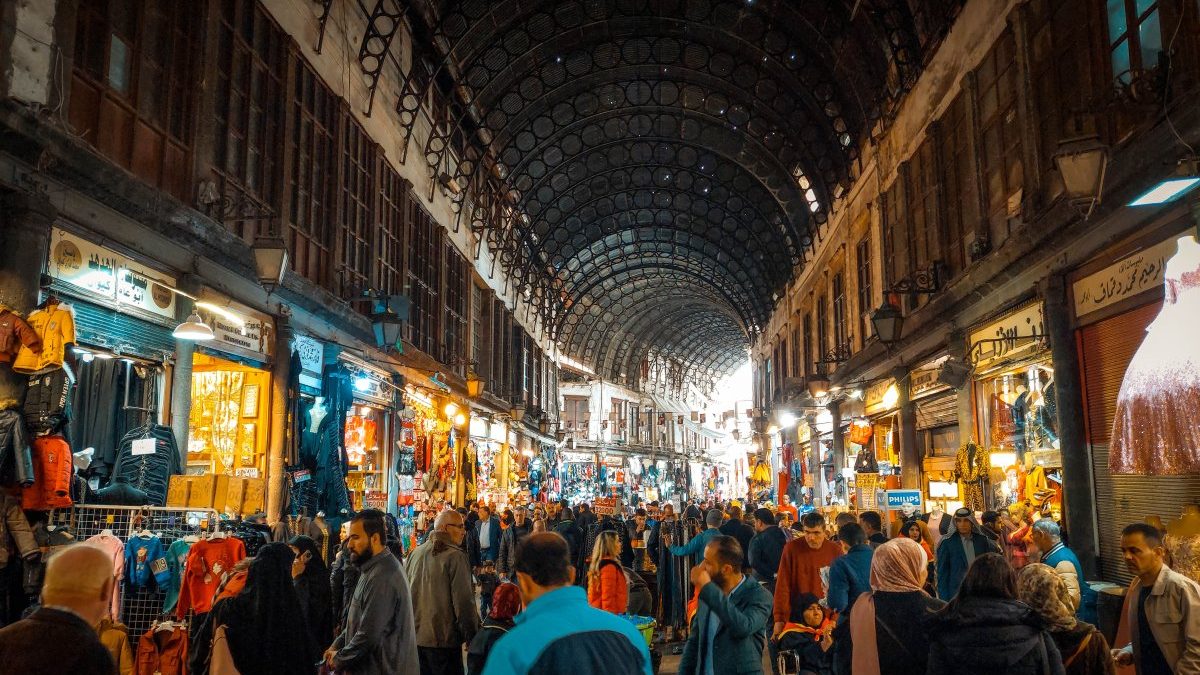
The Grand Souks, or traditional markets, are a very important part of Syrian culture. They are labyrinths of narrow alleyways lined with small shops selling everything from spices and textiles to jewelry and antiques. The souks are a social hub where locals gather to chat, bargain, and exchange news.
Many of the shops are housed in centuries-old buildings, and the traditional methods of trade are still very much in practice. You’ll see artisans at work, creating beautiful handicrafts, and vendors haggling over prices with customers.
One of the most famous is the Souk al-Hamidiyya in Damascus, which is known for its iconic iron entrance and its wide range of goods. As you walk through it, you’ll be captivated by the aroma of spices, the glitter of gold jewelry, and the rich colors of the textiles.
Another must-visit is the Souk al-Madina in Aleppo, one of the largest and oldest covered markets in the world. It’s a UNESCO World Heritage site and a standing proof to the city’s historical role as a crossroads of culture and trade.
Many souks have also food stalls selling local delicacies like falafel, shawarma, and sweet pastries. You can also find vendors selling fresh fruits, vegetables, and local produce.
8. For a Spiritual Journey
Syria felt like a place where faith lives side by side in harmony, and that’s what made my visit so special. Walking through the streets, I saw ancient churches and mosques standing close together, and people practicing their traditions respectfully alongside one another.
I was amazed at how Christianity and Islam have coexisted here for centuries. The respect and connection between communities gave the country a warmth and depth that I’ll never forget.
For me, visiting Syria was a reminder of how different beliefs can thrive together.
9. For the Cuisine
Syria’s food was one of the highlights of my trip. I loved the creamy hummus, and crispy falafel more than anything.
Street food was just as exciting. Tasting snacks from small vendors, watching how they prepared everything with care, made me appreciate the pride Syrians take in their food.
The smells, the tastes, the energy of the markets and cafés, they all made eating feel like a way to meet the people, learn their traditions, and enjoy a simple pleasure that unites everyone.
10. For the Museums
Syria’s museums are of surprising quality. Walking through them, I saw artifacts, old tools, and art that showed how people lived centuries ago.
I was surprised by how alive it all felt. Spending time in the museums made me appreciate Syria in a different way. It’s one thing to read about history, but being surrounded by it makes you feel connected to the lives of people who came before.
11. For the rich craft traditions
Syria has a long tradition of handmade crafts, and you can still see it everywhere. Walking through old markets and workshops, I watched artisans working with wood, metal, textiles, and glass, often using the same techniques passed down through generations.
What stood out to me was the care and patience behind each piece. These aren’t souvenirs made quickly for tourists, rather objects made with skill, pride, and history. Talking to craftsmen and seeing them at work gave me a deeper respect for their craft.
The craft traditions in Syria feel deeply connected to everyday life. Buying something handmade there felt meaningful, not just because of what it was, but because of the story, time, and hands behind it.
12. It is home to the best soap in the world
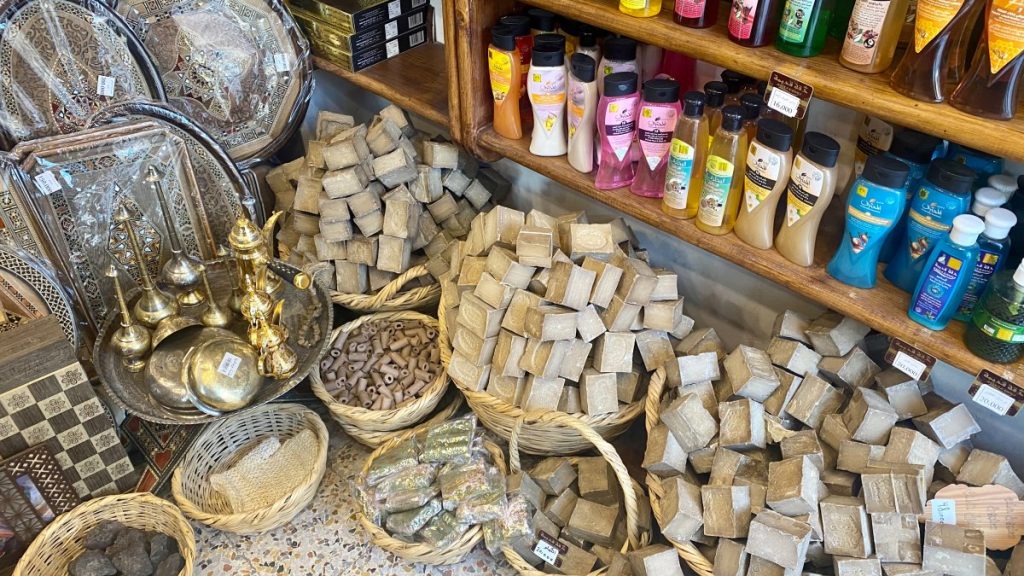
Aleppo soap is one of those simple things that carries a lot of history. Made from olive oil and laurel oil, it has been produced in the city for centuries, using methods that have barely changed over time.
Walking through Aleppo, you’ll often see stacks of these earthy green blocks drying in shops and workshops. It’s known for being gentle on the skin and completely natural, long before “natural skincare” became a trend.
Buying Aleppo soap felt like taking home a small piece of the city. It’s practical, meaningful, and connected to a tradition that has survived war, earthquakes, and time itself.
13. For the warm hospitality
What stayed with me most in Syria was the hospitality. From the first day, people were kind, curious, and genuinely welcoming. Strangers would stop to talk, offer help, or invite us to sit and share a coffee, simply because they wanted to connect.
I was surprised by how open people were, eager to share their stories and ask about ours. There was no rush, no formality, just honest conversations and small gestures that made us feel at home.
14. For the Music and Dance
Music and dance are a big part of everyday life in Syria. Doesn’t matter if it’s traditional songs playing in a café or music drifting through the streets during a celebration, it always feels close and familiar.
I loved how music brings people together. Dancing often starts casually, with a few people clapping or moving along, and suddenly everyone is involved. There’s no pressure to be perfect, just to join in and enjoy the moment.
15. Because you’ll be helping the locals
Traveling in Syria felt meaningful because I knew my presence was helping, even in small ways. Eating at local restaurants, buying handmade goods, and hiring local guides all directly support people who have been through years of hardship.
What struck me was how much those small choices matter. Many locals depend on tourism to keep their businesses going, and visitors are not taken for granted. Spending money locally felt less like consumption and more like participation.
Knowing that my trip contributed, even a little, made the experience deeper. It was about supporting real people and their livelihoods.
16. Because it is not touristy yet
Syria, argely due to the country’s recent history, remains relatively untouched by mass tourism. However, as the situation improves, more and more travelers are beginning to discover the unique charms of this Middle Eastern country.
Syria offers an authentic travel experience that is increasingly hard to find in more popular tourist destinations. You can explore ancient ruins, bustling markets, and stunning landscapes without having to contend with large crowds or the commercialization that often accompanies mass tourism.
17. Because It is very affordable
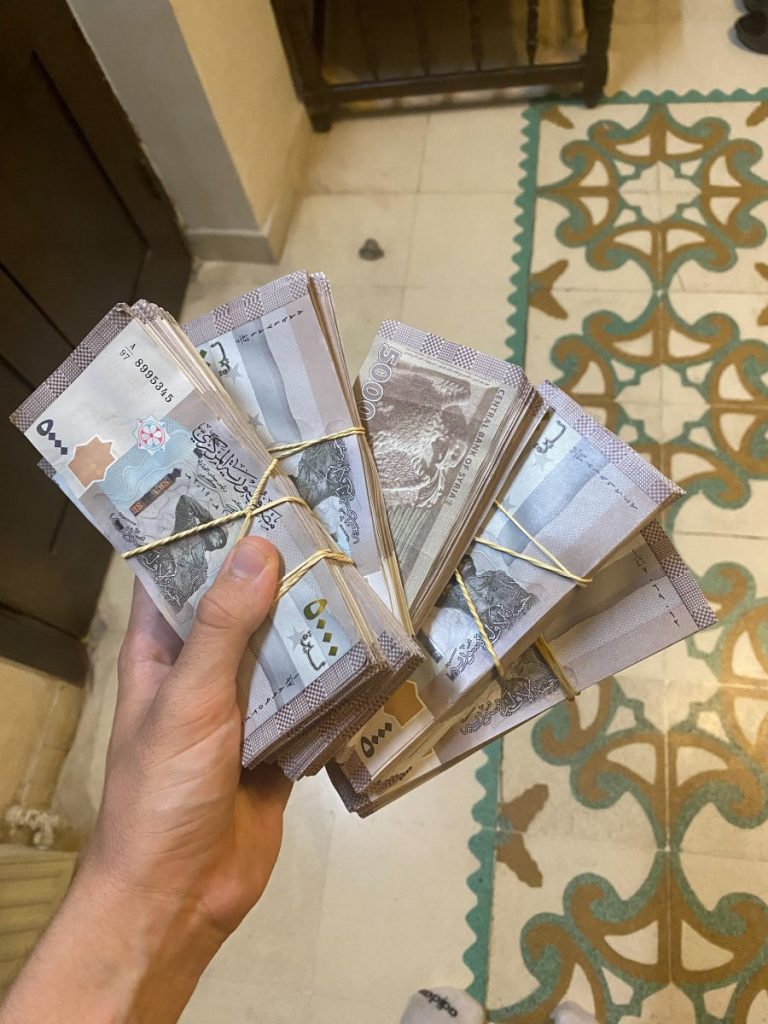
Syria is actually a very affordable country to visit. It is the cheapest country I have been to. A full traditional meal for 3-4 people at a middle-to-high-end restaurant will set you back around $15-20 USD in total. A sandwich will cost around $1-2 USD, and a soda $1 USD maximum.
Small souvenirs like keychains etc., cost around $0.5 USD per piece. As you can see, traveling to Syria on a budget can be very easy. However, there are more expensive and high-end options if you are a person who likes luxurious options.
18. For the Personal Growth
Traveling in Syria challenged the way I see the world. Being there, talking to people, and witnessing everyday life after so much hardship forced me to slow down and really listen. It made me more aware, more patient, and more open.
The conversations I had stayed with me. Hearing different perspectives on life, loss, and hope made me reflect on my own values and assumptions. It wasn’t always easy, but it was honest and real.
I left Syria feeling changed in a quiet way. The trip helped me grow, not through big moments, but through small interactions that reshaped how I understand resilience, gratitude, and human connection.
19. For the educational experiences
Traveling in Syria felt like learning outside of any classroom. Every day brought new lessons through conversations, places, and small moments that helped me understand the country beyond headlines and history books.
Talking with locals, guides, and drivers gave me insight into daily life, recent history, and how people see their future. These personal stories taught me far more than any article or documentary ever could.
The experience was deeply educational because it was real. Being there challenged what I thought I knew and helped me learn through listening, observing, and engaging with people in their own environment.
20. For the Sustainable Tourism Initiatives
Sustainable tourism initiatives are a critical aspect of travel in the modern world, and Syria is no exception. In Syria, there are several sustainable tourism initiatives that aim to ensure that tourism has a positive impact on the environment, society, and economy.
21. For the Ice Cream
Bakdash is a famous ice cream shop in the Al-Hamidiyah Souq. Established in 1895, it is known for serving some of the most delicious and traditional Syrian ice cream.
What sets Bagdash ice cream apart is its unique texture, achieved by using mastic, an extract from the mastic tree, and sahlab, a flour made from the roots of the plant orchid. These ingredients give the ice cream a distinct chewy quality, making it quite different from the typical creamy texture ice creams.
Bagdash is a historic shop that’s loved by locals and visitors. In fact, it is so famous and loved that, during the war, another branch was built in Amman to serve Syrian refugees!
22. To Witness the Evil Face of War
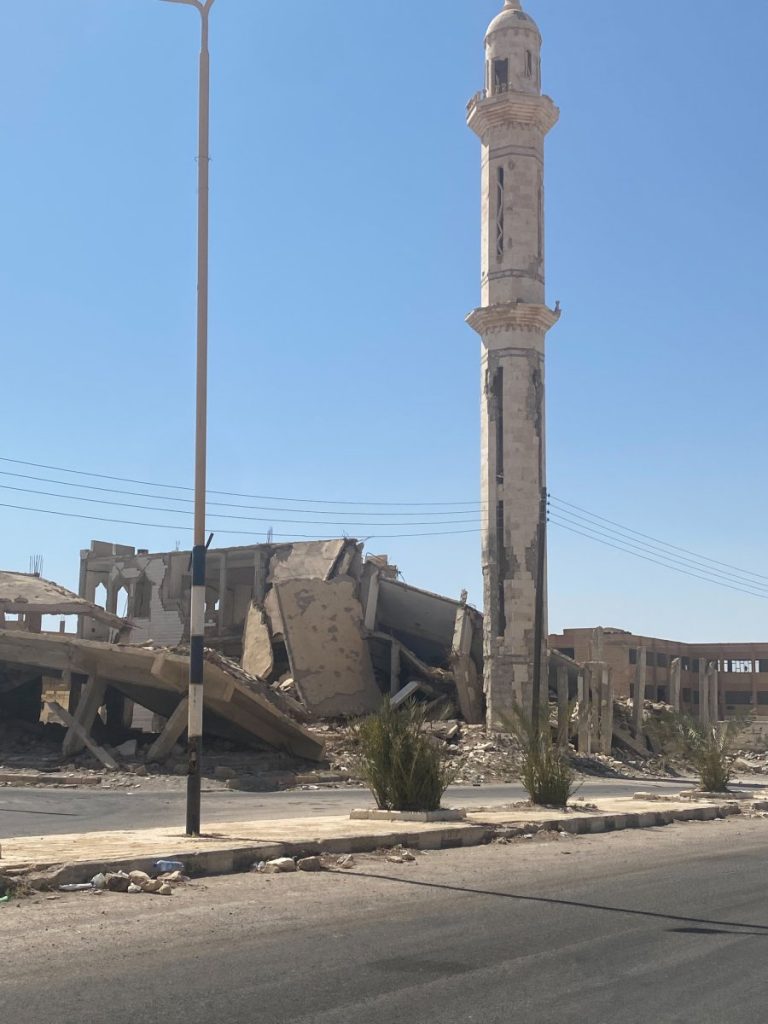
Witnessing the remnants of war is not about glorifying conflict, but rather understanding its impact and learning from history. Syria, having experienced a devastating civil war, offers a unique perspective on the resilience of humanity and the power of rebuilding.
Visiting Syria allows you to see firsthand the effects of war, including the destruction of infrastructure and historical sites. This can be a powerful reminder of the cost of conflict and the importance of peace.
Syria’s war-torn cities, such as Aleppo and Homs, are slowly being rebuilt. Visiting these places offers a glimpse into the process of recovery and the strength of the Syrian people.
23. For the drinking culture
This might sound surprising, but Syria has a lively and diverse drinking culture. Influenced mainly by Syria’s Christian minority, Damascus is home to many bars and clubs, like those in Europe. These bars provide a relaxed atmosphere for socializing, making them a central part of Damascus’s vibrant nightlife scene.
24. To hear a fairytale at a traditional cafe
One of the most magical experiences in Syria is sitting in a traditional café and listening to a local storyteller. The atmosphere, the warm lights, the smell of coffee, and the gentle murmur of other guests make it feel so unique.
The storyteller’s voice, the pauses, and the small gestures brought the story to life in a way that feel personal and alive. In that moment, surrounded by locals and the rhythm of the café, you can feel the culture, imagination, and history of Syria come together in the simplest and most unforgettable way.
25. Because you can have a traditional Syrian Wedding
If you’re dreaming of a truly unique wedding in Syria, Golden Team Syria makes it possible. They handle all the details, from venues to local traditions, making the planning process smooth and stress-free.
They understand the culture, the customs, and the little details that make a wedding feel authentic and special.
With their help, you can have a celebration that’s memorable for everyone attending. It’s a way to experience Syrian hospitality and tradition in a personal and unforgettable way.
What are the best places to visit in Syria in 2026?
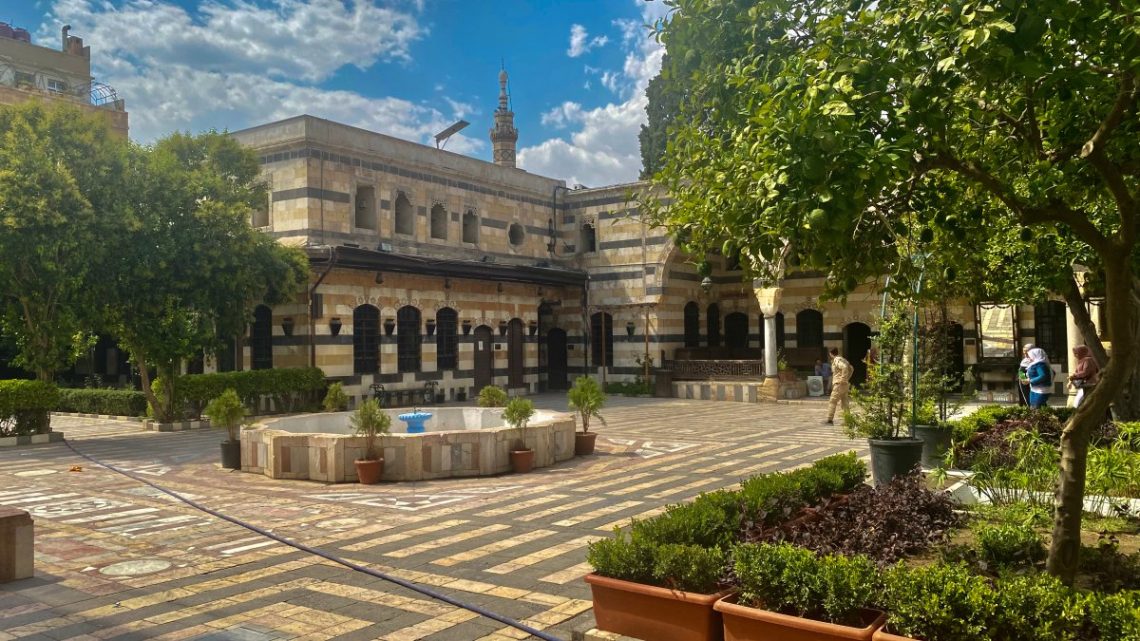
1. Damascus
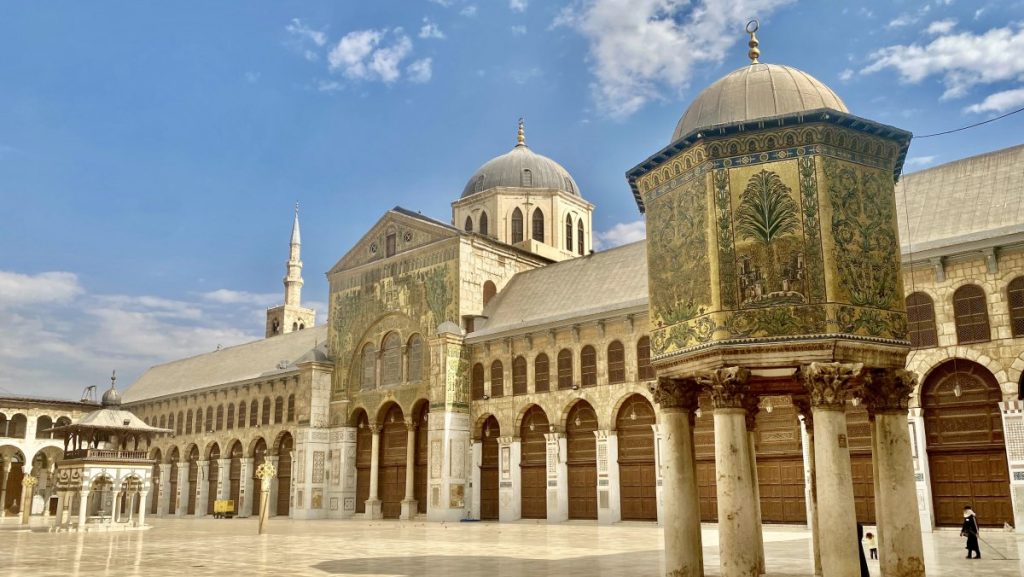
Damascus is the kind of city that stays with you long after you leave. Walking through the Old City, I felt the weight of centuries all around me.
The markets are alive with color and sound. Spices, fabrics, and handmade crafts fill the stalls, and the smell of fresh bread and coffee drifts through the streets. I loved stopping at small cafés, sipping tea, and just watching life go by. It’s easy to get lost here, and getting lost is part of the magic. You never know what small shop, fountain, or quiet corner you might stumble upon.
But what really made Damascus special for me was the people. Everywhere I went, locals welcomed me with curiosity and warmth. Families gathered in the streets, friends laughed in cafés, and strangers offered help with a smile. It made me realize that the heart of the city isn’t just in its history or buildings – it’s in its people, and in the way they continue to live, laugh, and carry on amidst everything they’ve been through.
If you want to find the best things to do in Damascus, you can read my guide to Syria’s historic capital.
2. Aleppo
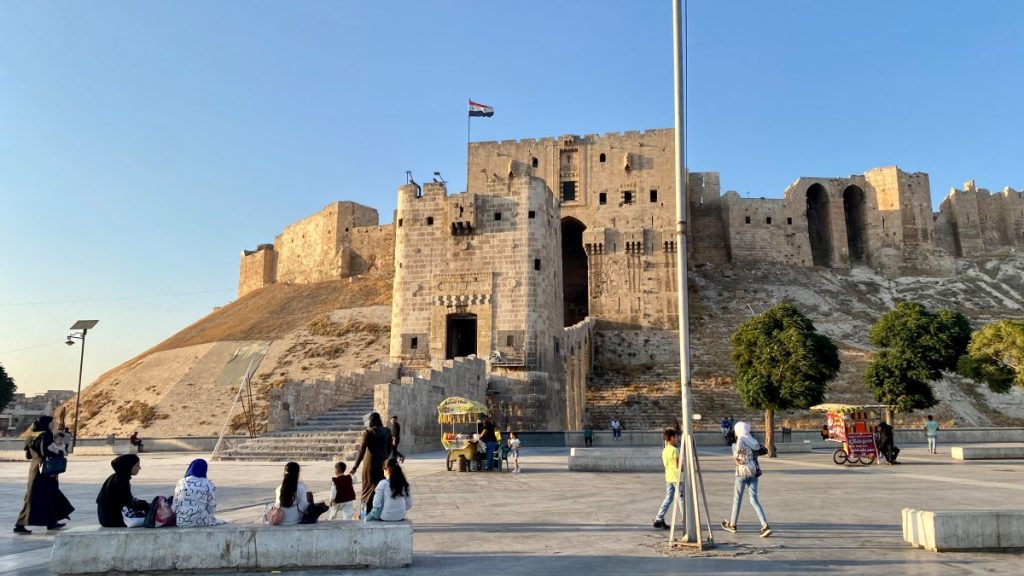
Aleppo is the second biggest city in Syria, dating back to the 6th millennium BC. Its streets are alive with history. Walking through the city, I could feel its resilience and the weight of everything it has endured.
I loved wandering through the markets, stopping at small shops, and chatting with locals. What stayed with me the most was the people. Despite the scars of war and recent hardships, families gather in the streets, children play, and neighbors laugh together. Their warmth and spirit are impossible to miss.
You can find all the reasons to visit this legendary city in my comprehensive guide.
3. Palmyra
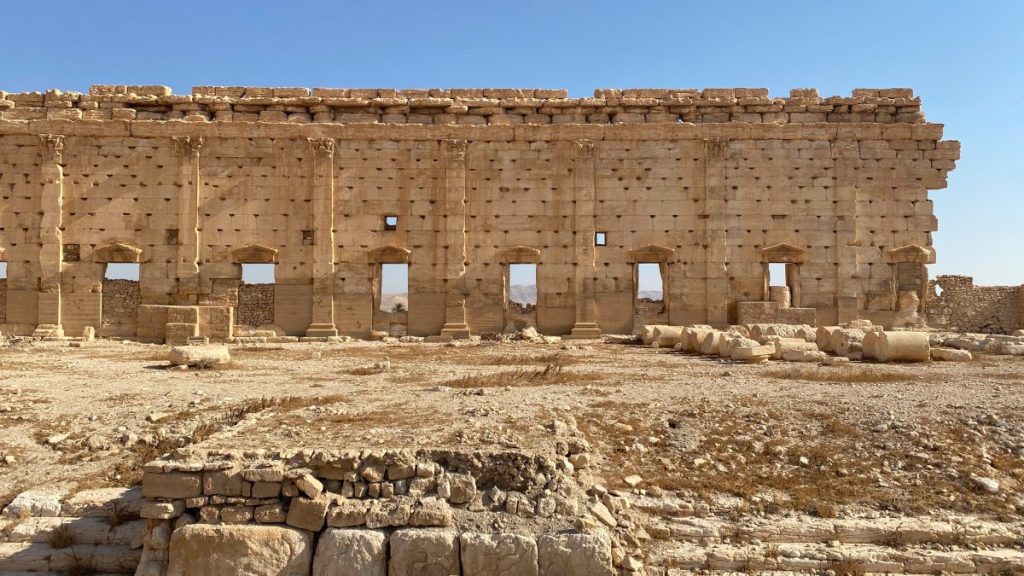
Palmyra is an ancient city located in the middle of the Syrian desert. It’s a UNESCO World Heritage Site and one of the most important cultural centers of the ancient world.
Palmyra has a rich cultural history. It was the home of Queen Zenobia, who led a famous revolt against the Roman Empire. The city’s museum houses many artifacts from this period, including statues, jewelry, and coins.
Despite the great damage inflicted during the Syrian Civil War, restoration efforts have been underway to preserve and restore Palmyra’s historic sites. The city remains a symbol of Syria’s rich history and resilience.
You can learn more about visiting Palmyra in 2026 in my travel guide dedicated to the sight.
4. Homs
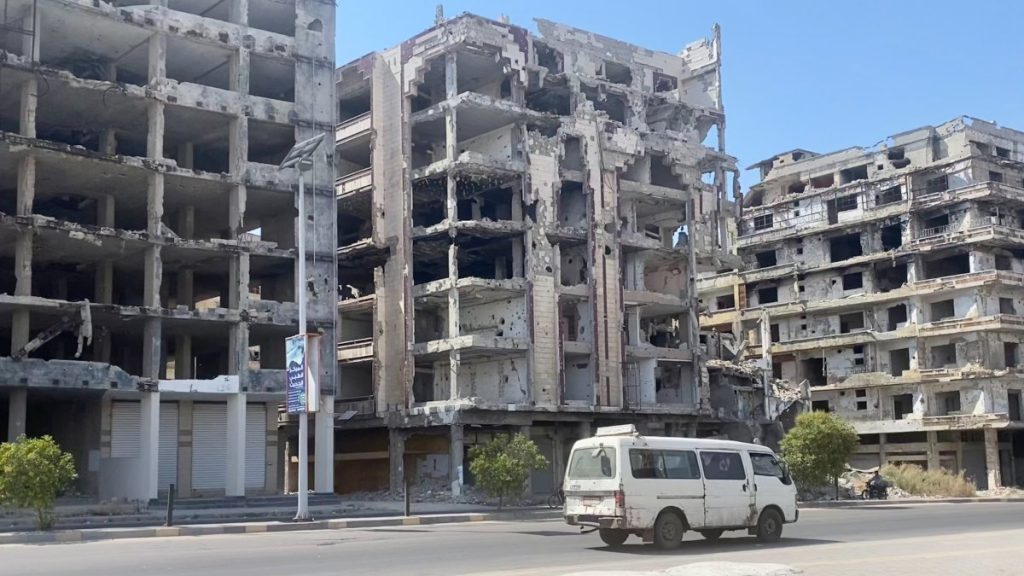
Homs is a city of layers. Ancient history, resilient communities, and everyday life. It offers a chance to see Syria beyond the headlines.
Visiting Homs is less about ticking off sights and more about experiencing the rhythms, flavors, and stories that make it uniquely alive.
Though it carries the marks of the past, it is slowly rebuilding, welcoming those willing to explore its streets and meet its people with curiosity and respect.
Find out why Homs is more than just a stop-over in my special guide to Syria’s overlooked city.
5. Krak des Chevaliers
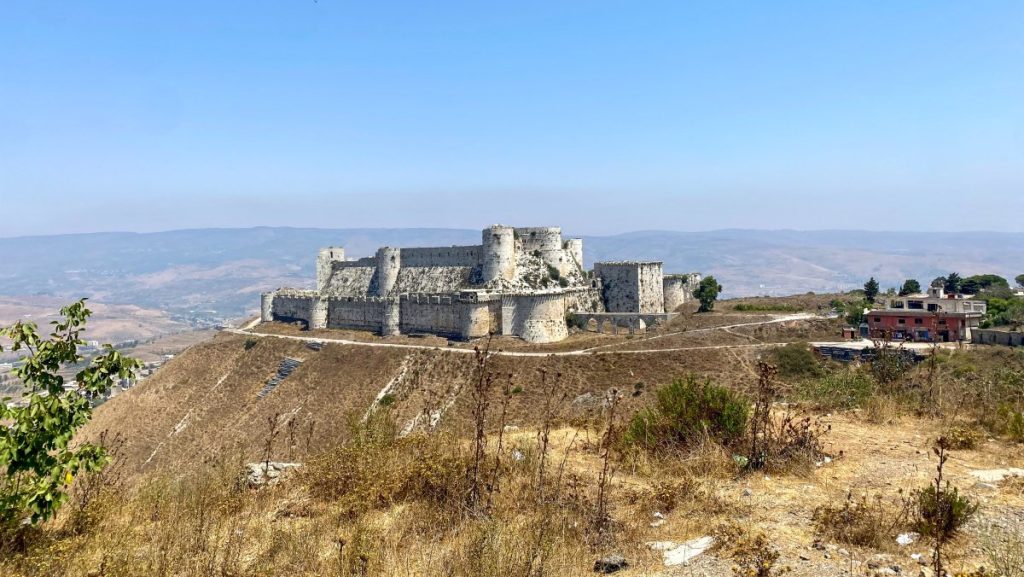
Krak des Chevaliers is one of the best preserved medieval military castles in the world. Located approximately 40 kilometers west of the city of Homs, it is a significant stop for anyone visiting the region.
Constructed by the Order of Saint John of Jerusalem during the period of the Crusades, the castle was a central figure in the defense of the Holy Land. It was built on the site of an earlier castle erected by the Emir of Aleppo.
The castle’s strategic location on a 650-meter-high hill between Homs and Tartus allowed the Hospitallers to control the gap between the mountains and the sea. From here, they could monitor and control the route from Antioch to Beirut, which was vital for trade and military movements.
The castle fell to the Mamluk Sultan Baibars in 1271 after a siege, marking the end of Crusader presence in the region. It remained in use until the 19th century, after which it became an archaeological site and a tourist attraction.
Despite damages during recent conflicts, Krak des Chevaliers remains largely intact and was listed as a UNESCO World Heritage site in 2006. The castle is, indeed, magnificent and I could spend many hours exploring it.
6. Ma’loula
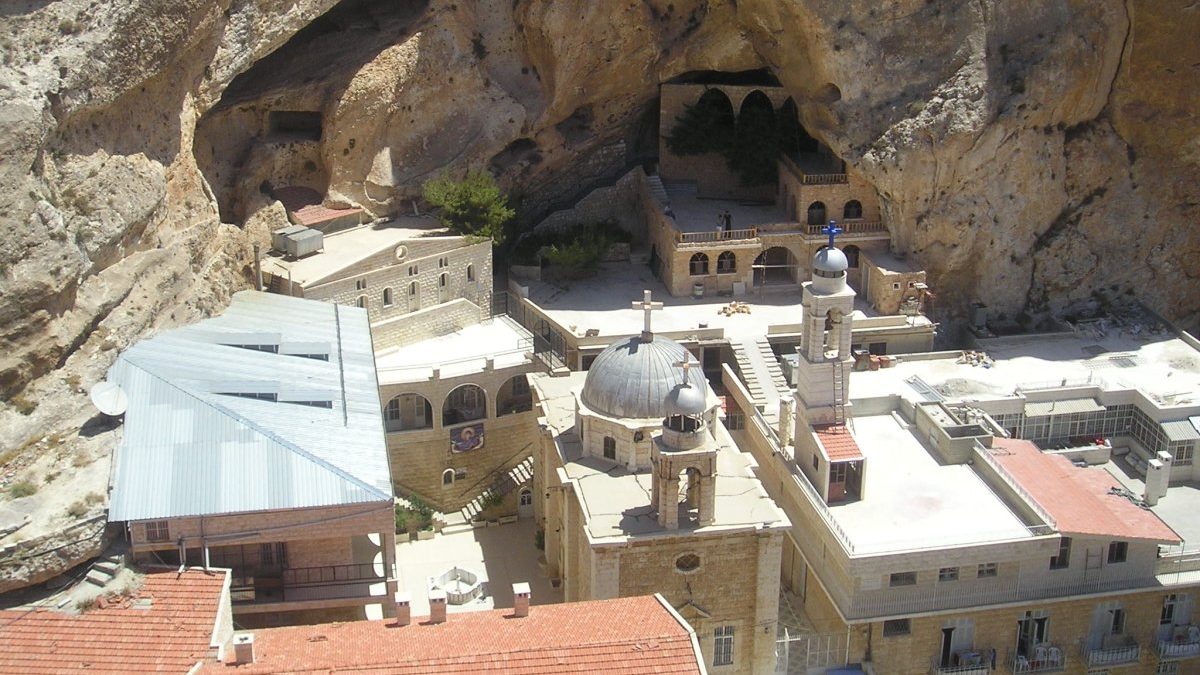
Ma’loula is a small town located about 56 km to the northeast of Damascus. It’s one of the few places in the world where Aramaic, the language of Jesus Christ, is still spoken.
It is built into the mountainside at an altitude of more than 1500 meters, making it one of the highest towns in Syria. The town is known for its historical and cultural richness. It’s home to two of the oldest surviving monasteries in Syria: Mar Sarkis and Mar Taqla. These monasteries still function and are open to visitors.
Mar Sarkis is dedicated to Saints Sergius and Bacchus, who were Roman soldiers martyred in the 4th century for their Christian faith. The monastery is built into the rock, giving it a unique and striking appearance.
Mar Taqla monastery is dedicated to St. Thecla, a disciple of St. Paul who is revered in the Eastern Orthodox Church. According to tradition, the saint escaped her persecutors by hiding in a mountainous area, which then miraculously opened to protect her. The monastery is said to house the remains of St. Thecla.
Maaloula is also a place of pilgrimage for both Christians and Muslims. The monasteries are revered by both communities, and the town is a living example of religious coexistence and tolerance.
7. Tartous
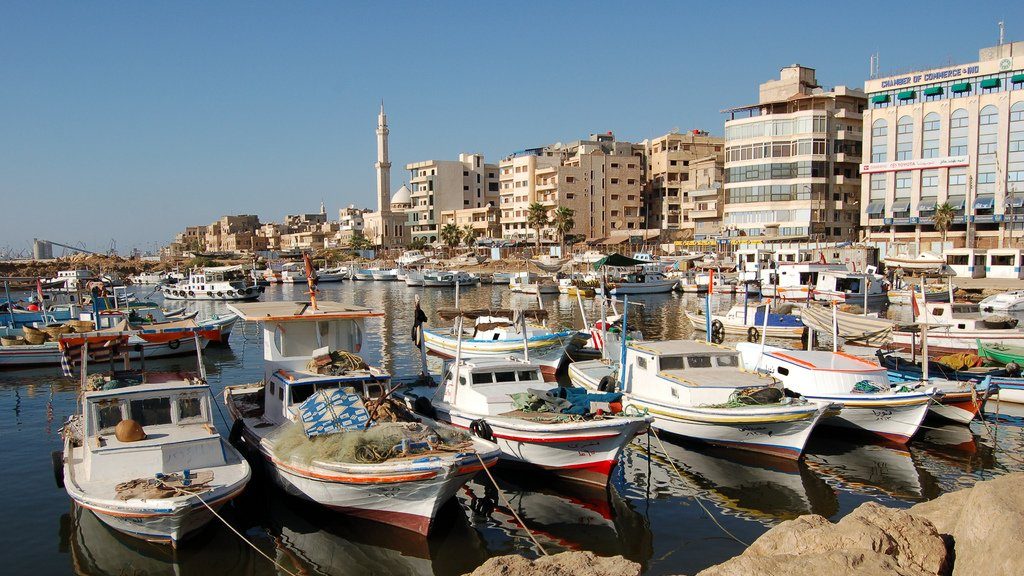
Tartous, located on the Mediterranean coast of Syria, is one of the country’s most significant port cities. It is home to the historic Crusader-era Cathedral of Our Lady of Tortosa, which has been converted into a museum.
The city’s coastal location offers beautiful beaches and a warm Mediterranean climate. The beaches are a popular destination for locals and tourists alike, offering a relaxing environment and a variety of water sports activities.
8. Apamea
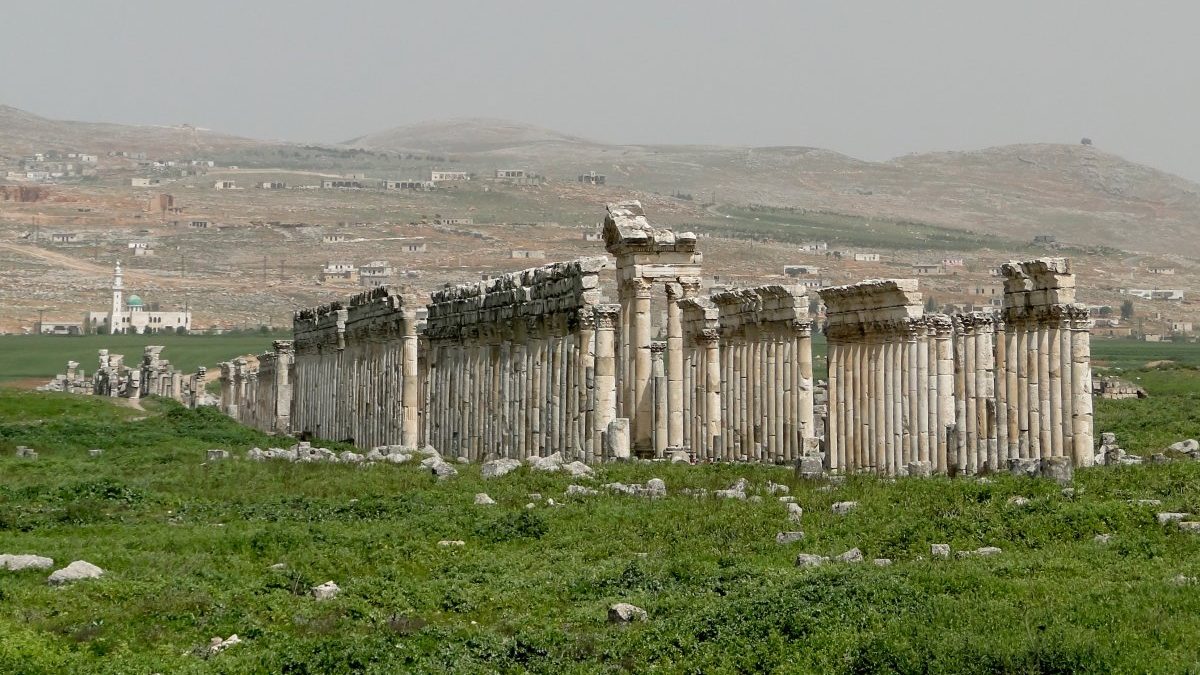
Apamea is an ancient city that dates back to the Hellenistic period, founded by one of Alexander the Great’s generals, Seleucus Nicator, in the 3rd century BC. It was named after his Persian wife, Apama.
Apamea was once a very important city, a significant stop on the Silk Road, and a center for philosophy and culture. It was known for its architectural beauty, with a two-kilometer-long main street lined with columns, some of which still stand today. The street is lined with hundreds of columns, each standing 9 meters tall, which once held statues and busts of prominent figures.
You can also explore the remains of the city’s great theater. Apamea also offers a significant number of mosaics, which are housed in the city’s museum. These mosaics depict a variety of scenes, from mythological tales to everyday life.
9. Bosra
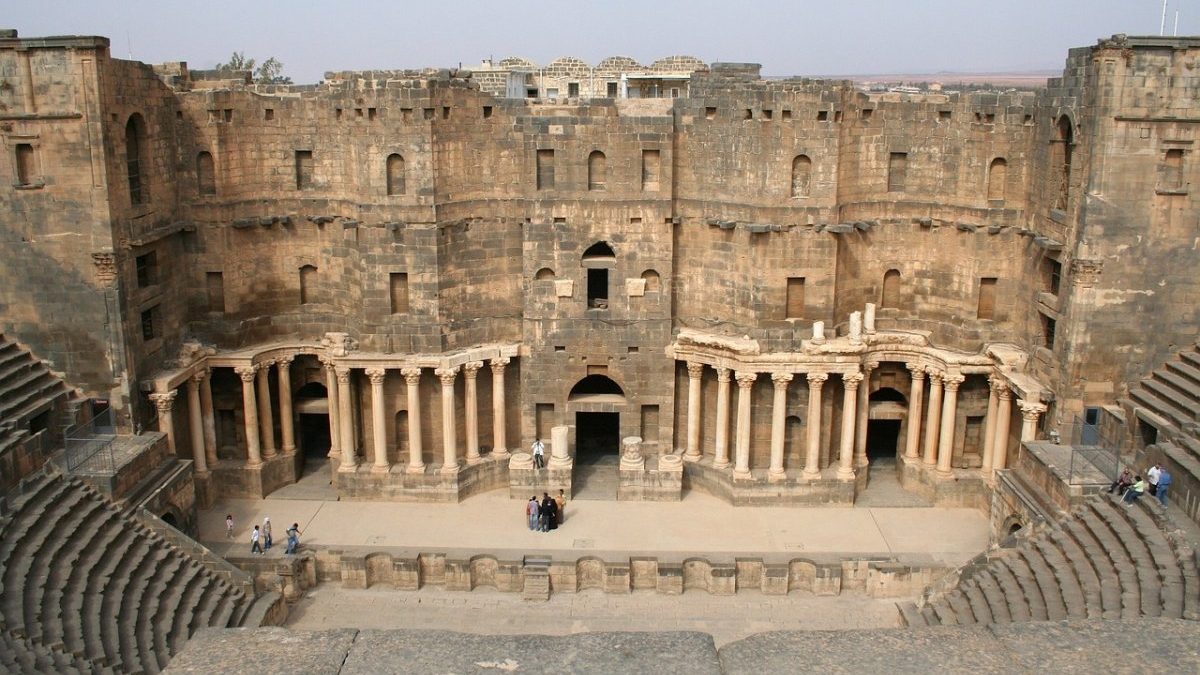
Bosra, located in southern Syria, was once the capital of the Roman province of Arabia and was an important stopover on the ancient route to Mecca.
It is home to a second-century Roman Theatre, one of the best-preserved in the world. Another reason to visit Bosra is the Al-Omari Mosque, one of the oldest surviving mosques in Islamic history. Originally a Roman basilica, it was converted into a mosque after the Islamic conquest of Syria.
Bosra is home to several other historical and archaeological sites, including the Roman baths, the Citadel of Bosra, and the ruins of the ancient city. These sites offer many reasons to pay a visit.
10. Hama
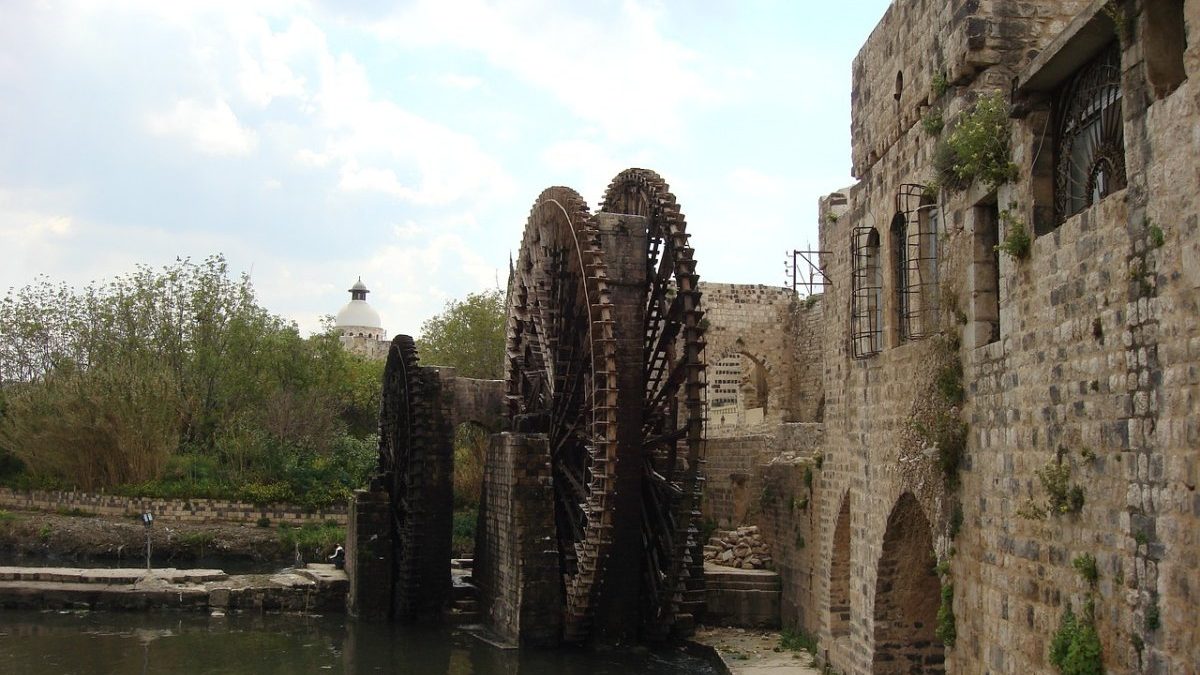
Hama is a city in west-central Syria that is famous for its 17 Norias, large water wheels that have been used since the Byzantine era. These Norias, some of which are still functional, are a unique sight and provide a unique insight into the ancient water management systems.
Hama has a calm, grounded feel that’s hard to find in bigger Syrian cities. The streets are quieter, and walking through the neighborhoods gives you a sense of everyday life. People shopping, chatting, or sipping tea in small cafés. It feels like a place where you can slow down and really notice the rhythm of life.
11. Masyaf
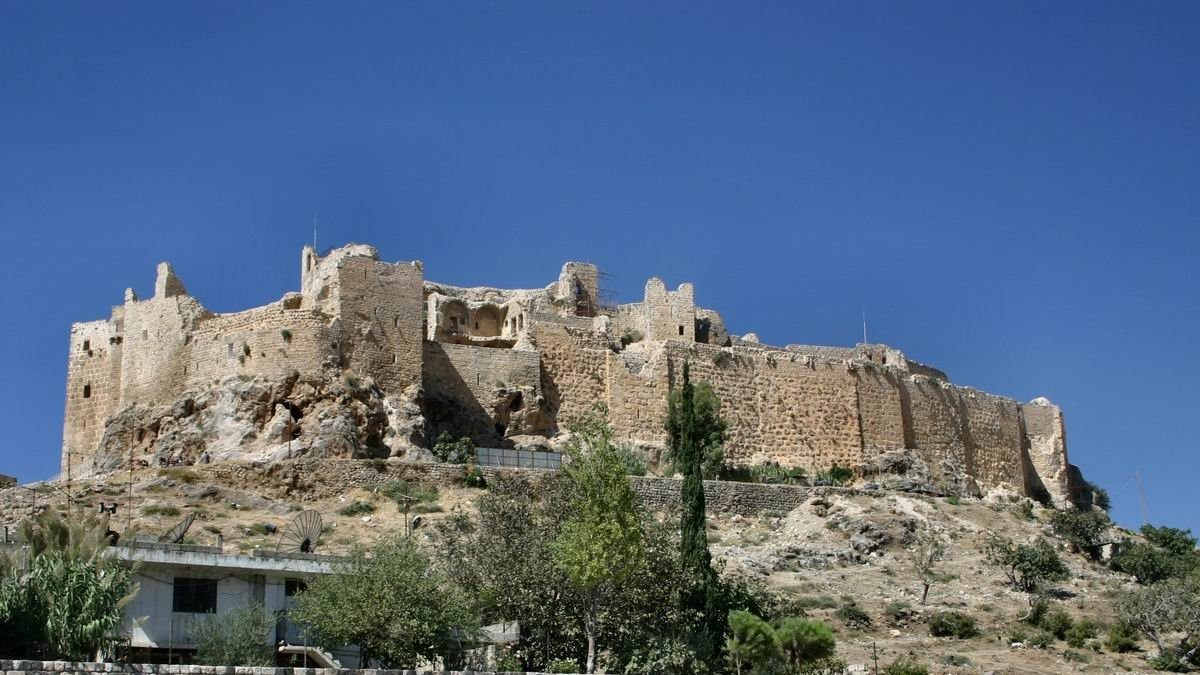
Masyaf is a city in western Syria most notably known for its castle. If this name sounds familiar it is because it is the same Masyaf castle from the famous “Assassins Creed” video game franchise.
Masyaf was which once the stronghold of the Assassins (yes, they were real), a medieval sect of Ismaili Shia Muslims. The castle is well-preserved and offers a fascinating glimpse into the past.
You can explore the castle’s many rooms, towers, and courtyards, and learn about the history of the Assassins and their unique way of life.
12. Latakia
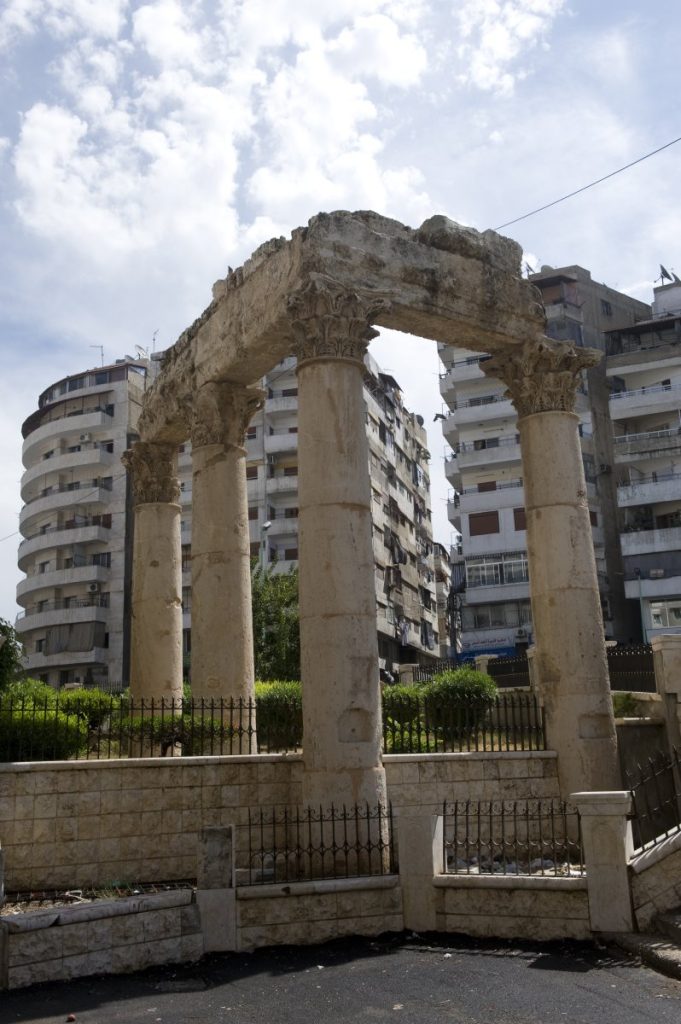
Sitting on the Mediterranean coast, Latakia is breezy, relaxed, and lively in a very different way. Walking along the waterfront, you can see locals strolling, families gathered, and cafés spilling out onto the promenade, all with the sea as a constant backdrop.
At night, Latakia takes on a quieter magic. The lights along the waterfront reflect on the water, and families sit outside, sharing meals and stories.
It is one of the best places in the country to enjoy calm vacation by the beachside.
Final Thougts
Visiting Syria is unlike traveling anywhere else. Every city, every street, every corner tells a story of history, resilience, and life that has endured despite so much hardship. The monuments, ruins, and traditions are incredible, but it’s the human connections that leave the deepest mark.
Traveling here changed the way I see the world. It reminded me how much culture, history, and everyday life are intertwined, and how kindness and hospitality can shine even in the hardest of places. Syria is a country that teaches patience, curiosity, and respect, and it’s a place that stays with you long after you leave.