Why I Wouldn’t Book an Airbnb in Athens
For years, Airbnb was a smart travel choice. More space, lower prices, a more local version of city travel. In Athens the idea took off fast, and short-term rental bookings have already overtaken hotel bookings.
The reality has changed, though. Over the last decade thousands of apartments were converted to short-term rentals to meet tourist demand, which intensified an already difficult housing situation here. A
t the same time Airbnb stopped being the obvious bargain. Between service fees, cleaning charges, inconsistent service, and listings that function as unofficial hotels, it often makes less sense both practically and locally.
So I wouldn’t recommend booking an Airbnb in Athens. Not as an anti-Airbnb rant, just an honest read from someone who has lived here his whole life and watched what happened to his own neighbourhood.
Just so you know: Some links on this page are affiliate links, which means I might earn a small commission if you book or buy through them, at no extra cost to you. Thank you for your support!
Is Airbnb Bad for Athens?

Athens reached its limits long ago. Almost half of Greece’s population lives in the wider Athens metropolitan area, and housing supply has never fully caught up.
Rents were already rising before Airbnb existed. And of course, short-term rentals are not the only reason for the housing crisis. The financial crisis, inflation, and investment trends all played a role.
However, according to Proto Thema, a major greek news outlet, “Nationwide, an estimated 200,000 properties are listed for short-term rental, around 175,000 of which are non-exclusive (not solely used for Airbnb)”.
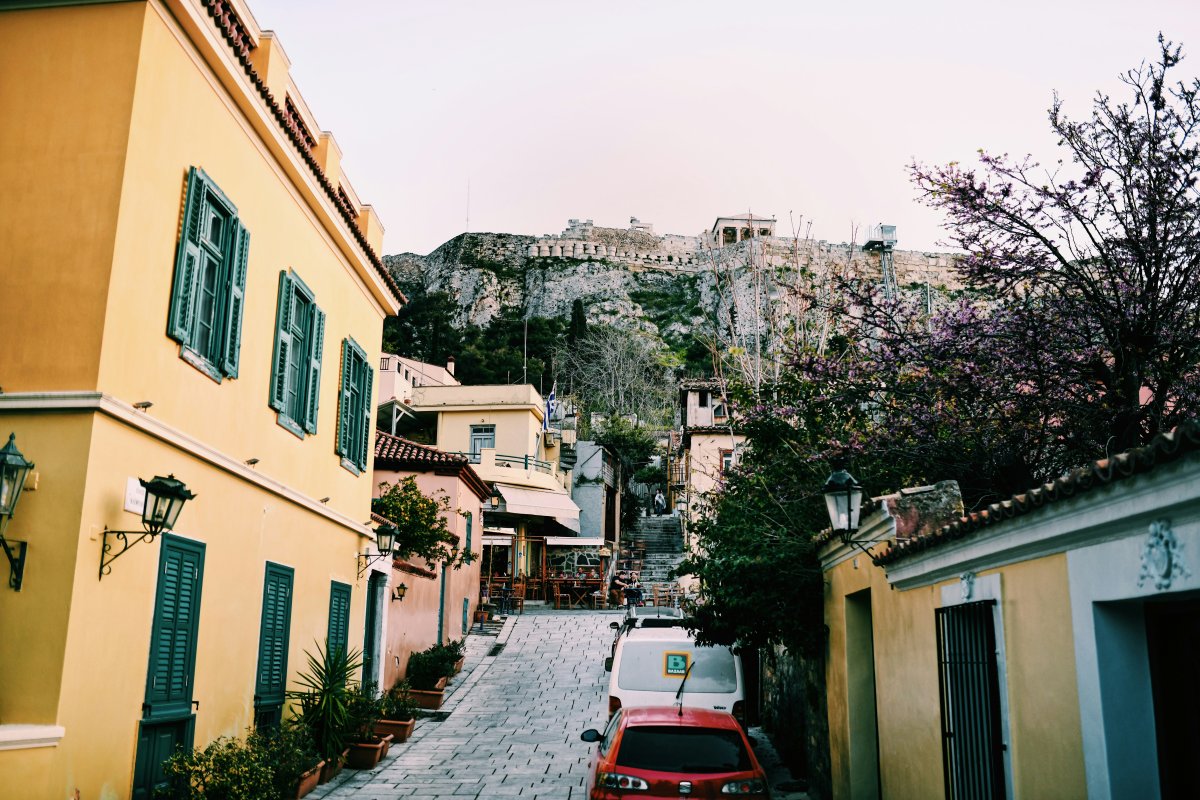
In central neighbourhoods like Koukaki, Psirri, Exarcheia, and parts of Pangrati, entire apartment buildings have been converted into short-term rentals. That has led to severe rent increases for locals, fewer long-term housing options, and many neighbourhoods losing permanent residents.
I recently read a report about the Venice-isation of Athens, where more and more areas are turning into tourist-oriented hotspots, and I was really surprised to find out that the problem has started spreading far from the city centre.
Walking through Koukaki recently, nearly every building entrance had a cluster of key lockboxes bolted to it. Not one or two. Rows of them, on residential doorways. That says more about how the neighbourhood changed than any statistic.
The already existing ban – and the loopholes
Truth is that there have been restrictions on new short-term rental listings in central neighbourhoods over the past three years.
However, there have been accusations of people bypassing them by listing their properties as “Serviced apartments”. These are furnished apartments that can be used for both short and long rentals and are neither Airbnbs nor hotels – at least legally.
In other words, it’s essentially a loophole. Combine that with uneven enforcement, and the restrictions haven’t made a substantial difference so far.
Is Airbnb Even Better Than Hotels?
Set the housing question aside entirely and the financial logic still doesn’t hold the way it did.
Ten years ago Airbnb was clearly cheaper. Now, between cleaning fees, service fees, and higher nightly rates in peak season, the total often matches or beats a well-rated boutique hotel. The nightly figure on the search page is rarely the figure at checkout.
Hotels offer daily cleaning, luggage storage, a reception desk you can call if something goes wrong, help with transport, early check-in flexibility when possible, and someone physically present if you lock yourself out or your air conditioning stops working in August.
In an Airbnb, you’re often messaging someone who may or may not be nearby. Sometimes that works perfectly, but sometimes it doesn’t.
There’s also the idea of the “local experience,” which Airbnb helped popularize. The truth is that most listings in Athens are professionally managed units in buildings that operate almost like unofficial hotels.
That doesn’t make them bad, but it does make the marketing outdated, and local life isn’t defined by having a keybox.
When Booking an Airbnb is a Good Idea

I’m not saying never.
Longer stays of two weeks or more are one clear case. Families needing a kitchen and several bedrooms are another. Anyone cooking most meals, or needing a washing machine on an extended trip, will find it more practical.
I’m also not going to lecture anyone travelling on a budget who needs a kitchen. Travel is expensive and priorities differ. If an Airbnb fits, there’s no reason to feel guilty about it. Conscious travel is about awareness rather than perfection.
That said, where the budget allows a choice, it’s worth pausing before booking a short-term rental in central Athens specifically.
What I’d Book Instead
A hotel usually makes for a better Athens stay anyway. It supports a regulated business, keeps housing in the housing market, and removes most of the small friction that eats into a short trip.
- Where to Stay in Athens, for picking the neighbourhood first.
- Best Boutique Hotels in Athens, for character at mid to high range.
- Best Hostels in Athens, for the budget end.
- Where to Stay for One Night, for a single night around a flight or ferry.
Final Thoughts
Airbnb isn’t the sole cause of the housing crisis here, but it’s part of what reshaped Athens over the past decade, and the law now reflects that plainly enough.
Practically, hotels tend to offer better service, fewer headaches, and often comparable prices once the fees are counted. Nobody should feel guilty if an Airbnb fits the budget or the trip. But where there’s a real choice, it’s worth a moment’s thought before booking.