
Athens SIM Card Guide: Local SIM vs eSIM (2026)
Mobile data is the first thing worth sorting after landing, since maps, taxi apps, transport tickets, and translation all depend on it.
The airport makes buying a SIM card look easy, but that convenience usually comes with a much higher price.
I’ve used Cosmote, Vodafone, and Nova over the years and been irritated by all three at different points. The provider itself becomes more important on the islands or more remote areas in the country.
Short version of my own position, avoid the airport counters, ignore the tourist bundles, and use an eSIM for an even better experience.
Just so you know: Some links on this page are affiliate links, which means I might earn a small commission if you book or buy through them, at no extra cost to you. Thank you for your support!
The Options Compared
| Airport SIM | City SIM | eSIM | |
|---|---|---|---|
| Cost | Around €40 | Considerably less | From around $5 |
| Setup | Immediate | A shop visit, ID needed | Before landing |
| Greek number | Yes | Yes | Usually not |
| Best for | Nobody, honestly | Longer stays, calls needed | Short trips, data only |
One thing before any of this. An EU or EEA SIM already works in Greece at no extra cost under roaming rules, subject to fair-use limits. For European arrivals the correct answer is to buy nothing at all. UK SIMs changed after Brexit, so those need checking with the provider first.
How SIM Cards Work in Greece
Physical SIMs require registration with ID, so buying one in a shop means showing a passport and having the number linked to a name. It takes a few minutes and it isn’t optional.
Greece has three providers, Cosmote, Vodafone, and Nova. All three cover the country with 4G, and 5G continues to expand.
For a stay confined to Athens, any of them is fine. The differences only become noticeable with islands, mainland driving, or smaller villages in the plan.
1. Cosmote – Telekom
The largest provider, and the one I’ve used for the last ten years.
Best coverage of the three, both in Athens and nationally. The signal holds up outside the big cities, including on islands, along highways, and in remote areas where the others can drop. In Athens it’s full 4G with widespread 5G.
Not always the cheapest, but the safest choice, and the one I’d pick without much thought.
Vodafone Greece
Second largest, and it performs very well in Athens, with the notable exception of my own apartment.
Speeds handle maps, streaming, taxi apps, and tickets without complaint, and I’ve never had trouble with it around the city. Outside Athens it remains usable in most places, though less consistently than Cosmote.
Not a provider to avoid. For a stay based in the city with a package that works, it’s a solid option, and prices sit close to Cosmote or slightly below.
Nova (formerly Wind)
The third, formerly Wind, and the one that’s given me the most trouble.
Usually the cheapest, and in Athens it does the job. City coverage and speeds are fine, so it isn’t unusable by any measure.
The problems start outside the main urban areas, where my experience has been less consistent than with the other two. For travel around Greece or heavy reliance on mobile data, it wouldn’t be my first pick.
Why the Airport SIM Is a Bad Deal
Having data working immediately after landing does help, and the SIM counters in arrivals know it. Tired arrival, immediate problem, obvious solution.
It’s convenient and it’s a poor deal. Airport SIMs are the most expensive option available in Greece, usually sold as “tourist packages” with nothing special about them beyond where they’re sold.
Last time through I saw a Vodafone SIM at around €40 for unlimited data and 200 local minutes, which bears no relation to what a few days require.
The two alternatives are a SIM from a shop in the city, or an eSIM installed before the flight. My airport guide covers the other things worth avoiding in arrivals, including the exchange desks.
Buying a SIM in the City
Athens has plenty of official Cosmote, Vodafone, and Nova stores, and prices bear no resemblance to the arrivals hall.
The process is simple. Walk in, show a passport or ID, and staff handle the setup, inserting the SIM, activating it, and usually confirming it works before anyone leaves. A few minutes, start to finish. After that, data and top-ups run through the provider’s app.
For a physical SIM go to Cosmote or a Germanos store, buy a standard prepaid SIM, top up through the app, and choose a data package directly.
Prepaid bundles aimed at tourists are inflated even outside the airport, so buying a plain prepaid SIM and adding the specific package needed is the cheapest route.
eSIMs
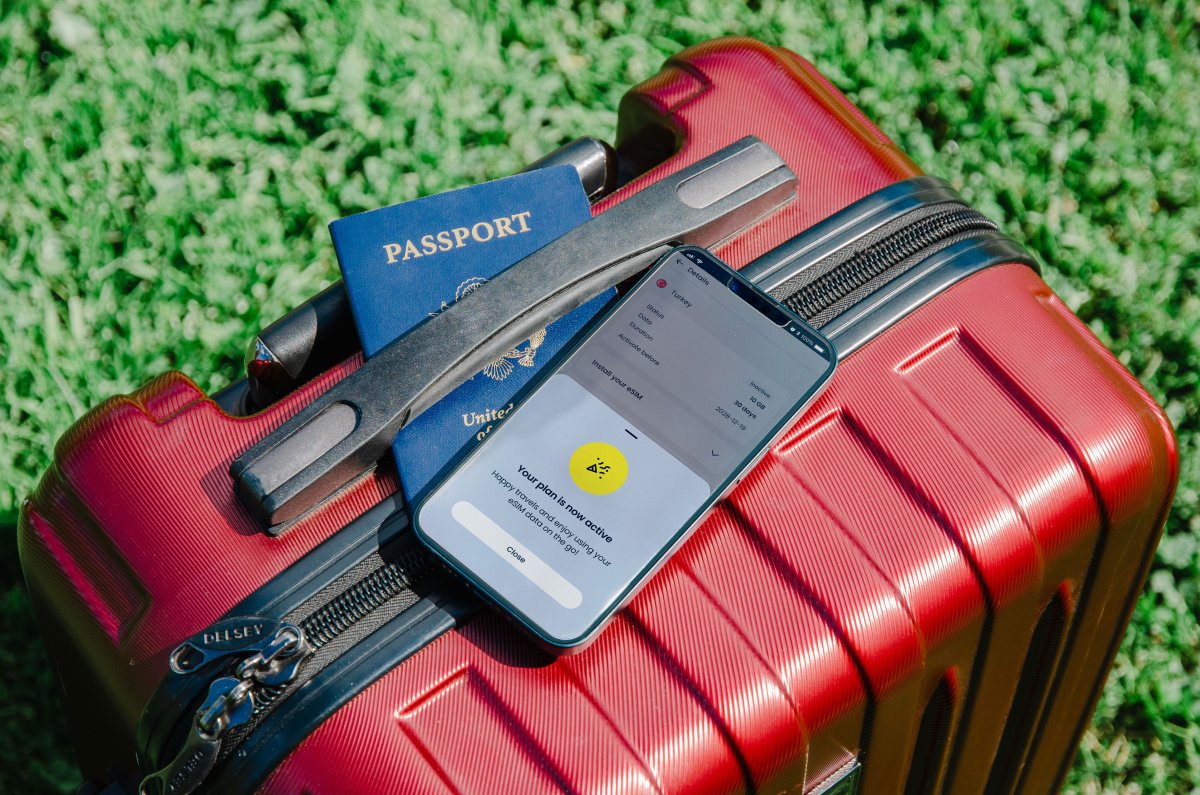
eSIMs removed most of the annoying parts of getting connected here, and I was glad when they arrived in Greece.
Rather than finding a shop, showing ID, and waiting for activation, a plan gets bought online, a QR code scanned, and everything set up before departure. The phone connects to a local network on landing.
Most newer phones handle dual SIM, so the regular number stays active for calls and messages while the eSIM carries data.
That’s the option I’d recommend for any trip to Athens.
I’ve used Saily plenty of times without problems. Choose a plan, install the eSIM, done. Pricing is reasonable, the connection has been stable, and it carries some extra security features, since the company behind it also owns NordVPN.
If you want to try it, you can use the code NICK5 for 5% discount.

The one limitation is that most eSIM plans are data-only, so there’s no Greek phone number attached.
In practice that’s rarely a problem, since almost everything runs through WhatsApp, Viber or Messenger.

Is a SIM Card Necessary at All?
Strictly, no.
Free wifi is widespread across Athens. Hotels, cafés, restaurants, and co-working spaces almost all offer it, and asking for the password is normal.
But mobile data makes everything easier. Navigation, live transport information, restaurant searches, translation, and taxi apps all work far better with a constant connection than with saved offline maps and a hunt for the next café.
For a short stay it’s possible to manage on wifi alone. For anything involving moving around a lot, or day trips beyond the city, data stops being optional in any sense.
Apps Worth Installing
- Google Maps, essential for navigation, walking routes, transport directions, reviews, and opening hours. Offline maps are worth downloading either way.
- FREE NOW, the most used taxi app here, connecting to licensed yellow taxis with the fare estimated up front. My taxi guide explains why an app beats the street.
- Uber, which in Greece books regular licensed taxis rather than private drivers.
- OASA Telematics, the official public transport app, with live information for buses, metro, trams, and trolleybuses. Covered further in my transport guide.
- e-food, the largest delivery app in Greece, covering thousands of restaurants and bakeries.
- Wolt, the other major delivery app, also handling groceries and convenience items.
- Google Translate, particularly the camera function, which handles Greek menus and signage well.
- Visit Greece, the official tourism app for attractions, events, and museums nationwide.
Final Thoughts
Getting connected in Greece isn’t difficult. It only becomes expensive through a decision made in the first ten minutes after landing.
Skip the airport counters, ignore the tourist bundles, and either install an eSIM before flying or pick up a normal prepaid SIM in the city. For anyone arriving with an EU SIM, do nothing at all.
Once data is working, the rest of the trip gets simpler. Booking a taxi, using the metro, checking maps, buying tickets, working out where to go next.
For the rest of the arrival, my guides to getting in from the airport, how taxis work here, and what a trip to Athens costscover what comes next.