Best Day Trips from Athens According to a Local
At some point in a longer Athens trip the city starts asking for a break. Sometimes the answer is sea air, open space, or somewhere that moves more slowly. The good news is none of that requires relocating. Leave in the morning, spend the day somewhere completely different, sleep in the same hotel that night.
Not every day trip is worth the effort, though. I’ve seen plenty of guides drop Meteora onto lists like this, and while Meteora is extraordinary, four hours each way makes for a brutal day. That’s eight hours in a vehicle for something that deserves an overnight stay.
Corinth and Mycenae are a different matter. Historically significant, far easier to reach, and more suited to a single day out.
So this guide covers the trips that earn their place, judged on effort in against what comes back out.
Just so you know: Some links on this page are affiliate links, which means I might earn a small commission if you book or buy through them, at no extra cost to you. Thank you for your support!
Start Here
- Cape Sounion, closest and easiest day trip from Athens
- Delphi, best for ancient history
- Mycenae and Epidaurus, best combination of sites
- Corinth, best short trip on a tight schedule
- Aegina, best island day trip
- Hydra, most beautiful island near Athens
- Lichadonisia, best purely for swimming
| Destination | Time from Athens | Type | Tour or DIY |
|---|---|---|---|
| Cape Sounion | 1.5 hrs by car | Coastal temple, sunset | DIY |
| Corinth | 1 hr by car | Ancient site and fortress, Odyssey filming location | DIY |
| Mycenae and Epidaurus | 1.5 to 2 hrs | Two ancient sites | Tour, unless driving |
| Delphi | 2.5 hrs by car | Archaeological site | Either, tour adds a lot |
| Aegina | 40 min to 1 hr 15 by ferry | Island, swimming, pistachios | DIY |
| Hydra | 1.5 to 2 hrs by ferry | Car-free island, atmosphere | DIY |
| Three-island cruise | Full day | Hydra, Poros, Aegina | Tour by definition |
| Lichadonisia | 2.5 to 3 hrs by car | Swimming, clear water | Tour |
Best Ancient Site Day Trips
1. Delphi
- Distance: 2.5 hours by car, about 3 hours by KTEL bus.
- Time needed: 2 to 3 hours for the site, 1 hour for the museum.
- Best for: anyone who cares about ancient history.
- Verdict: worth a tour without a car.
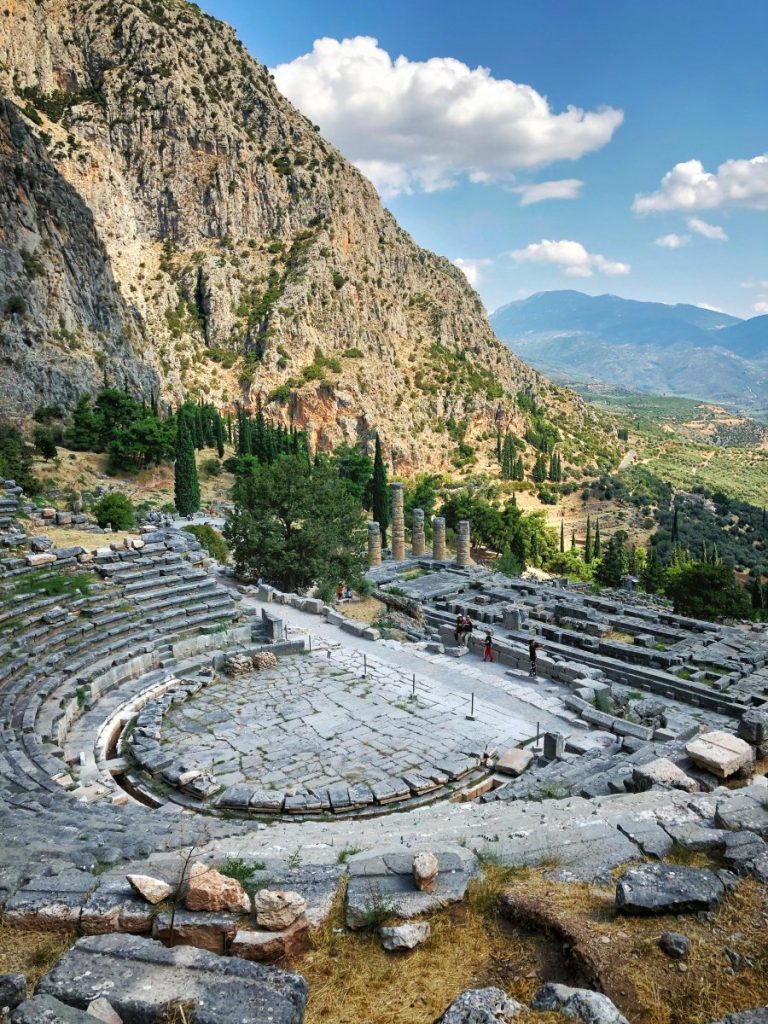
Delphi is one of the most important archaeological sites in Greece. In antiquity it was a sanctuary to Apollo and home to the Oracle, where people came for guidance before taking big political or military decisions. It also worked as a shared religious and cultural centre for the city-states, back when each functioned more or less as its own country.
The site runs up a mountainside, starting low and climbing past the treasuries, the Temple of Apollo, and the theatre, with a stadium higher still. It’s large, and there’s real walking involved.
That said, it’s absolutely worth it. The ruins look out across a wide valley of olive trees with the sea visible beyond. Compared with the archaeological sites inside Athens, everything here is open and unhurried, and none of it is boxed in by the city.
The archaeological museum is right next to the site and I wouldn’t skip it. It holds most of the big finds from the site, including the bronze Charioteer statue.
Doing it yourself: Delphi is one of the more manageable long-distance trips to organise alone. Renting a car gives the most freedom, the road is good, the route simple once clear of Athens, and an early start helps with both heat and tour buses. KTEL buses also run from Athens in about three hours each way. They’re cheap, but the day ends up organised around the timetable.
Tour or not? This is one of the few where I’d say yes, or at least seriously consider it. Unlike Sounion, where the experience is mostly visual, Delphi is historically dense, and without someone tying it together a lot of it reads as scattered stone. Organised Delphi trips start around €27, and several include a stop in Arachova, a mountain village Greeks themselves go to.
2. Mycenae & Epidaurus
- Distance: 1.5 to 2 hours by car, depending on traffic.
- Time needed: a full day for both.
- Best for: Bronze Age history and one extraordinary theatre.
- Verdict: tour, unless driving.
Mycenae is far older than the classical Greece that usually comes to mind. It’s Bronze Age, belonging to the civilisation that dominated the mainland long before the Parthenon existed, and it’s the citadel once ruled by Agamemnon of Trojan War fame.
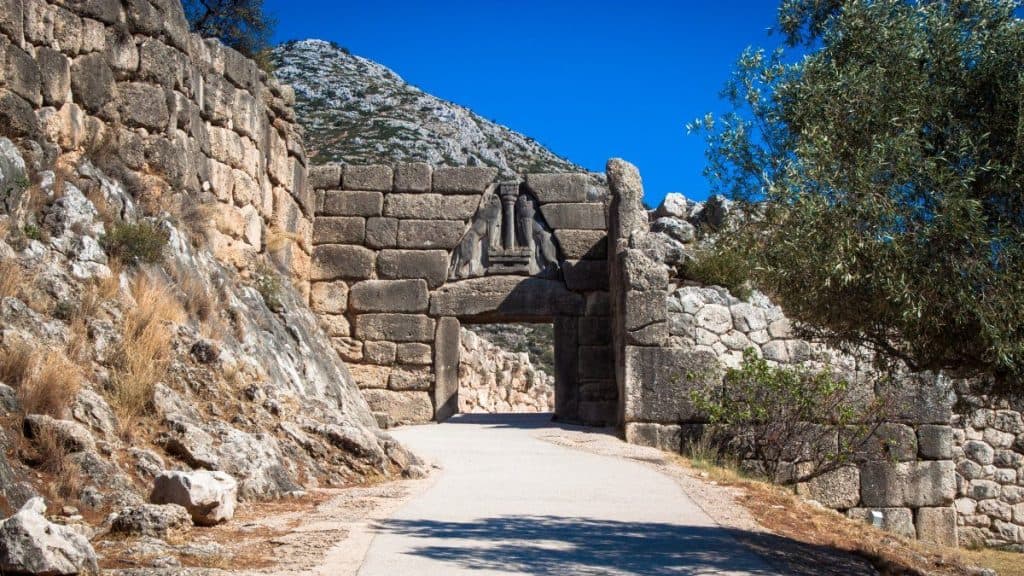
The Lion Gate comes first, named for the two carved lions still standing above it. The path climbs from there through the citadel, past palace ruins, grave circles, and defensive walls, with a small museum that supplies context the stones can’t.
A short distance away is the Treasury of Atreus, a tomb with an enormous stone entrance and a beehive interior.
A note for anyone who’s seen the Odyssey film: Nolan’s The Odyssey landed in July 2026, and the flashbacks of Agamemnon coming home to Mycenae, and the welcome his wife Clytemnestra had waiting for him, are a part of the story. Anyone arriving expecting to recognise the scenery will be disappointed, though. Those scenes weren’t shot at Mycenae. The production used Acrocorinth as its stand-in, which is the fortress in the Corinth section below.
I find that swap quite funny, because it means the two sites are now linked by something other than the Bronze Age. Corinth is the day for filming locations. This one is the actual citadel Agamemnon ruled from, with the actual Lion Gate. Both in a weekend is entirely possible, since neither is far from Athens.
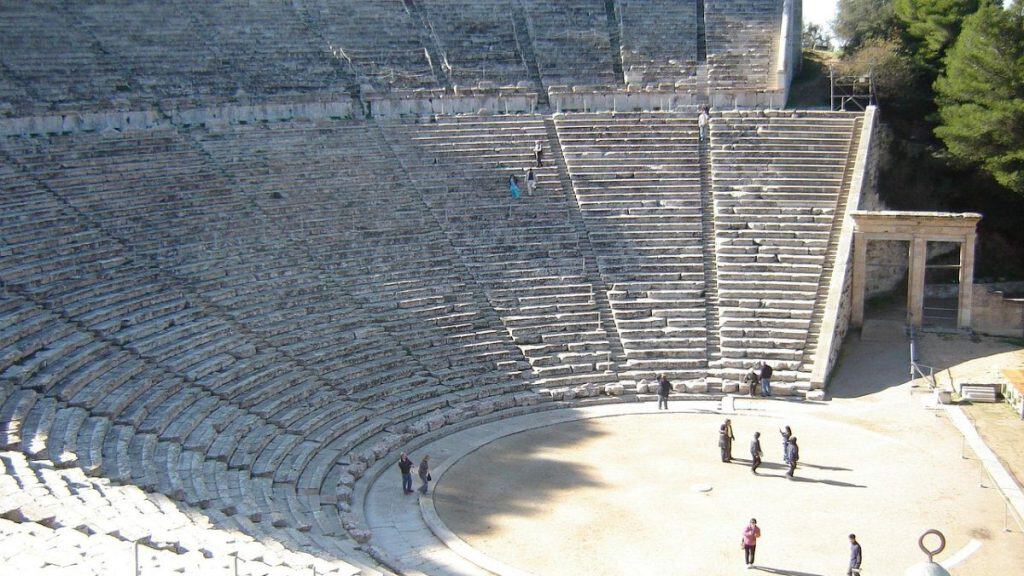
About an hour on is Epidaurus and its theatre, which is exceptionally well preserved and still used during the summer festival season. Even with nothing on, it’s worth the trip by itself. The wider sanctuary was dedicated to Asclepius, god of healing, and there are more ruins scattered around, but the theatre is the reason to come.
Doing it yourself: driving is the only sensible way to combine both in a day. The route from Athens is straightforward, crossing the Corinth Canal before heading into the Peloponnese, and having a car makes a real difference to how long each stop can run. Public transport exists, but this is where it becomes a headache. Buses reach towns in the region, but stitching both sites into one day without a car is difficult.
Tour or not: I’d lean toward a tour short of renting a car. Not because the driving is hard, but because linking the two smoothly without private transport is a nuisance. Many tours also include Nafplio, a coastal town and Greece’s first capital, which is worth the stop.
3. Corinth
- Distance: about 1 hour by car.
- Time needed: half a day, or a relaxed full one.
- Best for: the most site per hour of travel.
- Verdict: DIY, and check Acrocorinth is included on any booked tour.
Ancient Corinth was among the richest and most powerful cities in Greece. Its position controlled the trade routes between the mainland and the Peloponnese, and it later became a significant Roman centre too.
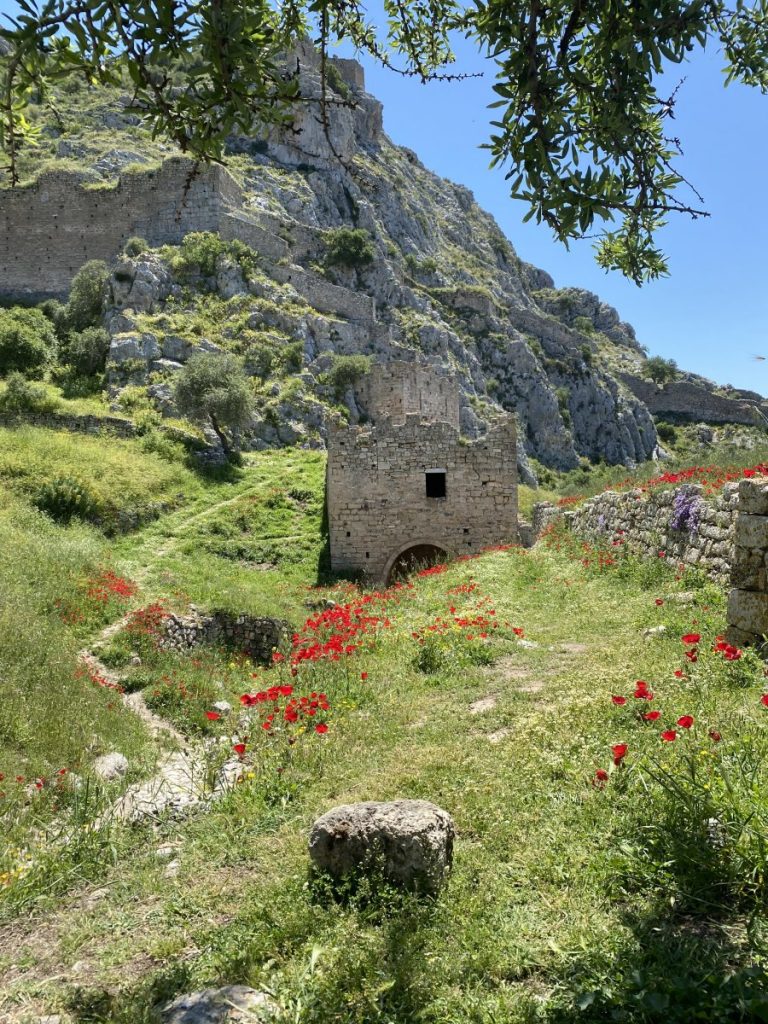
The archaeological site takes in the Temple of Apollo, the Roman Agora, and remains from both periods. Above it rises Acrocorinth, a fortified hill reached by driving part way up and then climbing, with views stretching to the Gulf of Corinth on a clear day.
The fortress is the real highlight for me. I went in spring, with wildflowers growing through the ruins, and the whole place had a slightly unreal quality to it. It reminded me, and I say this with total sincerity, of The Legend of Zelda: Breath of the Wild.
Acrocorinth also had a busier 2026 than usual, since this is where Christopher Nolan shot the Mycenae sequences for The Odyssey. Expect a few more people up there than there used to be, and expect at least one of them to be looking for a spot they recognise from the screen.
Plenty of people stop at the Corinth Canal on the way. It’s a five-minute photo stop, but worth doing once.
Doing it yourself: at roughly an hour from Athens, this is the lowest-commitment trip on the list, and it doesn’t cost a whole day. The drive is simple and mostly highway. Leave in the morning, see both sites, be back by afternoon. Public transport reaches Ancient Corinth, but the moment Acrocorinth enters the plan it becomes awkward.
A tour? Organised Corinth trips start around €30. On any booked tour, check that Acrocorinth is included. Some cover only the canal and the lower site, which misses the best part.
4. Cape Sounion (Temple of Poseidon)
- Distance: roughly 1.5 hours by car.
- Time needed: 1 to 2 hours on site, longer with stops along the coast.
- Best for: sunset.
- Verdict: DIY.
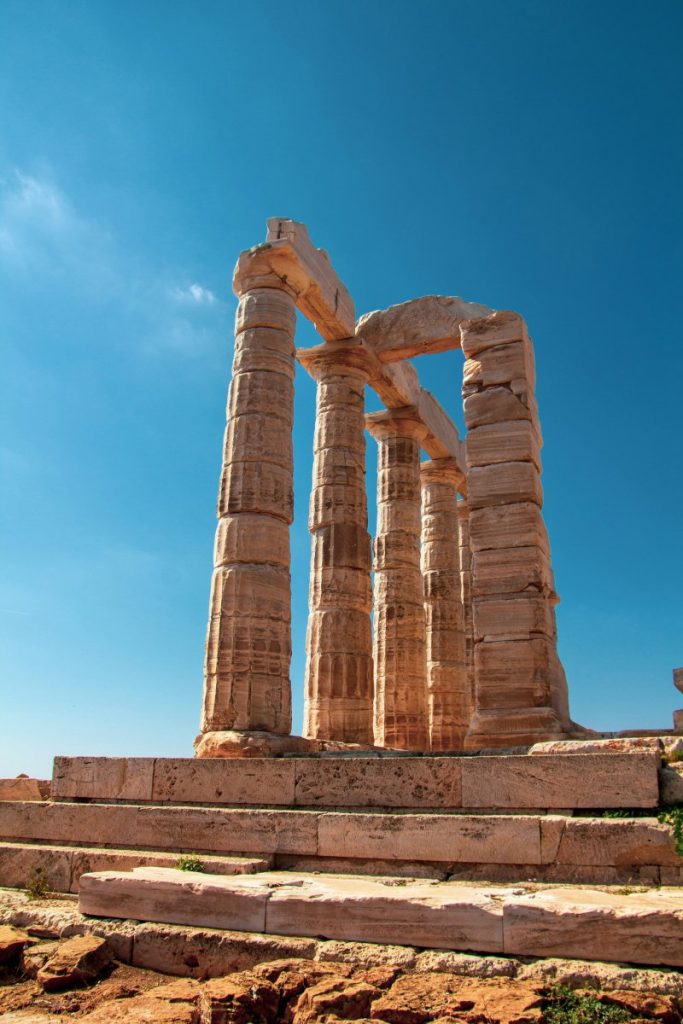
Cape Sounion is the easiest day trip from Athens by a distance. The Temple of Poseidon stands on a cliff at the southern tip of Attica looking straight out over the Aegean, which makes it one of the best sunset spots anywhere near the city.
The site itself is simple. There’s no museum and not much to explore beyond the temple ruins and the beach below. A walk round the site, the coastline, and that’s the experience. Not a criticism, just something to know before a whole day gets built around it.
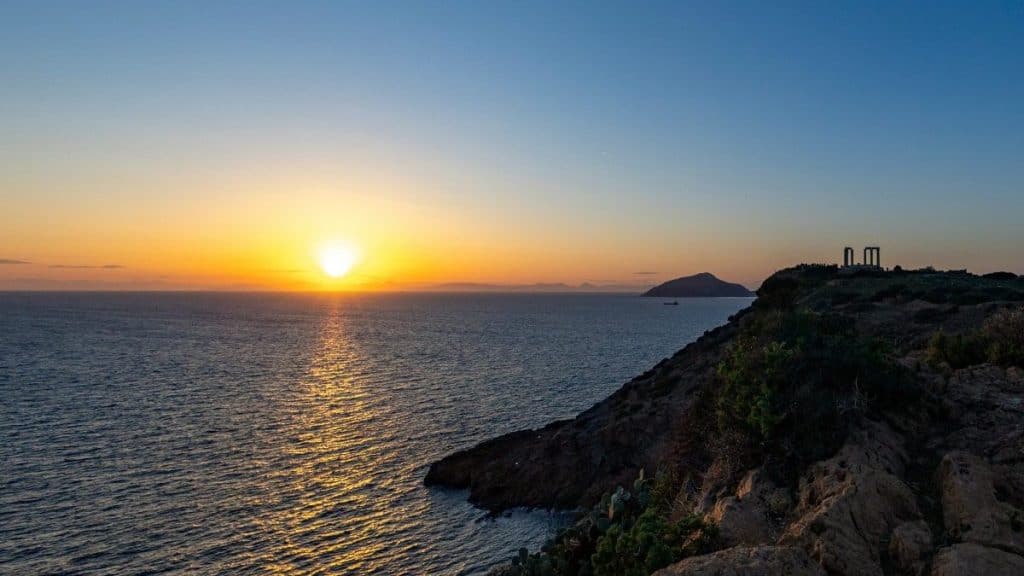
Doing it yourself: By car it’s about 90 minutes from central Athens, and the freedom to stop along the coast for coffee, lunch, or a swim is what makes the day rather than the temple alone. Vouliagmeni and the rest of the Athens Riviera make easy stops on the way, and my beaches guide covers which are worth pulling over for. Public buses run to Sounion too and work perfectly well, but a timetable costs the flexibility.
A tour? Not really necessary. Half-day Sounion tours are fine for anyone who’d rather not think about transport, but this is a destination that’s more relaxed alone.
Best island day-trips
5. Aegina
- Distance: 40 minutes to 1 hour 15 by ferry from Piraeus.
- Time needed: full day, comfortably.
- Best for: the easiest real island escape.
- Verdict: DIY.
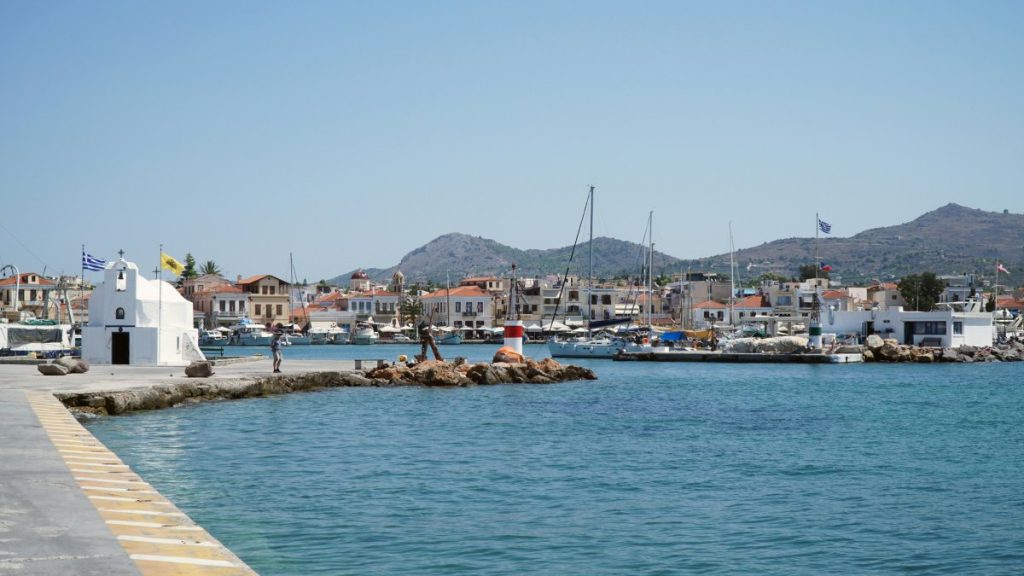
Aegina is the closest island that still feels like an island rather than an extension of the Athens coastline. Ferries run from Piraeus throughout the day, and depending on the boat the crossing is anywhere from 40 minutes to an hour and a quarter.
That makes it very manageable. Leave in the morning, have lunch by the harbour, swim, wander the town, and be back the same evening without the day vanishing into transport.
The island is famous for pistachios, which becomes obvious within five minutes of arriving. Every second shop sells pistachio sweets, pistachio spreads, pistachio pastries, and pistachios in bags of every conceivable size.
Beyond the port, two things earn the time. The Temple of Aphaia, on a pine-covered hill 20 to 30 minutes from the harbour, and finding somewhere to swim. This isn’t Caribbean water, but for a sea day within easy reach of Athens it does the job well.
Doing it yourself: Metro to Piraeus, walk to the ferry gates, buy a ticket at the port or book ahead on Ferryhopper, and that’s the hard part done. Sailings are frequent from late spring onward. The one thing I’d check in advance is the return, so the day doesn’t end waiting around the harbour.
A tour? No. This is one of the simplest routes to organise yourself, and a guided trip strips out the flexibility that makes Aegina pleasant. Organised options exist for anyone who’d rather not handle ferry tickets, but they’re not necessary.
6. Hydra
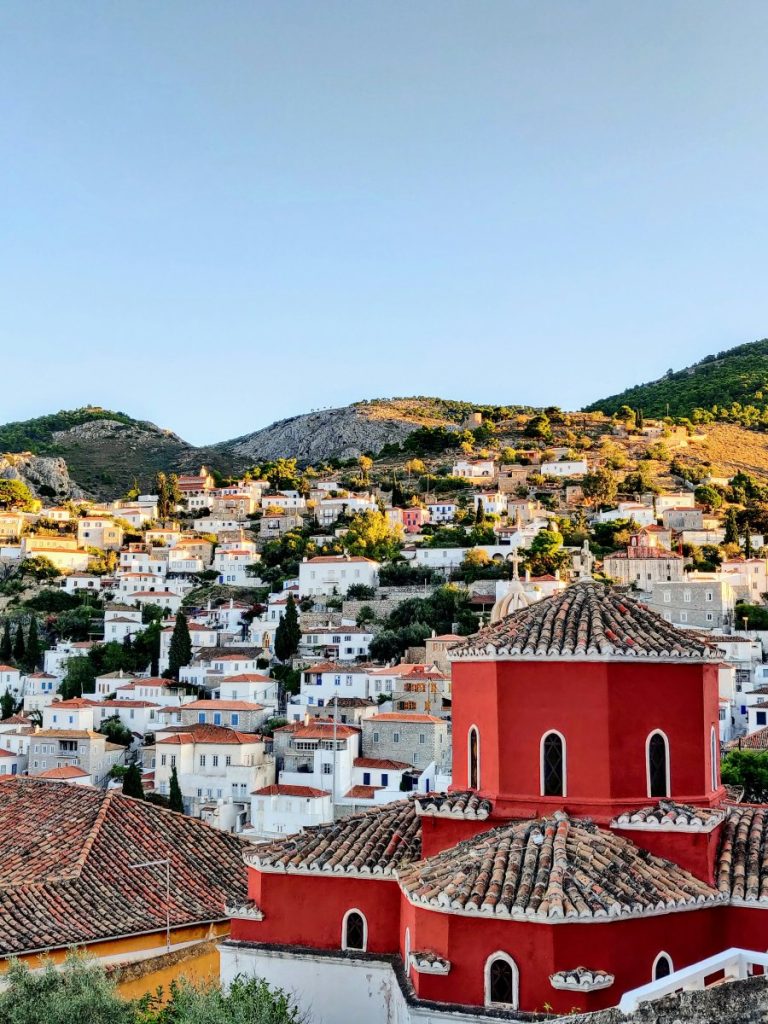
- Distance: 1.5 to 2 hours by high-speed ferry from Piraeus.
- Time needed: full day.
- Best for: atmosphere, and the sharpest contrast to Athens.
- Verdict: DIY.
Hydra is the most beautiful island realistically reachable from Athens in a day, and the most photogenic. The harbour is lined with stone mansions, fishing boats, donkeys, and an almost absurd number of cats, and the complete absence of cars changes the rhythm of the place the moment the boat docks.
The island got rich from shipping in the 18th and 19th centuries and much of that architecture survives. Later it drew artists and writers, Leonard Cohen most famously, which partly explains the bohemian streak that’s still there.
The catch is distance. The high-speed ferry runs 1.5 to 2 hours from Piraeus, and adding the trip to the port makes this a full-day commitment rather than something spontaneous.
There are no sandy beaches in the harbour itself, but there are rocky swimming spots within walking distance and boats out to more secluded water. Mostly, though, Hydra is somewhere to wander. Long lunch, sea views, stone staircases, harbour cafés, no urgency. That’s the day, and that’s the point.
Independent or guided? Independent, without question. The ferry is not difficult to organise, and Hydra gets worse the more tightly it’s scheduled. Lingering, swimming, or doing nothing for an hour is the point, and a group timetable works against all three.
7. 3-Island Cruises (Hydra, Poros, Aegina)
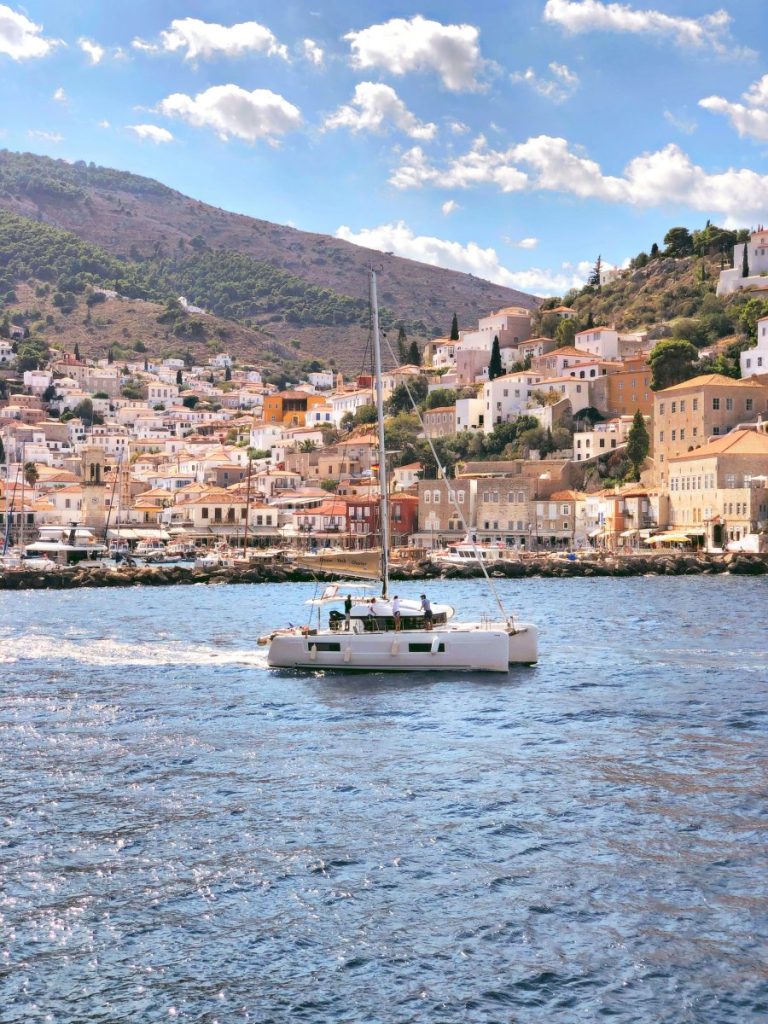
- Distance: full day from Piraeus.
- Best for: seeing several islands without planning anything.
- Verdict: tour by definition.
For the idea of Greek islands without the ferry schedules and tickets, a three-island cruise is the easy answer. These leave Piraeus in the morning and take in Hydra, Poros, and Aegina across the day.
The convenience is real. Show up, get on a boat, and the logistics disappear. Meals are often included or available onboard, and some routes include a swim stop.
The trade-off is pace. None of the stops are long, and once boarding, sailing, announcements, and moving as a large group are accounted for, the day can feel more like sampling islands than visiting them. Hydra in particular is somewhere I’d rather take slowly than tick off.
So it depends on the goal. A taste of island scenery with zero planning, this works. A calmer, more atmospheric island day, pick Hydra or Aegina and do it properly.
8. Lichadonisia
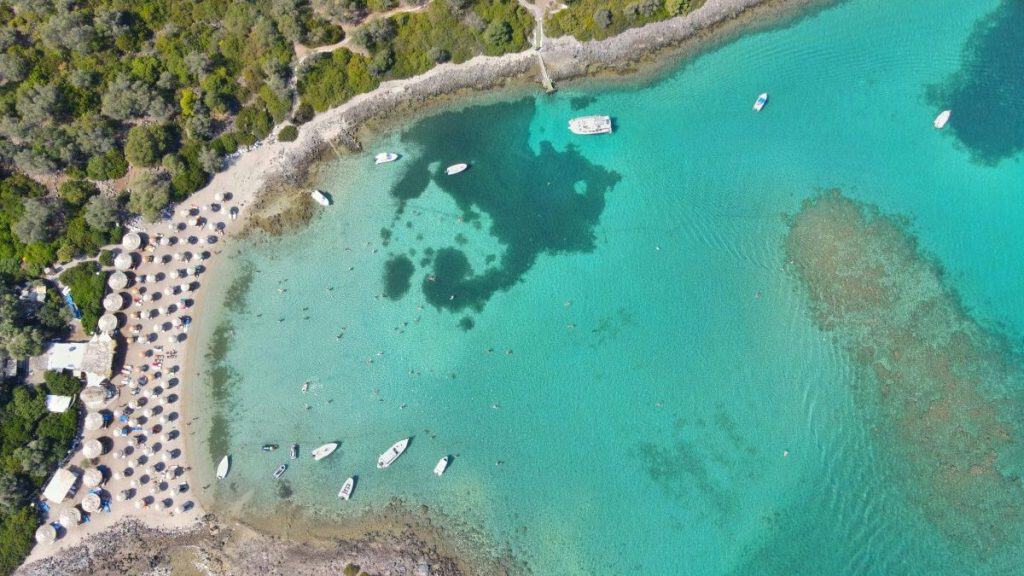
- Distance: 2.5 to 3 hours by car to the departure port in northern Evia
- Best for: swimming, and nothing else
- Verdict: tour
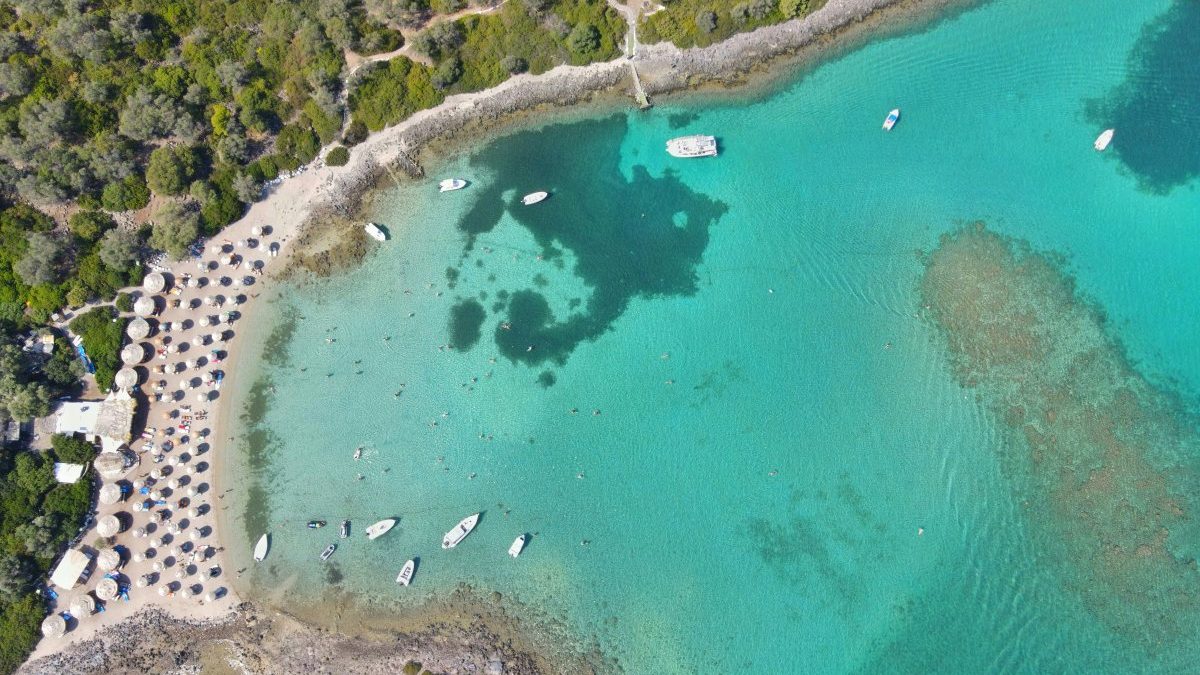
Lichadonisia isn’t a classic Athens day trip, but for swimming somewhere properly beautiful, it’s among the best options in reach.
It’s a cluster of uninhabited islets off the northwest coast of Evia, often called the Greek Seychelles for the pale sand and clear shallow water. In the right weather the setting is remarkable, and this is very much a swim day rather than a sightseeing one.
Boat trips from the mainland circle the surrounding islets, and dolphin sightings get mentioned, though I wouldn’t treat that as anything but luck.
Realistic to self-organise? Only with a car. It’s roughly 2.5 to 3 hours to the small port near Kavos in northern Evia, then a small boat across. Public transport isn’t viable for a single day, so it’s driving or an excursion.
Tour or DIY? Unless a long driving day appeals, I’d book a guided trip. It removes the fiddly business of coordinating road transport with boat transfers.
When You Should NOT Do a Day Trip
Sometimes the best day trip is skipping the day trip.
With only two or three days in Athens, the city itself already has enough to fill the time well.
In that case, a slower day inside Athens is better than spending hours on the road, in a ferry queue, or watching the clock for the return.
The same goes for summer once the heat starts wearing you down.
After a couple of days in the city, adding six to ten hours of logistics is not always the smartest move.
On days like that, a museum, a long lunch, a neighbourhood walk, and maybe a swim can be a much better use of time.
Final Thoughts
Athens can easily fill an entire trip on its own. But a day trip can work as a reset when the city starts getting too loud, too hot, or just too full.
The easiest way to choose is to start with what’s missing. Sea, ancient history, open space, an island harbour, a quieter pace – that’s the part to follow.
And when none of that sounds necessary, staying in Athens is also a perfectly good answer.
Not every extra day needs a big plan.