5 Sites in Athens I Would Skip Paying to Enter
Athens used to have a combined ticket covering most of the main archaeological sites for one price. It was scrapped in April 2025, and now every site sells its own, which adds up fast.
€30 for the Acropolis, €20 for the Acropolis Museum, €20 for the Ancient Agora, then the Roman Agora, Hadrian’s Library, and a few smaller sites, and “seeing ancient Athens” quietly turns into a serious line in the budget.
That got me thinking about which of these tickets justify their price. There are a few sites where I don’t think paying separately makes sense, either because most is visible from the outside, or because what survives inside is too thin to justify the price at the gate.
To be clear about what this is and isn’t, I’m not judging historical significance here. Most of these places are important, and a couple are foundational to the city’s history. This is purely about value, and about where a limited budget and a limited number of days are best spent.
Just so you know: Some links on this page are affiliate links, which means I might earn a small commission if you book or buy through them, at no extra cost to you. Thank you for your support!
1. The Panathenaic Stadium
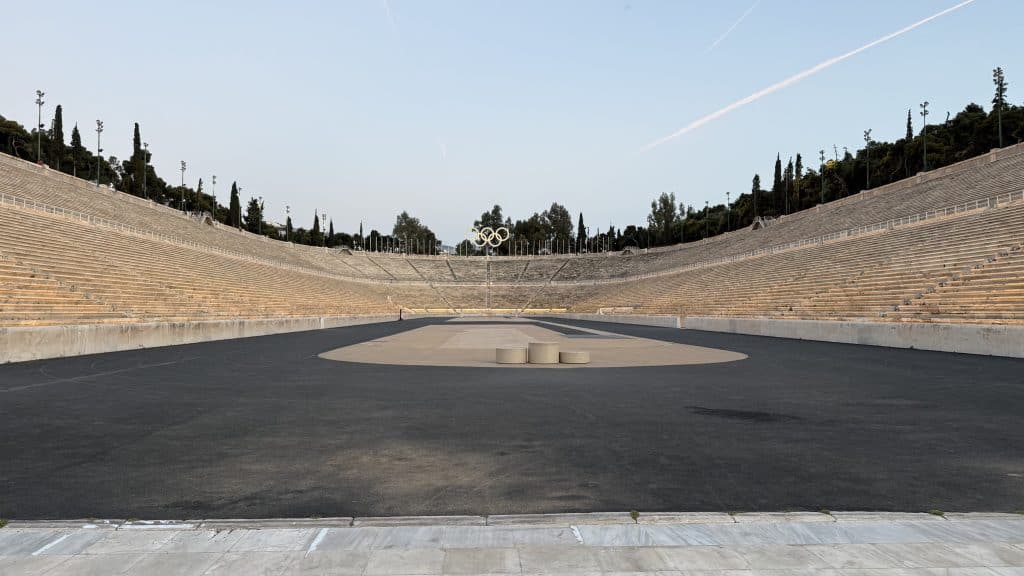
I’m pretty sure I’m going to get a lot of “love” from my fellow Greeks for this one, but here it is. I don’t think the Panathenaic Stadium is worth paying to go inside.
That doesn’t mean skip it entirely. It’s an imposing building, and being the only stadium in the world built entirely of marble gives it real presence. My issue is purely what €12 buys. Inside, there isn’t much to do beyond walking around the seating, looking at it from a few angles, and passing through a small museum. For that price, it doesn’t add up.
From outside, though, it’s still very much worth seeing. The stadium is open enough to give a proper sense of it without paying, and for me that’s enough.
The exception is if something is happening there. The stadium still hosts ceremonies, concerts, and sports events, and being inside for one of those is a completely different experience. Seeing it as a working venue, with people and sound and atmosphere, beats walking around an empty bowl by a distance. The Athens Marathon finishes here on the first weekend of November, and watching as a spectator costs nothing.
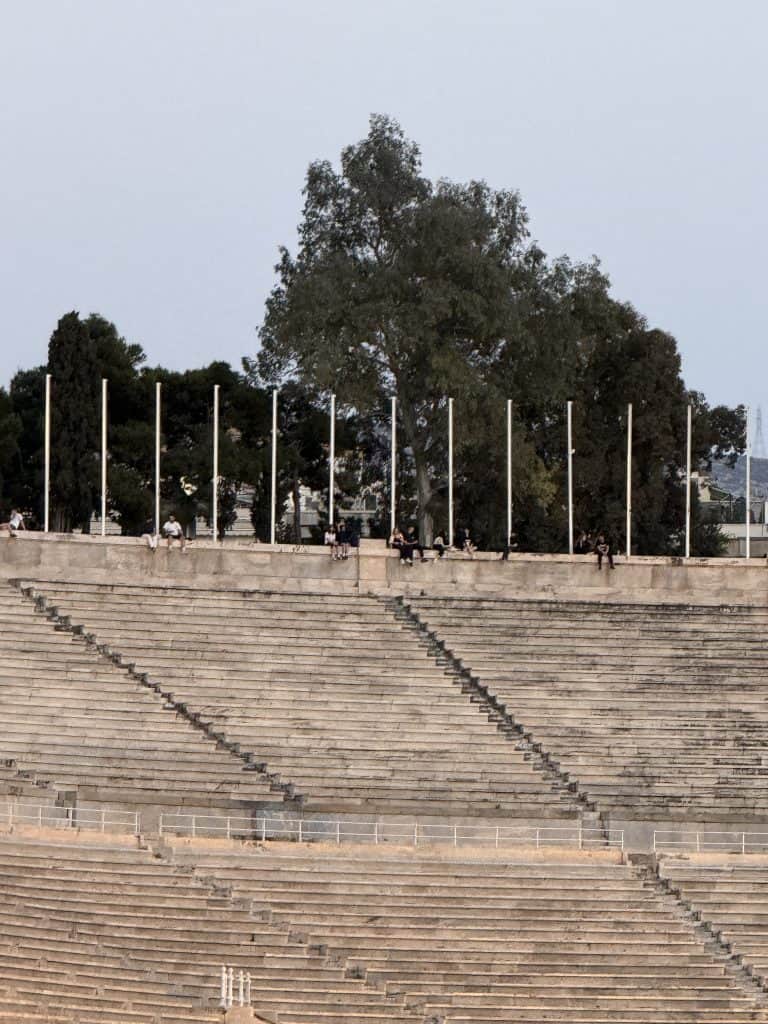
There’s also a small hack that mostly only locals know. All the way around the stadium there’s a little park behind it.
From there it’s possible to climb up and sit on the upper rim, with the full panoramic view down into the stadium for nothing.
Climbing down into the stadium itself from up there isn’t allowed, but sitting along the top edge is fine. There are usually a few locals already up there doing exactly this.
2. The Roman Agora
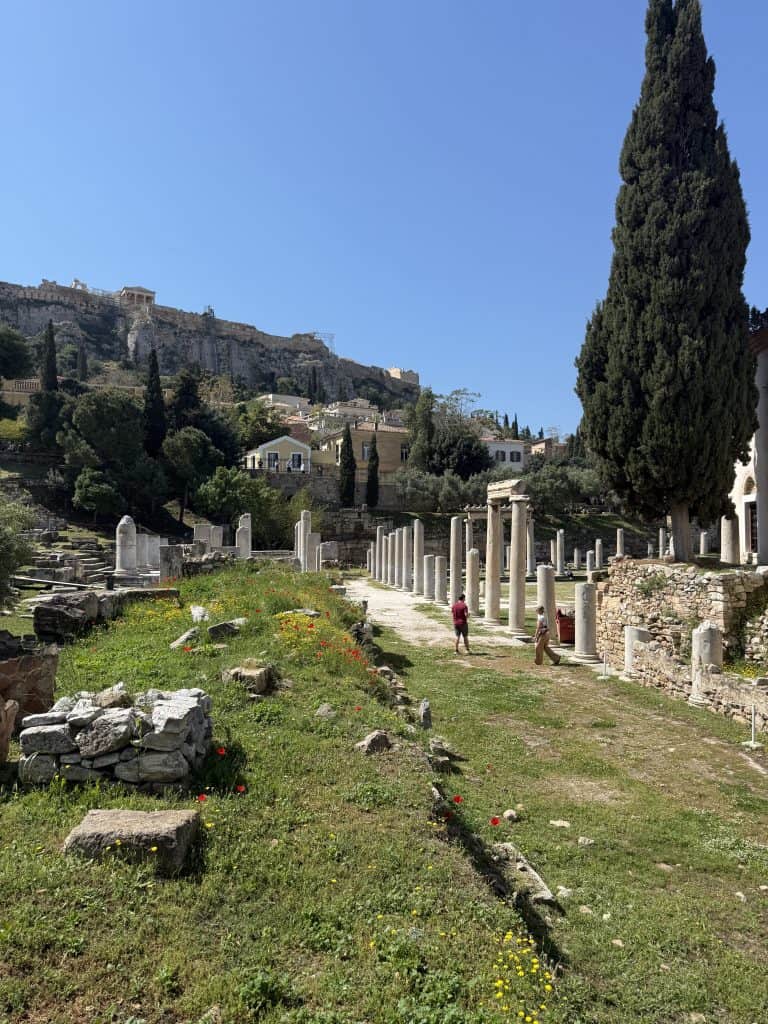
The Roman Agora falls squarely into the category of very nice to see, not necessary to enter.
The fencing leaves most of the site clearly visible, so on a wander through Plaka or Monastiraki, it works perfectly as a stop from the pavement.
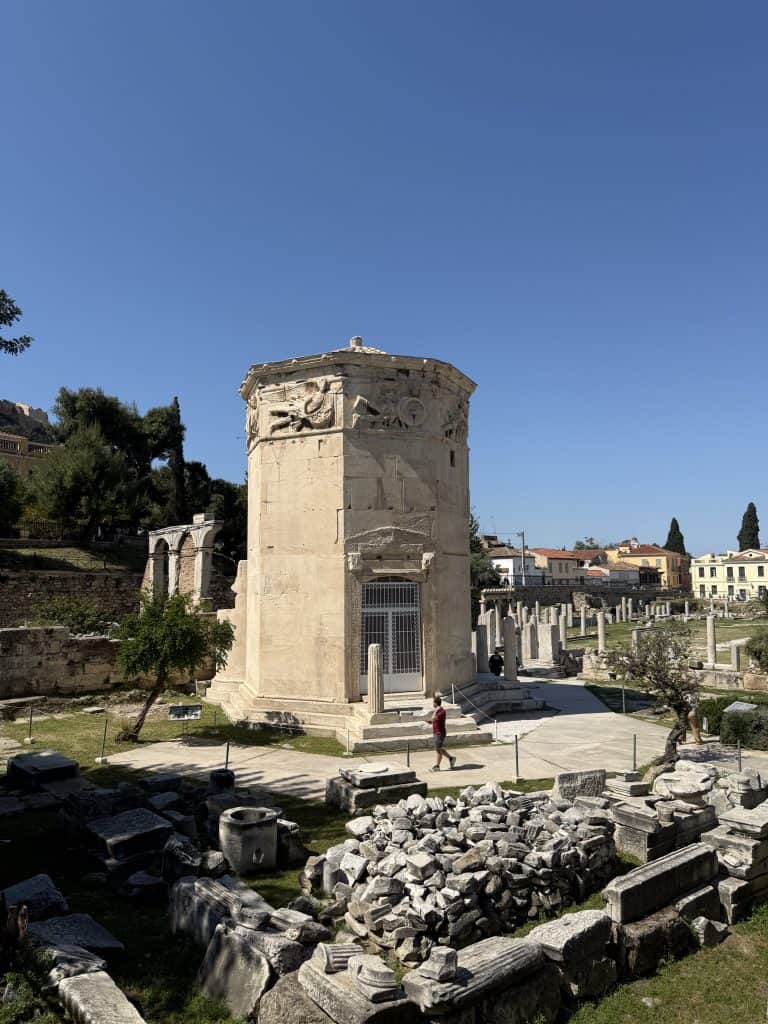
That goes for the main highlight too, because the thing that steals the show here is the Tower of the Winds, and it’s perfectly visible from outside.
It dates to the 1st century BC, and each of its eight sides shows a different wind carved as a god in relief. Effectively, a stone weather forecast.
Which isn’t far off what it actually was. The Tower of the Winds worked as a weather station, sundial, and water clock all at once, and there was once a bronze Triton mounted on top that turned with the wind to show its direction.
Ancient Athenians had a very stylish public weather app. Theirs was just made of marble and didn’t need charging.
3. The Hadrian’s Library
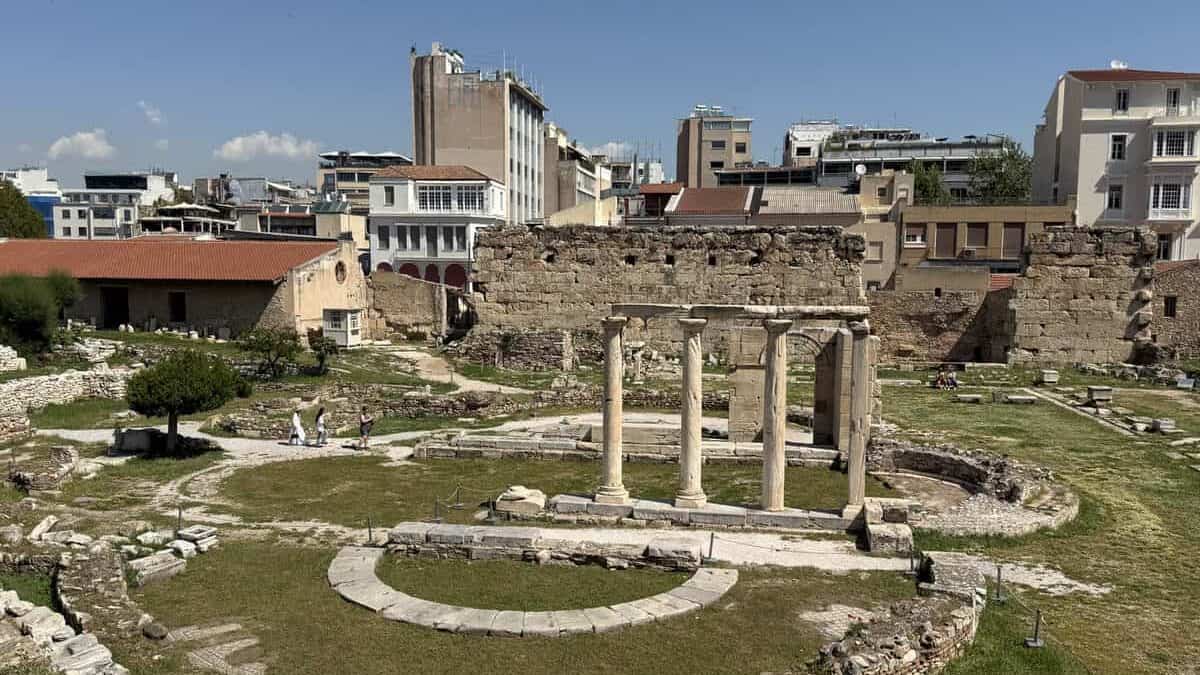
Hadrian’s Library sits right next to Monastiraki Square, so it’s almost unavoidable anyway.
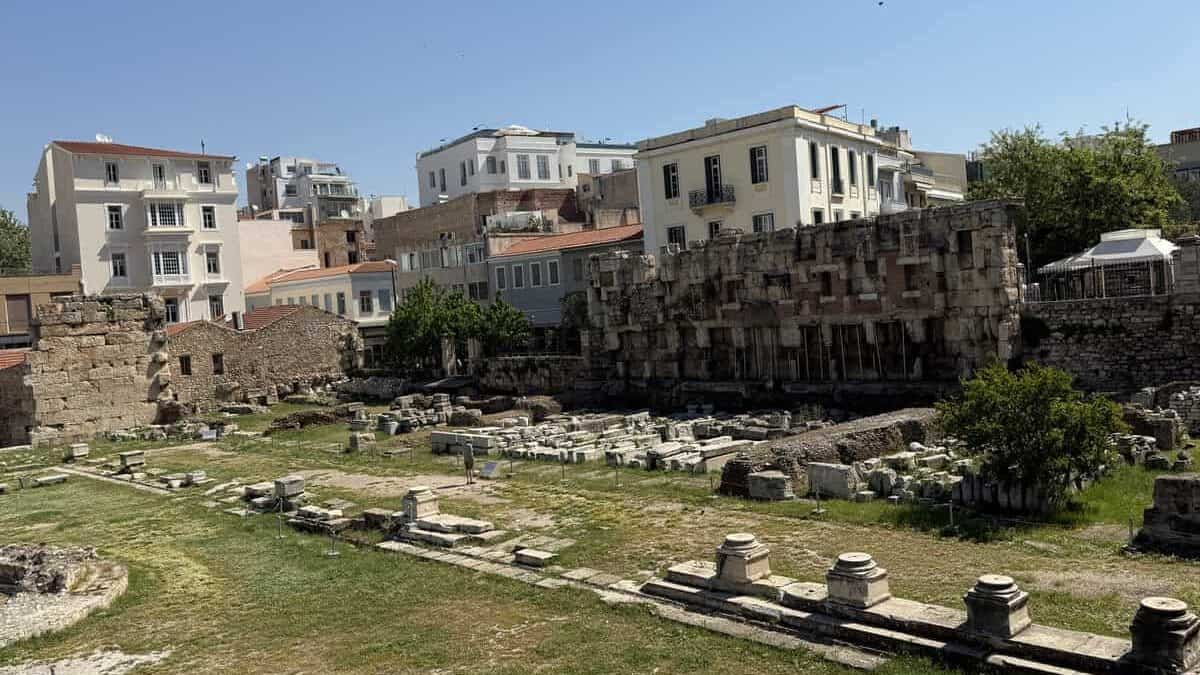
From the street there’s already a solid sense of the place, the surviving columns and the open courtyard are clearly visible, and stepping inside doesn’t change the experience much.
Hadrian built it in the 2nd century AD, when Roman Athens was still a serious cultural centre, and it was never just a library in the modern sense. The complex held lecture halls, reading rooms, gardens, and spaces for people to gather and argue about ideas.
Most of the site survives as foundations, partial walls, and open ground. For me it’s better enjoyed as one more layer in a walk through Monastiraki and Plaka than as somewhere that needs its own ticket.
4. The temple of Olympian Zeus
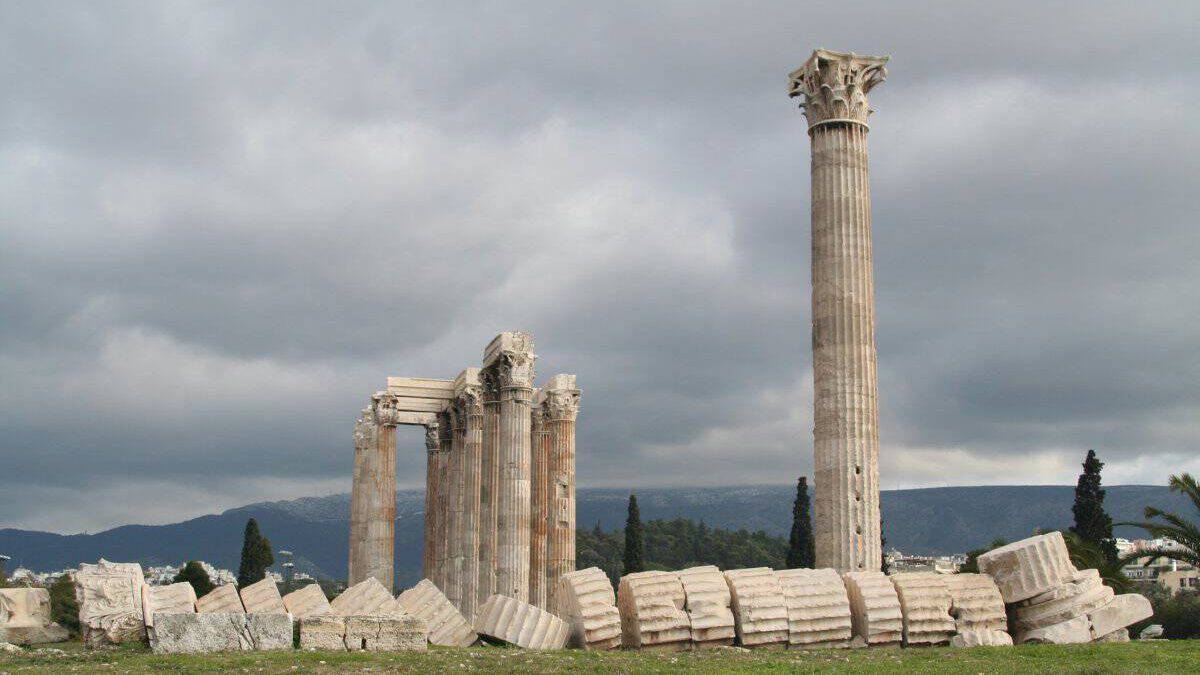
This is the one where the price is hardest to justify. €20 is a lot for a site this limited.
It was once among the largest temples in the ancient world, and the surviving columns still carry that. Standing near them is the only way to really register the scale, and I won’t pretend otherwise.
But that’s also the whole visit. A walk around the columns, a look from a few angles, a few information panels, and it’s over.
At €20, with the Acropolis itself at €30 for a much better experience, it’s hard to recommend. The good news is the view from outside is decent anyway, walking the area around Zappeion, Syntagma, and Hadrian’s Arch.
Short of standing directly beneath the columns, save the money, take in the scale from the railing, and move on. Koukaki and Syntagma are both an easy walk from that view.
5. Aristotle’s Lyceum
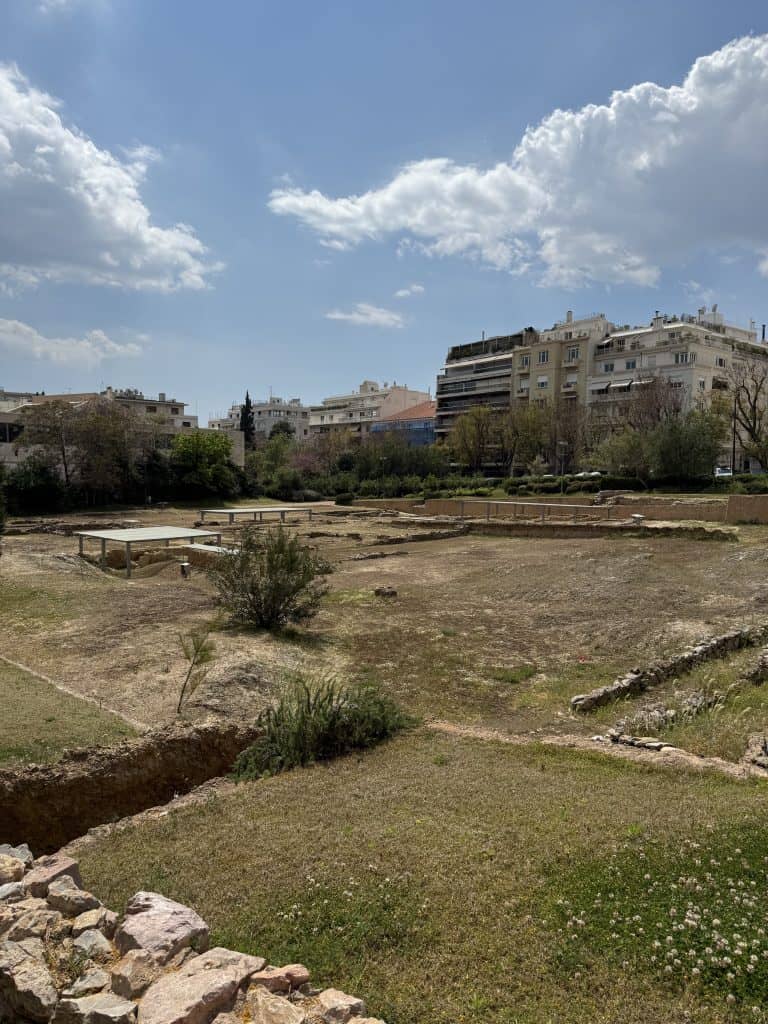
Of all the archaeological sites in Athens, the Lyceum is the one that disappointed me most, and I say that with some regret, because the history attached to it is extraordinary. This is where Aristotle founded his school in the 4th century BC, taught, and worked out ideas that shaped philosophy, science, politics, and logic for the next two thousand years.
Expectations run high, and then reality arrives. What survives is low ruins and foundation outlines across an open patch of ground. There’s almost no vertical structure left, and without knowing precisely what’s what, it’s hard to connect the weight of the place to the view.
It doesn’t help that it’s ringed by modern apartment blocks, so there’s none of the atmosphere that carries some of the city’s other sites. As a call on where limited time and money go, though, I wouldn’t call it essential.
When These Sites Are Free
All of these are state-run sites, which means they’re free for everyone on a set list of days each year.
That includes 6 March (Melina Mercouri Day), 18 April (International Day for Monuments and Sites), 18 May (International Museum Day), the last weekend of September (European Heritage Days), 28 October (Ohi Day), and the first and third Sundays of every month through the winter period from 1 November to 31 March.
Free tickets can’t be booked online, only collected at the ticket office in person, and these are among the busiest days of the year at every site. Queues of an hour for a free ticket are normal.
Separately, entry is always free for EU citizens under 25 and for under-18s from anywhere, with ID. For anyone in that bracket, most of this article is moot, go and see everything.
What About Combined Tickets?
The old government combo ticket, €30 for the Acropolis plus six other sites over five days, is gone as of April 2025. Some blogs still reference it, so any listing advertising it is out of date.
What I Would Pay For Instead
Since this whole article is about where not to spend, it’s only fair to say where I would.
The Acropolis at €30 is the one ticket I’d never tell anyone to skip. It’s the most expensive in the city and it earns it. My full guide to visiting the Acropolis covers timing, entrances, and the mistakes that cost people their morning.
The Acropolis Museum is the other easy yes. It gives context to everything on the hill, and the Parthenon Gallery on the top floor is worth the entry on its own.
The Ancient Agora is the one people most often lump in with the sites on this list, and I’d argue against that. Unlike the Roman Agora, there’s a lot to walk through here, and the Temple of Hephaestus is among the most complete ancient Greek temples still standing.
For everything else, my museums guide breaks down which of Athens’s many museums justify the ticket and which can be skipped.
Final Thoughts
Understanding the city’s history doesn’t require walking into every fenced ruin in it.
In a lot of cases, walking through the centre and passing places like the Roman Agora or Hadrian’s Library as part of the city already delivers most of the experience. Spend where going inside changes something, and let the rest be the backdrop.
For the rest of the planning, there’s where to stay by itinerary, how to visit the Acropolis without the common mistakes, what’s worth doing in the city, and what a trip here really costs.
Athens isn’t only ruins. It’s neighbourhoods, cafés, markets, rooftop bars, late dinners, street life, and walking around without much of a plan.