The Best Time to Visit Athens – Month by Month
I’m going to be honest.
Growing up in Athens, I always assumed the city had four distinct seasons.
That changed when I spent a few months living in Denmark.
Suddenly, a place with more than 300 sunny days and around 2,700 hours of sunshine a year no longer felt like it played by the same rules.
That said, sun on its own should not decide when you visit Athens.
Sunshine sounds ideal until you are climbing the Acropolis in the middle of summer, in 40°C (104°F) heat, with barely any shade.
For me, the best time to visit Athens is spring, while summer is the worst.
And winter deserves far more credit than it gets. It’s cheaper, quieter, and much more enjoyable to be outside.
Rain comes mostly between November and February, and even then it tends to arrive in short, heavy bursts rather than endless grey days.
So the real question comes down to temperatures, crowds, and hotel prices more than anything else.
Just so you know: Some links on this page are affiliate links, which means I might earn a small commission if you book or buy through them, at no extra cost to you. Thank you for your support!
Best time to visit Athens

For long walks, comfortable temperatures, and a city that’s lively without being overwhelming, late April to early June and September to mid-October are the best windows.
For combining Athens with the islands, June and September are the best. July and August can still be alright, but the rhythm of the day has to revolve around the sun.
For lower prices and crowds, winter (outside the holiday period) is the clear winner.
If I had to choose one window for the most balanced version of Athens, I’d pick May or late September.
The city is alive, the light is beautiful, and everything works without the extremes.
1. Spring
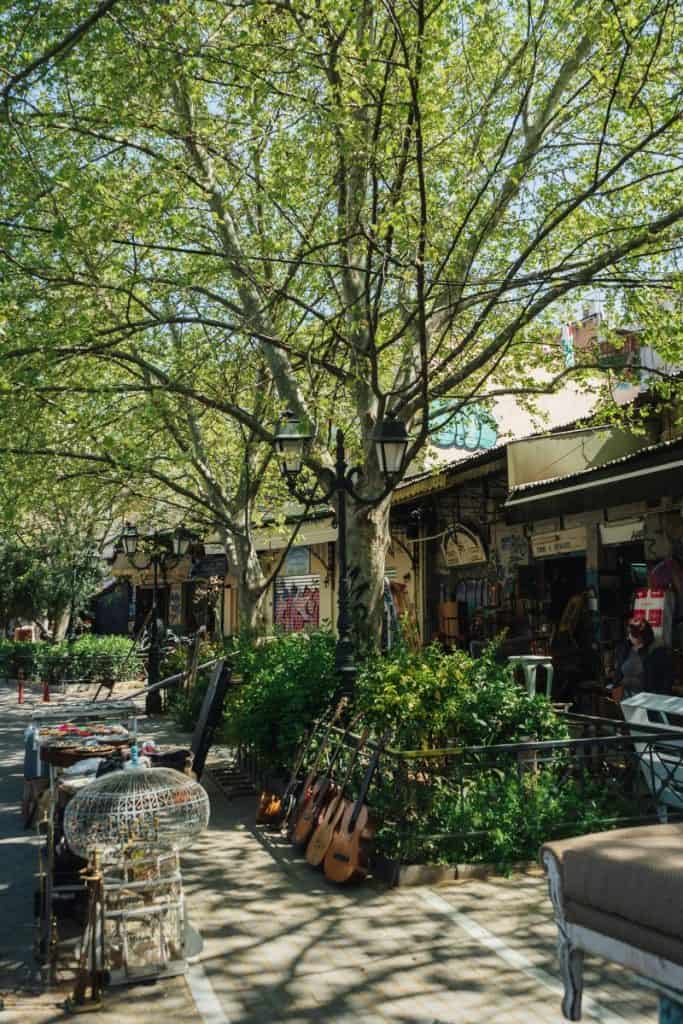
Spring is the best season to visit Athens.
Temperatures are mild, usually between 17°C and 25°C (63-77°F), which makes it easy to walk around the city for hours without getting exhausted.
Outdoor sightseeing is comfortable, cafés spill onto the sidewalks again, and even visiting the Acropolis is manageable if you go early.
April and May are the sweet spot.
The city is alive, but not yet crushed by summer crowds.
And there is something really nice about being able to sit outside for coffee or dinner without desperately searching for shade.
Swimming is not really part of the equation yet. March is still too cold, and even April can be chilly for the sea (at least for my greek ass).
By late May though some beach days become more realistic.
Athens in March
- Crowd level: Low
- Hotel pricing: $$
March marks the beginning of spring, even if the weather can be unpredictable at times.
Some days feel like proper spring, others remind you winter isn’t quite finished yet.
And occasionally you’ll get a day that feels closer to a North European summer.
- Average temperature: 11-19°C (52-66°F)
- Rain: 6-8 days
On March 25th, Greece celebrates the anniversary of the start of the War of Independence.
I’ve always found it strange that we celebrate the beginning of a war instead of the end. There’s a military parade in the city centre, but it’s not one of my favourite traditions.
That said, I really love the Athens half marathon events which also take place around this time.
It’s a smaller event compared to the “authentic” version in November, but the atmosphere is lovely.
One small detail: March often falls within the Orthodox fasting period before Easter, meaning restaurants have more vegan dishes available than usual.
Athens in April
- Crowd level: Moderate (especially around Easter)
- Hotel pricing: $$
Weather in April is more stable, the Acropolis is still comfortable to explore, and evenings are mild enough to sit outside.
Flowers start appearing across the city (where they exist, at least) and Athens is noticeably more alive.
- Average temperature: 13-22°C (55-72°F)
- Rain: 4-6 days
The biggest event in April is Orthodox Easter.
It is a moving holiday, so it can fall anywhere from early April to early May, and it also comes with a two-week school holiday period in Greece. That makes a bit busier than normal.
One of the most interesting traditions during that period is the Epitafios procession, which takes place on the Friday before Easter Sunday.
A symbolic tomb of Jesus, decorated with flowers, is carried through the streets while people gather and follow it.
Processions take place at churches all over Athens, but if you are in Plaka that night, you can also catch the moment when the processions from the Church of the Transfiguration of the Saviour and Agios Nikolaos Ragavas meet.
In 2026, Orthodox Easter falls on April 12, with the Epitafios on April 10.
Athens in May
- Crowd level: Moderate
- Hotel pricing: $$$
May is arguably the best month to visit Athens.
The weather is warm but still manageable, the evenings are long, and the city is alive without yet reaching peak summer levels.
The main downside is that prices slowly start going up.
- Average temperature: 17-27°C (63-81°F)
- Rain: 3-5 days
The main event of the month is the “This is Athens” City Festival, which runs from May 1 to May 31.
It’s one of the most interesting cultural events in the city, with more than 200 free activities taking place across Athens.
The program changes every year, but it usually includes things like guided walks, open-air cinema screenings, rooftop concerts, yoga sessions, street parties, and small cultural events in neighbourhood squares.
Everything is free and open to the public, so it’s always worth checking the official program.
2. Summer

Summer is the worst time to visit Athens due to the heat, crowds, and inflated hotel prices.
June can still be manageable, but July and August are a different story. Temperatures of 35-40°C (95-104°F) are not unusual, and heatwaves can push things even further.
That is why, in peak summer, timing is more important than anything else.
Early mornings are for the outdoor sights. Midday is for museums, long lunches, or hiding somewhere with air conditioning.
The upside is that summer nights in Athens are fantastic.
Sunsets last forever, rooftop bars are full, and open-air cinemas appear all over the city.
Hotel prices, though, stay painfully high.
Oh, and plenty of festivals take place during the summer months.
The Athens Open Air Film Festival runs throughout the season, hosting free movie screenings in some of the city’s most unusual locations, from archaeological sites to hidden courtyards and neighbourhood squares.
The Athens & Epidaurus Festival is another big cultural event.
While the ancient theatre of Epidaurus in the Peloponnese hosts most performances, many concerts, plays and cultural events take place inside Athens.
Athens in June
- Crowd level: High
- Hotel pricing: $$$
During June, the city feels very much alive.
The days are long, the evenings are ideal for sitting outside, and Athens still has that early-summer energy before the harsher part of the season fully kicks in.
That said, June can still get quite hot, especially later in the month, so midday sightseeing can already start feeling tiring.
- Average temperature: 21-32°C (70-90°F)
- Rain: Rare
But June also brings many events around the city.
One of the most interesting is SNF Nostos, hosted at the Stavros Niarchos Foundation Cultural Center.
It runs between June 21-28 and includes discussions, concerts, sports activities, exhibitions, and cultural events.
Many talks are held in English, and the program is large enough that you can easily spend an entire day there. Registration is required, but the events themselves are free.
June is also the month of the Athens Pride parade.
Greece became the first Orthodox-majority country to legalize same-sex marriage, and Pride has grown into one of the city’s biggest celebrations of the year.
The parade takes place in the centre and attracts large crowds, music, and a joyful atmosphere.
Athens in July
- Crowd level: Very High
- Hotel pricing: $$$$
July in Athens is hot.
Not metaphorically, literally hot.
The city centre has very little shade, not much greenery, and plenty of people.
Early mornings and late evenings are really the only times when you can enjoy the city without feeling like you are melting.
- Average temperature: 24-35°C (75-95°F), often higher
- Rain: Almost none
I really love the fact that July is concert season.
Ejekt Festival, Greece’s largest rock music event, takes place every July and brings world-class international artists to Athens.
It’s one of the few festivals where you’ll see big global bands performing in Greece, and it’s worth planning a trip around it.
This year’s event takes place on 14-15 July and will be headlined by “Florence + the Machine” and “The Cure”.
Athens in August
- Crowd level: High (tourists), Lower (locals leave)
- Hotel pricing: $$$$
August is the hottest month in Athens but also one of the busiest for tourism.
At the same time, many Athenians leave the city for their summer houses or the islands, which gives parts of Athens a strangely quieter feeling.
The historic centre stays busy, of course, but some smaller local businesses close for a few weeks in the middle of the month.
One date to keep in mind is August 15. It is a religious holiday in Greece, and many shops and restaurants close for the day.
- Average temperature: 25-36°C (77-97°F)
- Rain: Extremely rare
On the evening of the August full moon many museums and archaeological sites across Athens stay open until midnight.
Entrance is free, and the night includes small concerts or performances in historic spaces.
Seeing ancient sites under the full moon is a beautiful experience, and one of the more unique things that happens in the city each year.
3. Autumn
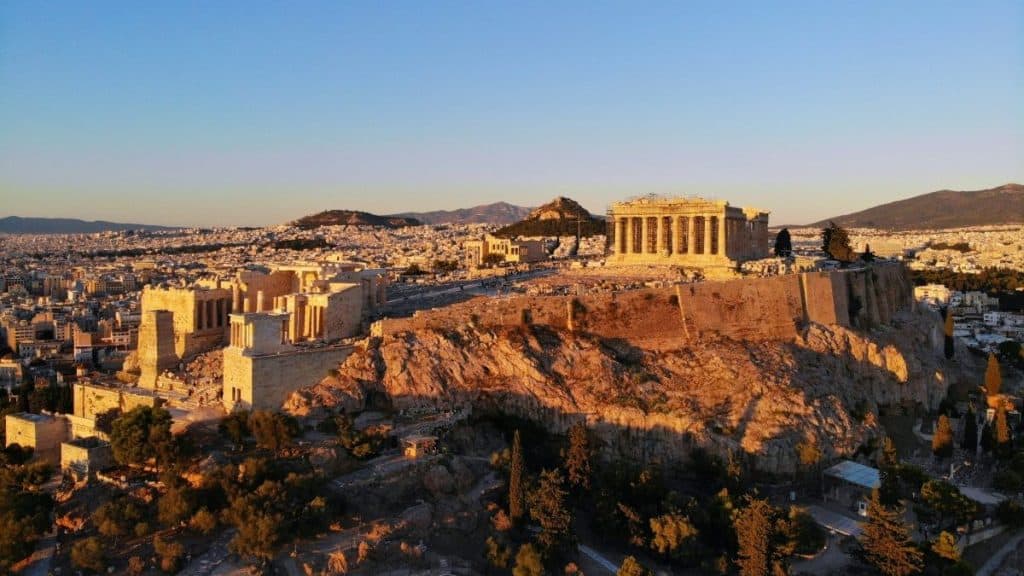
Autumn in Athens is underrated.
September is a great month to visit because the city starts breathing again and the heat becomes easier to handle.
During October, long afternoons in the centre are comfortable again, museums are less crowded, and restaurants slowly fill with locals rather than peak-season crowds.
And by November, that shift becomes even more obvious.
Another advantage of autumn is that hotel prices begin to lower after summer, and availability improves.
Good central hotels are still in demand, but the pressure of peak season is gone.
And when it comes to day trips, autumn is a fantastic time.
Delphi or Cape Sounion are much more manageable than they do in July, simply because the weather is on your side.
Athens in September
- Crowd level: Moderate-High (early), Moderate (late)
- Hotel pricing: $$$
During September summer has not fully disappeared, so the city still has long bright days, warm nights, and plenty of energy.
There is still heat around, especially at the start of the month, but it becomes easier to move through the day without planning everything around it.
- Average temperature: 21-31°C (70-88°F)
- Rain: Minimal
The Athens Coffee Festival in Gazi is among my favourite events of the year.
It’s part industry event, part excuse to drink very good coffee all day, and the atmosphere is much more fun than that probably sounds.
Athens in October
- Crowd level: Moderate
- Hotel pricing: $$-$$$
October is excellent for walking.
The city stays alive, but the exhausting part of summer is gone.
Long days outside are easy again, which makes this a very comfortable month for sightseeing.
- Average temperature: 17-26°C (63-79°F)
- Rain: 4-6 days
Every 28th of October greeks celebrate the “Ochi day” (translated to “No day”) when greek dictator Ioannis Metaxas refused entry to Mussolini’s army and signalled the beginning of Greece’s involvement in WWII.
There is a military parade in the centre, similar to the one on March 25. Cafés, restaurants, and bars, however, are usually open.
Athens in November
- Crowd level: Low
- Hotel pricing: $$
November is quieter than the rest of autumn.
Rain returns more often, but the city has a calmer rhythm and a more local atmosphere.
- Average temperature: 13-21°C (55-70°F)
- Rain: 6-8 days
The month’s main event is the Athens Marathon “The Authentic”.
Its origin story goes back to the 490 BC legend of Pheidippides, the messenger said to have run from Marathon to Athens to announce victory over the Persians before collapsing.
That’s why Athens claims the birthplace of the marathon, and the event still carries a certain weight because of that.
The race takes place on the second weekend of November.
I’ve run the full 42 km (26.2 miles) myself, and it was a fascinating experience. T
he route begins in Marathon and ends at the Panathenaic Stadium, with official event buses taking runners from Athens to the starting point.
Even without running the full distance, the weekend is still worth paying attention to.
There are also 10 km, 5 km, and children’s races, and watching from the sidelines is free.
The atmosphere across the city is celebratory and really fun.
4. Winter
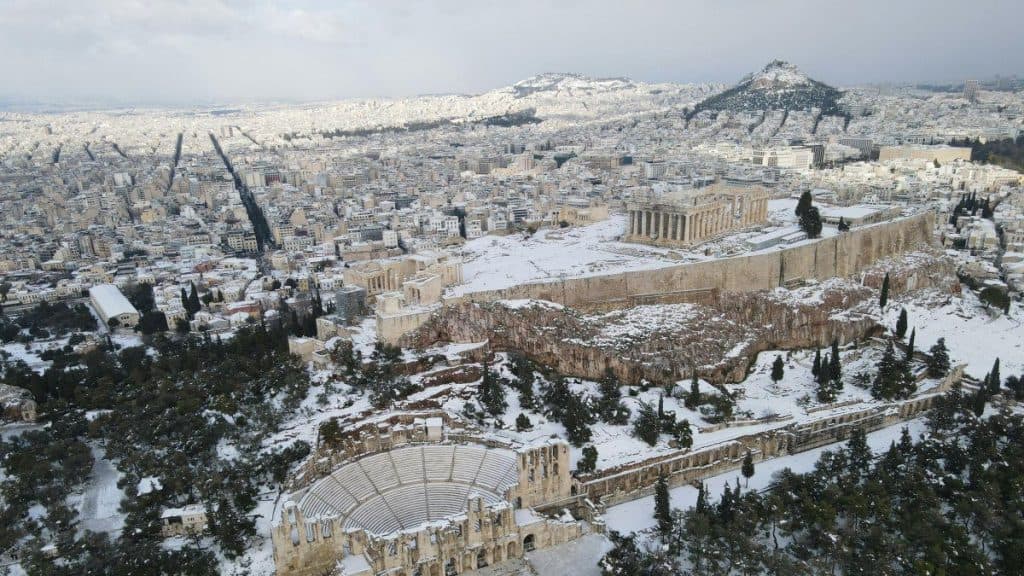
Winter in Athens might surprise you.
Snow in the city is rare (maybe once every two or three years) and temperatures stay relatively mild compared with much of Europe.
During these months, expect something around 8°C to 16°C (46-61°F).
Swimming is off the table, of course, and some rooftops close depending on the weather.
But winter has its advantages.
Museums are at their best, the Acropolis is far quieter, and walking around the centre is really enjoyable.
Hotel prices also drop in central neighbourhoods, so this is the season where Athens offers its best value.
The downside is shorter daylight and the occasional grey stretch.
But for museums, neighbourhood walks, and archaeology without queues, winter works really well.
Athens in December
- Crowd level: Moderate (Christmas spike)
- Hotel pricing: $$-$$$
December in Athens is cozy.
Syntagma Square and Ermou Street are decorated, evenings look festive, and the city gets a softer atmosphere than usual.
It’s not the kind of Christmas destination that gives you snow and German-style markets.
But it still works well in its own way.
- Average temperature: 9-18°C (48-64°F)
- Rain: 8-10 days
- Sea temperature: ~18°C
A lot of cafés, restaurants, and shops put up Christmas decorations, but two places stand out.
The first is Public in Syntagma.
It’s a large Greek retail chain that sells books, electronics, and pretty much everything else, and the building is decorated differently every year.
Sometimes it looks like a giant wrapped gift, sometimes something completely different, but it always catches attention.
Then there’s Little Kook in Psirri.
The place is known for over-the-top decorations all year round, but Christmas takes that to another level. It’s excessive, slightly absurd, and somehow still fun.
Athens also has a few seasonal attractions, the best known of which is The Christmas Factory in Gazi.
Athens in January
- Crowd level: Very Low
- Hotel pricing: $
January is the quietest month of the year.
The Christmas lights come down, the holiday rush disappears, and Athens returns to its normal rhythm.
It’s also the coldest month, though “cold” in Athens is still relative.
A proper jacket is necessary at night, but extreme weather is rare.
- Average temperature: 8-16°C (46-61°F)
- Rain: Around 8-10 days
The biggest moment of the month is New Year’s Eve.
At midnight, fireworks light up the city and a free concert takes place in Syntagma Square.
The guest performer is usually a big name from the Greek music scene, and the atmosphere is crowded, loud, and festive.
The night doesn’t end there.
Greeks tend to head out after midnight and stay in bars or clubs until very late, so booking ahead is a good idea.
Athens in February
- Crowd level: Very Low
- Hotel pricing: $
February is similar to January but slightly lighter.
Days stretch a little longer, and you’ll get even more sunny days.
It’s also one of the cheapest times to stay in the centre, including some very good boutique hotels.
- Average temperature: 9-17°C (48-63°F)
- Rain: 7-9 days
- Sea temperature: ~15-16°C
February also brings some very Greek seasonal traditions.
Tsiknopempti takes place about eleven days before Clean Monday and marks the last big meat-heavy Thursday before Lent.
The name literally means “Smoky Thursday,” which tells you most of what you need to know.
Taverns grill nonstop, balconies fill with smoke, and the whole city becomes louder and more chaotic for the evening. Booking a table helps.
Then comes Clean Monday, which marks the beginning of Lent.
Many Athenians leave the city for the day, fly kites, and eat fasting foods such as lagana bread, taramosalata, olives, and seafood.
Athens changes mood on that day. Shops close, hills like Filopappou and Lycabettus fill with families, and the atmosphere turns almost picnic-like.
By late February, it’s carnival season.
Athens doesn’t have the huge parades of Patras, but smaller costume events, parties, and themed nights still start appearing around the city.
When Is Athens Cheapest?
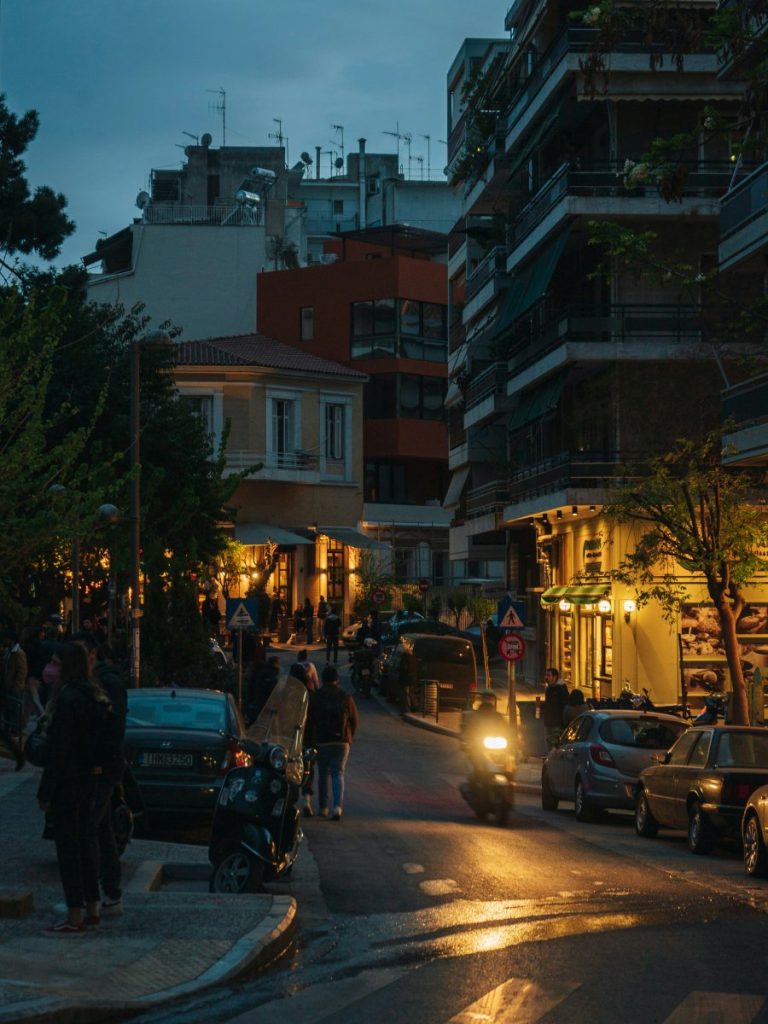
Athens is cheapest in the deep off-season, roughly from mid-January to early March, and then again in November (outside Christmas and New Year).
That’s when hotel prices drop the most, flights become easier to find at decent rates, and central neighbourhoods aren’t under pressure from cruise traffic or summer stopovers.
January and February are the lowest point of the year.
Availability also improves. Monastiraki, Plaka, and Kolonaki, which can be fully booked months ahead in warmer months, often have much better last-minute options.
November is the second sweet spot. The weather stays mild by European standards, but demand drops once October ends.
When is Athens Most Crowded?
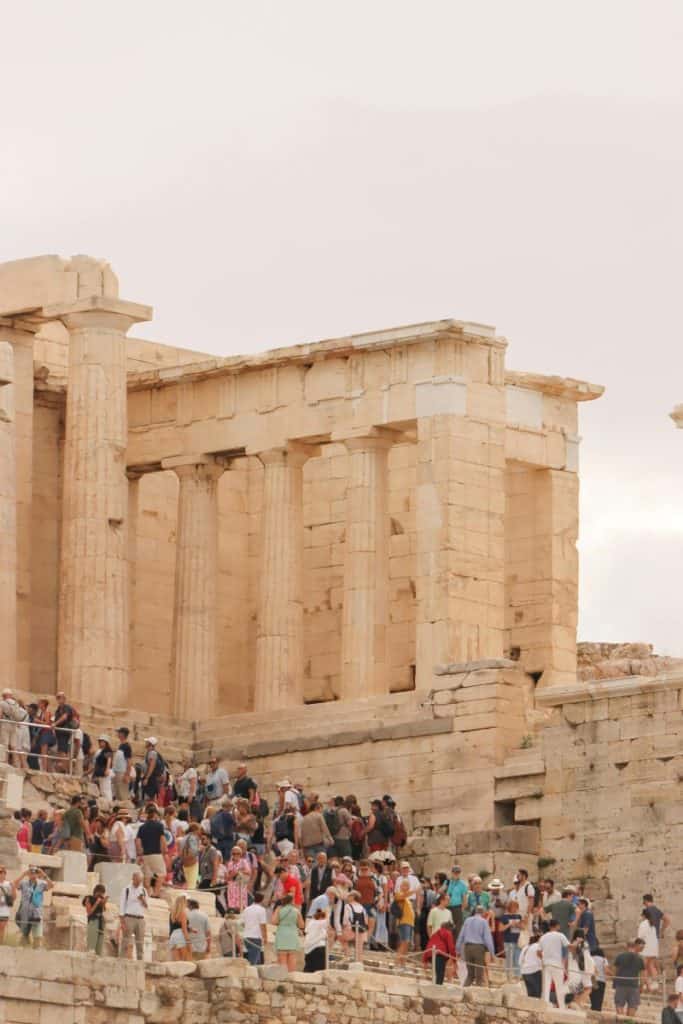
The city is busiest from June through early September.
Cruise ships arrive daily in Piraeus, island traffic is at its highest, and Athens becomes the natural stop before or after the islands.
In July the centre can be packed from morning until late evening.
August is slightly different. Many Athenians leave for their own holidays, so some residential areas quiet down.
But tourism stays high around Plaka, Monastiraki, Syntagma, and the Acropolis.
Beyond summer, there are smaller spikes:
- Greek Easter (usually April) – domestic travel period.
- Late April-May – Cruise season ramps up.
- October – Popular with American travellers and retirees seeking mild weather.
The important thing is that crowds in Athens are very concentrated.
Walk a few streets away from the Acropolis, Plaka, or Monastiraki, and things calm down quickly.
Final Thoughts
Athens doesn’t have one perfect season.
The city in spring is lighter, easier, and much better for long days outside, while summer is harsher during the day but much more alive at night.
That is why timing and planning go together here.
It always helps to know what to expect from Athens in spring, how to handle the city in summer, and which stops are worth building your trip around.