Why Spring is the Best Season to Visit Athens
Spring is one of my favourite times of year in Athens.
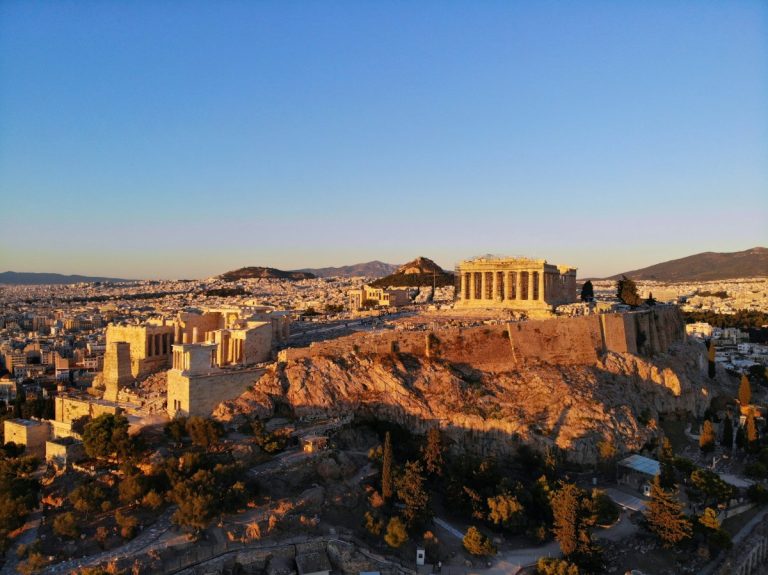
Temperatures make it comfortable enough to walk for hours, markets fill with seasonal fruit, outdoor cinemas reopen, and the hills around the Acropolis turn green for a short while.
And then there are events like the Athens Half Marathon, the Athens Jazz Festival, and the gradual return of outdoor concerts, screenings, and festivals across the city.
At the same time, spring in Athens is not always calm or cheap.
March and early April can still be unpredictable weather-wise, pollen can become a real issue, and by May hotel prices start climbing.
So here’s what spring in Athens is like month by month, what to expect from the weather, what to wear, and the seasonal events and outdoor experiences that make this one of the best times of year to visit the city.
Just so you know: Some links on this page are affiliate links, which means I might earn a small commission if you book or buy through them, at no extra cost to you. Thank you for your support!
Spring in Athens Is Ideal For

Walking the city: I love that spring in Athens is already sunny, but still enjoyable to walk around without constantly looking for shade, air conditioning, or the nearest place to collapse from the heat.
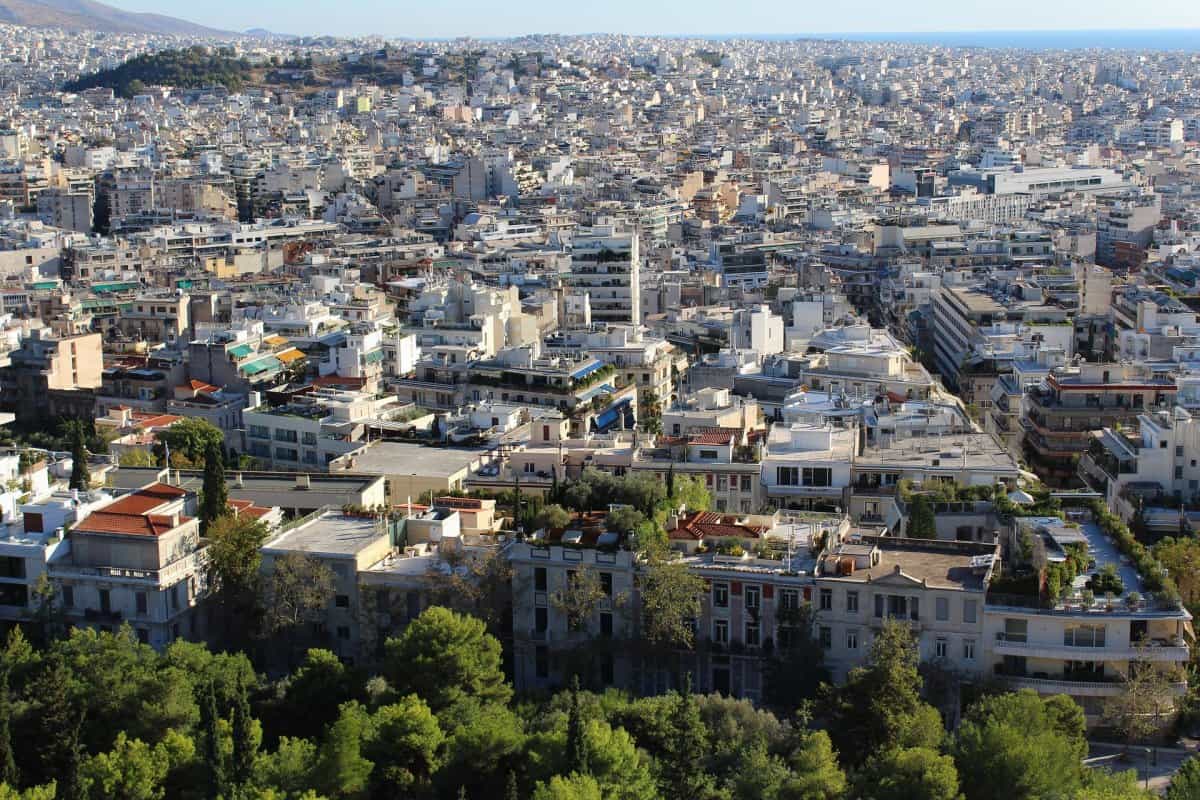
Seeing the city while the hills are still green: This part doesn’t last long. For a few weeks, the hills around the Acropolis, Philopappou, and Lycabettus still have greenery and wildflowers before summer dries everything out.
Seasonal food and local markets: Spring is when strawberries and other seasonal produce start showing up in neighbourhood markets again. I love strawberries, so I always look forward to this little window of the year.
Local traditions and seasonal events: Orthodox Easter is a big part of this season. Spring also brings the Athens Half Marathon, art fairs, and the gradual return of outdoor performances.
But it is Less Ideal For
Stable weather: Spring weather is usually pleasant, but it is not completely predictable in March and early April. You can get a warm, almost summer-like day, then a cooler afternoon, some wind, or a short burst of rain.
Pollen and allergies: The same greenery that makes Athens so beautiful in spring can also make allergies worse. The city has a lot of olive trees, pine trees, and other Mediterranean plants, so pollen is something I would definitely keep in mind.
Hotels can become expensive surprisingly early: Spring is not a quiet bargain season like Winter. By May, good central hotels already start climbing in price.
Athens in March
March is the start of spring, though not always in a very convincing way.
Daytime temperatures sit around 14-18°C (57-64°F), but I would still bring a jacket, because evenings can be cold even if the afternoon was sunny.
Rain shows up every now and then, but it rarely lasts for more than an hour.
I like March because Athens is still quiet. At the same time, the Acropolis is easier to visit, Plaka is not packed yet, and you can walk around the centre without being trapped in crowds.
Athens in April
April is when it’s warm enough to stay outside for most of the day, with temperatures around 18-23°C (64-73°F).
It is not as quiet as March, but it is still manageable.
The city has more movement, more people sit outside, and evenings are much better than a few weeks earlier.
April is usually the period of Greek Orthodox Easter.
When it is, some locals leave the city and opening hours can change around the Easter weekend.
But you may also come across candlelit church services, midnight fireworks, and a more traditional side of Athens that you do not always get to see.
Athens in May
May is when Athens starts getting hotter and busier.
Daytime temperatures often reach 22-26°C (72-79°F), evenings stay warm, and the city stays lively later into the evening.
It is not July or August, but the cool and quiet feeling of early spring is mostly gone.
Hotels cost more, the Acropolis gets noticeably busier later in the morning, and the historic centre starts getting crowded again.
For me, May is one of the best months in Athens, as long as you treat it like the beginning of the busy season.
What to Wear in Athens in Spring
Spring weather in Athens is good, but it can change through the day.
Mornings and evenings can still be cool, while afternoons are usually warm enough for lighter clothes.
So the easiest way to deal with that is to dress in light layers.
A light jacket or sweater helps in March and early April. By May, you’ll probably only want it at night.
During the day, T-shirts, light shirts, and thin knits are usually enough.
The most important thing to bring is comfortable walking shoes.
Athens is best explored on foot, and a lot of the older streets are uneven, stone-paved, or slippery.
I’d also pack sunglasses and sunscreen.
Spring sun in Athens is strong, and sunglasses are always a good idea.
Nothing complicated here. Just clothes that work for warm afternoons, cooler evenings, and a lot of walking.
Experience Spring Outdoors in Athens
1. Walk Dionysiou Aeropagitou While the Hills Are Green

Dionysiou Areopagitou is the pedestrian promenade that runs from the Acropolis Museum toward Thisseio and Monastiraki, and spring is when this walk looks its best.
For a short window, the hills around the Acropolis turn green, and wildflowers appear along the slopes and walking paths.
The promenade is wide, mostly flat, and much calmer than the surrounding roads, which makes it one of the easiest places to walk in the centre.
There are street musicians along the path, locals out for a walk, and the Acropolis stays above you for most of the route.
Keep going and the promenade eventually leads toward Thisseio and Monastiraki, where you can stop for coffee or just continue walking.
2. Spend Time in Outdoor Cafés and Squares
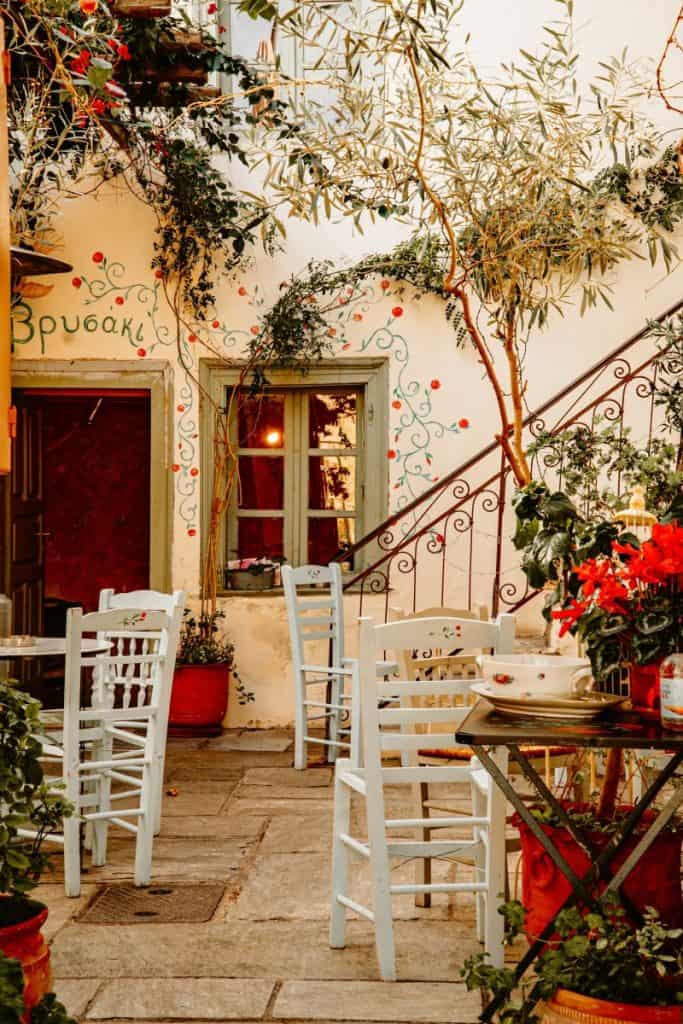
A big part of spring in Athens is simply being outside again.
As the weather warms up, café tables return to the pavements, neighbourhood squares get busier, and people stay out for much longer. Coffee can easily turn into an hour or two of sitting, talking, and watching the street.
That’s a very normal part of life here. Coffee is an hours-long habbit, and spring is when that habit becomes more visible again.
Koukaki, Pangrati, Psirri, and Exarcheia are particularly good for this.
You’ll find cafés, bakeries, and bars spilling into sidewalks and small squares, and that side of the city is just as worth noticing as the big sights.
This is not really about chasing a specific place. Pick a square, sit down, order something, and stay there for a while.
3. Hike Mount Hymettus

Mount Hymettus rises just east of Athens and is one of the easiest ways to leave the city behind without going very far.
There are walking trails through pine forest, small monasteries, and viewpoints looking back toward Athens and the sea.
This is exactly when Hymettus is best. The air is fresher, the mountain is greener, and the walk is much easier to enjoy.
A lot of trails begin around Kaisariani and Vyronas, which makes the mountain fairly easy to reach from the centre.
TopoGuide does a fantastic job explaining these, so make sure to visit their website to learn more.
4. Cycle the Athens Coastal Bike Path
Athens might not be a bike-friendly city, but the coastal route is a bright exception.
Around Faliro, Flisvos Marina, and the Stavros Niarchos Foundation Cultural Center, there is a long seaside bike lane that makes cycling easy and enjoyable.
It stays relatively flat and passes parks, marinas, waterfront promenades, cafés, and open sea views along the way.
I’d recommend doing this with a guided bike tour rather than figuring it out alone.
Spring is probably the best time for it. The weather is warm enough for the coast, but still comfortable for a longer ride.
It’s probably one of the easiest ways to experience the Athens Riviera without needing a car or taxi.
5. Enjoy Rooftop Bars Reopening for the Season

The weather is warm enough to sit outside comfortably, but the city still hasn’t reached the intense heat and crowds of summer evenings.
Around sunset especially, rooftops become a very easy way to end the day.
Most are concentrated around Monastiraki and Syntagma, with direct views toward the Acropolis. A few good options are Ermou 18 Beyond the Horizon, Ciel Athens, and 360 Cocktail Bar.
Rooftops are great for coffee, drinks, and views. For lunch or dinner, I’d choose a restaurant elsewhere and keep the rooftop for before or after.
6. Visit Outdoor Cinemas
Outdoor cinemas are a long-standing part of life in Athens.
Most of them close during the winter months and begin reopening toward the end of spring, just before the main summer season starts.
These are usually small open courtyards with rows of seats, plants, string lights, and a snack bar selling drinks and popcorn.
The whole thing is much more relaxed than a normal indoor cinema.
Two of the best-known ones are Cine Thisio, which also has views of the Acropolis, and Cine Paris in Plaka.
Watching a film outside on a warm evening is among my favourite warm-weather things to do in the city.
Spring Events and Festivals
7. Attend the “This is Athens” City Festival

May brings the “This is Athens” City Festival, a city-wide program organised by the Municipality.
For weeks, different neighbourhoods host concerts, screenings, talks, exhibitions, performances, and smaller events in squares, galleries, parks, museums, and public buildings.
What I love about it is that it spreads across the city.
You might come across live music in a small square, a guided tour, a screening in a courtyard, or an event inside a building you would have otherwise walked past.
Most events are free, so it’s an easy way to add something cultural to your evening without much planning.
The program changes every year, so it’s worth checking the official schedule once you’re in Athens.
In May, there’s always something happening somewhere in the city.
8. Experience Greek Orthodox Easter

Spring often overlaps with Greek Orthodox Easter, the biggest religious celebration of the year in Greece.
One of the most atmospheric moments is the Epitafios procession on Good Friday evening.
Churches decorate a symbolic funeral bier with flowers, and the procession moves slowly through the surrounding streets, with people following behind holding candles.
The main moment comes late on Holy Saturday.
People gather outside churches with candles, and close to midnight the flame is passed through the crowd. Then come the fireworks, and many families head home for the traditional late meal.
Around Easter, bakeries fill with tsoureki pastries, while churches across the city become much busier than usual.
9. Watch the Athens Half Marathon
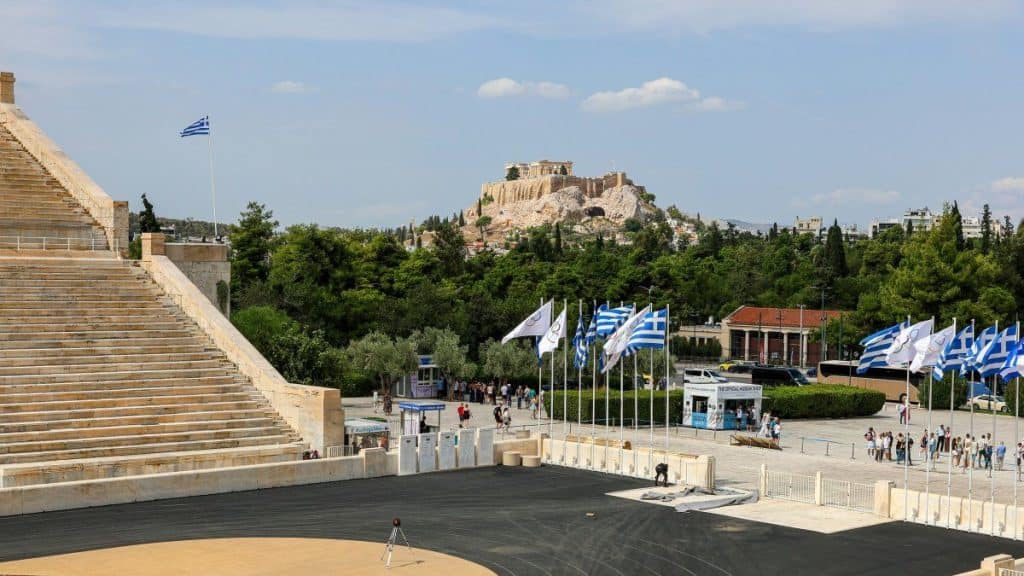
I love that running culture has started becoming more visible in Athens.
The city is not always easy for runners. It is hilly and flat open spaces are not as common as they should be.
Still, there are a few running events that bring a very different energy to the centre, and the Athens Half Marathon is one of them.
This year’s race takes place on March 8, bringing runners from Greece and abroad into the centre of Athens.
The route passes through central streets and areas around Syntagma and the Panathenaic Stadium, and it’s not very challenging.
You do not need to be into running to enjoy it.
People gather along the route, music plays in different spots, and cafés turn into casual viewing points for the morning.
If your trip overlaps with the race, it is worth stopping for a while to watch.
Just keep in mind that some central streets may close temporarily earlier in the day.
10. Visit the Athens Digital Arts Festival

Athens is not only ancient sites and marble ruins, and ADAF is a good reminder of that.
It focuses on the more experimental side of the city, with video art, animation, sound projects, installations, virtual reality, and other work that mixes technology with art.
Depending on the programme, some pieces are interactive, some are strange, and some are easier to enjoy than explain.
11. Attend the Athens Jazz Festival

Athens Jazz Festival is one of the city’s best-known music festivals, and in 2026 it runs from May 25 to May 31 at Technopolis in Gazi.
For a few evenings, the whole place fills with live music from artists coming from Greece and abroad.
The program changes from year to year, but it tends to mix more classic jazz with newer, stranger, and less predictable sounds.
A big plus is that entry is free.
People gather in the courtyard with drinks, sit on the ground or stand near the stage, and stay there for hours.
In late May, that kind of evening is ideal.
12. Visit the Athens Street Food Festival

I love food, so this one is very easy for me to recommend.
The setup is simple: lots of food stalls, communal tables, music, drinks, and a crowd moving around the old depot trying different things.
And that’s really the appeal.
You’ll find Greek street food, burgers, Asian food, Middle Eastern flavours, and plenty in between.
It’s perfect for an easy spring evening in Gazi with food, drinks, music, and enough variety to keep things interesting.
13. Visit Monuments for free on April 18
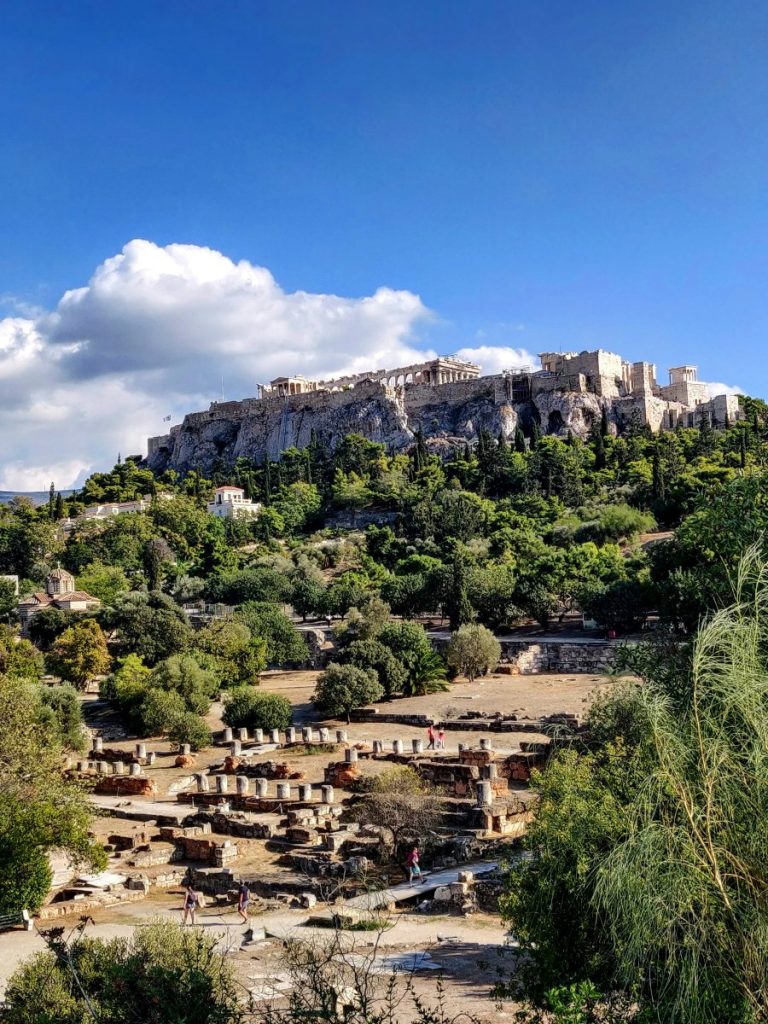
Every year on April 18, Athens celebrates the International Day for Monuments and Sites.
That means free entry to museums and archaeological sites, including the Acropolis.
If your trip happens to line up with that date, it’s an easy chance to see some of the city’s main sites without paying for each ticket.
Just go early. Free entry days can get busy quickly.
Local Activities
14. Visit Street Markets and Neighborhood Flea Markets
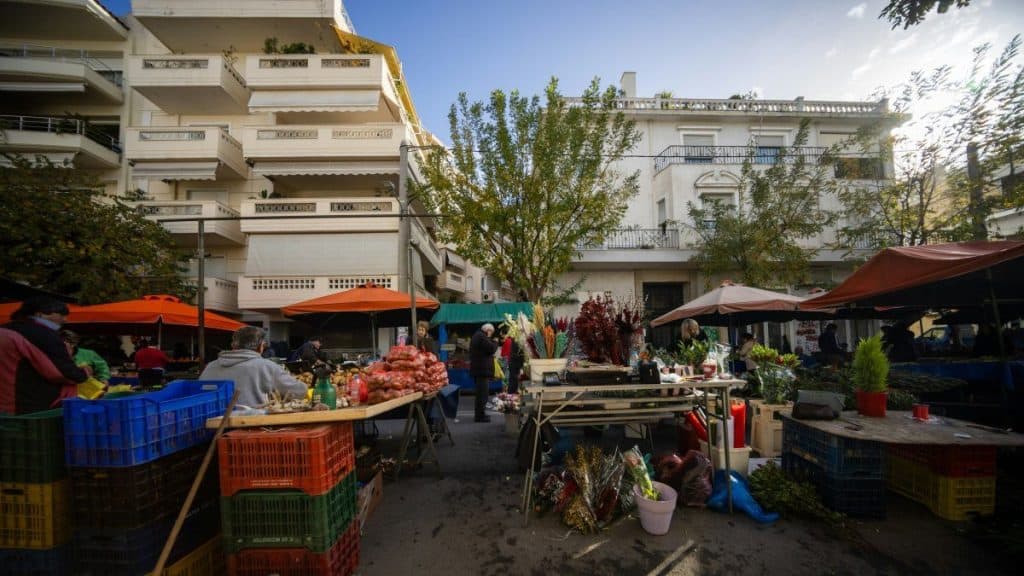
Athens still has a strong open-air market culture, and spring is a good time to see that part of the city.
Many neighbourhoods have a weekly laiki (the local farmers market) where people buy fruit, vegetables, herbs, olives, and whatever is in season.
The markets usually take over an entire street, with vendors calling out prices and people moving slowly between stalls with shopping bags in hand.
It’s busy, a little messy, and very normal.
For something different, there’s also the Monastiraki flea market area.
Around the square and in the surrounding streets, you’ll find shops selling records, furniture, antiques, second-hand objects, and plenty of random things in between.
Some of it is obviously touristy, but not all of it.
15. Try Strawberries and Seasonal Fruit

One of the things you’ll start seeing everywhere during Spring is fresh strawberries, stacked in small boxes at market stalls and fruit shops across the city.
Strawberries, loquats, early cherries, and other seasonal fruits begin appearing around this time, and they’re much fresher and cheaper than what you’d find in supermarkets.
Even if you’re just passing through, grabbing a small box of fruit while exploring a neighborhood market is a very local experience.
Final Thoughts
Spring brings enough good weather for long walks, enough activity to keep the city lively, and still enough breathing room to slow down in cafés, markets, and outdoor spaces.
If you are still deciding when to visit, it also helps to compare spring with summer in Athens, because the city is very different once the extreme heat arrives.